Science & Space By

A Strange Gap in Black Hole Sizes Hints at Stars That Vanished Without Exploding
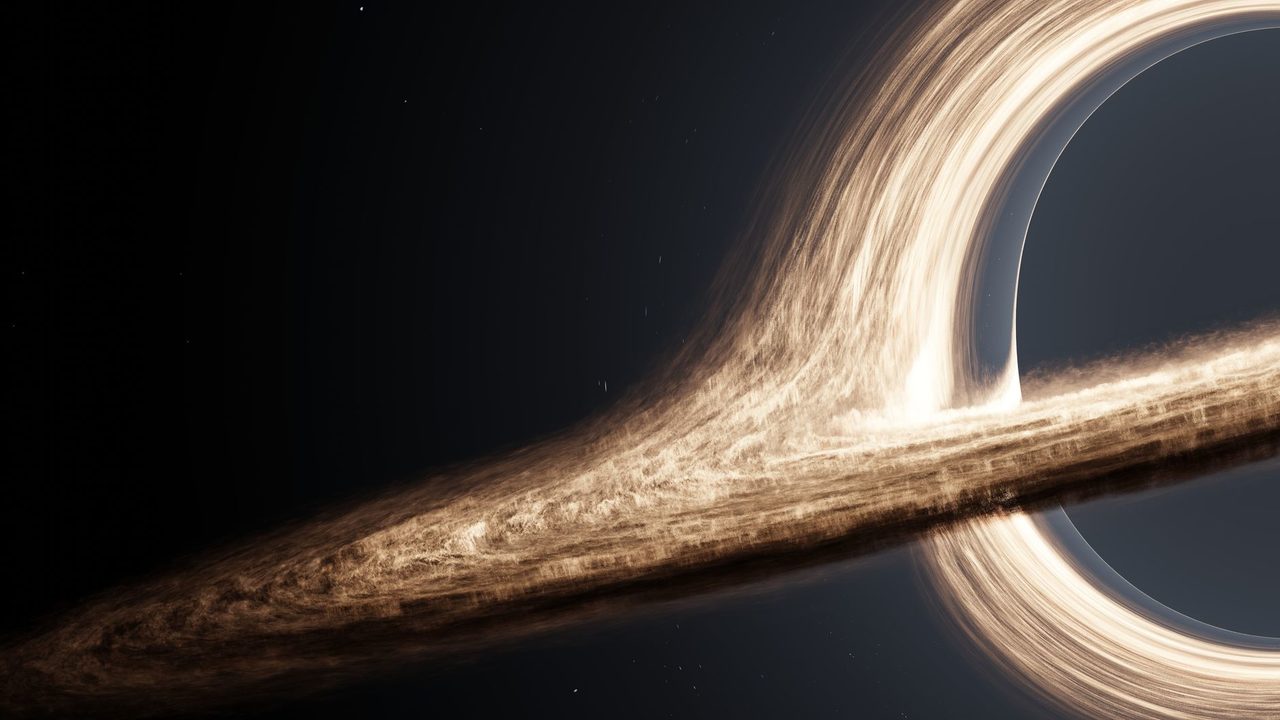
Some massive stars may end their lives without the blast scientists usually expect, collapsing straight into black holes instead. A new Caltech-led study of gravitational wave data finds a pattern in black hole masses that fits that idea, according to ScienceDaily, which published the Caltech summary.

The result does not prove that any such star has vanished. It does match what theory predicts for black holes born that way, the researchers say.

What did the researchers look at?

The team examined the masses of black holes in 257 mergers detected over the past decade by the LIGO, Virgo and KAGRA detector network. LIGO is funded by the National Science Foundation and runs detectors in Louisiana and Washington. It made the first direct detection of gravitational waves in 2015, from two colliding black holes. The network has since recorded more than 300 black hole collisions.

What pattern did they find?

Black holes of roughly 10 times the mass of the Sun were exceptionally common, appearing in about three-quarters of the merger sample. The team also found a shortage of black holes between 12 and 16 solar masses. According to the summary, this is the first time such a distinct gap has been identified in the mass distribution.

The researchers also looked at spin rates, which can preserve clues about how a black hole formed. Black holes near 10 solar masses tended to have spins concentrated in a narrower range than the wider population.

Why would that point to stars that never exploded?

Together, the crowd of 10-solar-mass black holes, the thin 12-to-16 range and the similar spins suggest these black holes may share a formation history. One possible explanation is that many came from massive stars that collapsed directly into black holes with no supernova. In such mergers, either the heavier black hole or both could have formed this way.

Katerina Chatziioannou, a Caltech physics professor who led the study, said the data suggest this group may be a distinct subpopulation that failed to go supernova. Lead author Isaac Legred, who did the work at Caltech and is now at the University of Illinois Urbana-Champaign, asked why black holes of, say, 14 solar masses are so rare when 10-solar-mass ones merge so often. He said the gap may reflect a special mix of internal physics behind the abundance of 10-solar-mass black holes.

Has anyone seen a failed supernova?

Not a confirmed one. Astronomers have yet to confirm a specific case, despite decades of searching. Ordinary supernovae produce bright flashes visible across vast distances, while a failed supernova may leave little to see. Legred described it as a star that simply vanishes, leaving a dark patch of sky. The study was published in Physical Review D, and Jacob Golomb, a former member of Chatziioannou's group now at Asari AI, also contributed.

Why does it matter?

For general readers, the finding shows how a new kind of data is changing astronomy. Stars that die quietly are hard to catch with ordinary telescopes, but the black holes they leave behind can still collide and send out gravitational waves. Those signals let scientists test ideas about stellar death that light alone cannot reach.

The study also offers an explanation for the origin of a large population of black holes across the universe, and it gives researchers a specific feature, the gap between 12 and 16 solar masses, to test against future observations. Chatziioannou said the results connect gravitational wave data to the underlying astrophysics scientists are trying to extract.

How firm is the conclusion?

It is a pattern that fits a theory, not a direct observation of the process. The authors say the findings do not directly confirm that failed supernovae exist, and other explanations for the mass gap remain possible.

Around Prague, based on reporting by ScienceDaily
Share: Telegram WhatsApp

More science news

Computer Models Hint at a Second Hidden Planet Far Beyond Neptune
Astronomers say the strange orbits of some icy objects far beyond Neptune could point to a hidden planet, and it would not be the long-sought Planet Nine. A new study proposes a second world, informal
Black Holes Could Split Into Tiny Fragments if They Spin Fast Enough, Study Says
Black holes are known to collide and merge, but a new theoretical study suggests they might also break apart. Under extremely specific conditions, the researchers propose, a black hole could fragment
Farm Plow Hints Led to a Buried Pot of 200-Plus Celtic Silver Coins in Hungary
Archaeologists in western Hungary have uncovered a hoard of more than 200 Celtic silver coins, each over 2,000 years old, according to Live Science. The cache is described as one of the largest found
Laser-Pushed Starships Hit a Strange Drag Problem Near 75% of Light Speed
Light that is supposed to push an interstellar spacecraft forward can start working against it, according to a new physics study. Once a laser-driven solar sail reaches about 75% of the speed of light
Old Prescriptions May Leave Gut Bacteria Fingerprints Years After You Stop
Medicines you stopped taking years ago may still be shaping the bacteria in your gut. A large study from the University of Tartu Institute of Genomics found that many commonly prescribed drugs leave d
Why Does the Right Brain Run the Left Body? A 500-Million-Year Theory
Why does the left side of your brain handle the right side of your body, and the other way around? Two neuroscientists at the University of Minnesota, Martin Wessendorf and Daniel Wang, have proposed

Related news

Astronomers say the strange orbits of some icy objects far beyond Neptune could point to a hidden planet, and it would not be the long-sought Planet Nine. A new study proposes a second world, informally called Planet X2, according to Scienc
Black holes are known to collide and merge, but a new theoretical study suggests they might also break apart. Under extremely specific conditions, the researchers propose, a black hole could fragment into smaller ones, a bit like a pair of
Archaeologists in western Hungary have uncovered a hoard of more than 200 Celtic silver coins, each over 2,000 years old, according to Live Science. The cache is described as one of the largest found in the country in decades. The coins cam
Light that is supposed to push an interstellar spacecraft forward can start working against it, according to a new physics study. Once a laser-driven solar sail reaches about 75% of the speed of light, part of the scattered light produces d
Medicines you stopped taking years ago may still be shaping the bacteria in your gut. A large study from the University of Tartu Institute of Genomics found that many commonly prescribed drugs leave detectable changes in the gut microbiome
Why does the left side of your brain handle the right side of your body, and the other way around? Two neuroscientists at the University of Minnesota, Martin Wessendorf and Daniel Wang, have proposed a new evolutionary answer in the journal
NASA’s Johnson Space Center in Houston is marking 65 years of human spaceflight. The agency says the center has shaped American crewed missions from the Gemini flights through the Apollo Moon landings and the space shuttle era to the Intern
SpaceX launched a batch of classified satellites for the National Reconnaissance Office on Sunday, Nov. 22, on a mission called NROL-136, Space.com reported. A Falcon 9 rocket lifted off from Launch Complex-4E at Vandenberg Space Force Base
A physicist in Japan has built an analog black hole out of digital logic, and it behaved in a way a real black hole is not expected to. When he changed a single bit inside its horizon, a small part of the resulting disturbance got out, acco
A NOAA expedition in the Gulf of Mexico went looking for a shipwreck and found a seafloor strewn with refrigerators, freezers and washing machines, ScienceAlert reported. The cargo, lost from a shipping container that never reached its dest
Astronomers have long assumed that galaxies formed first and their central black holes grew later. Observations from the James Webb Space Telescope (JWST) are shaking that assumption, Live Science reported, and researchers it spoke with say
Scientists have sequenced the entire genome of a whale using snot collected from its breath by small commercial drones, according to NPR. The team says it is the first time a whole whale genome has been produced from this kind of sample. Th