King Tide Flood Warnings on the West Coast: How It Works and What to Watch
USD 22,28
Popular
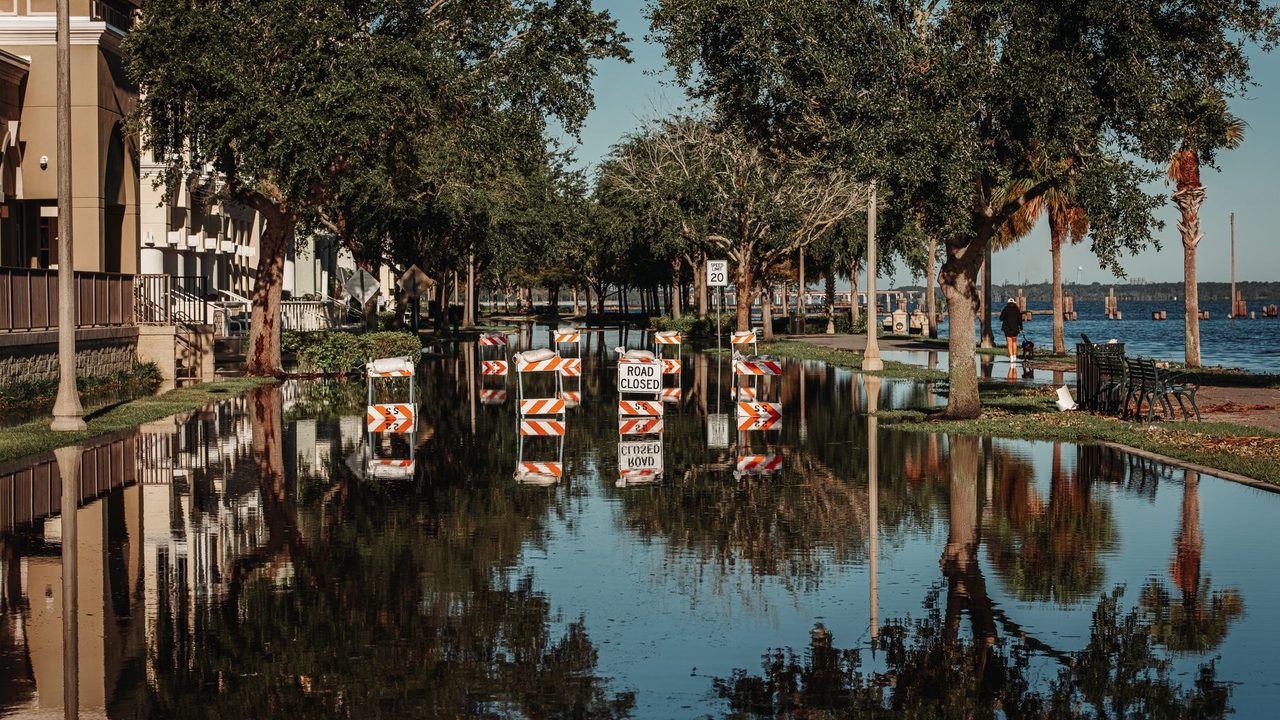
Officials along the West Coast of Canada and the U.S. are warning people who live near the ocean about possible flooding during a king tide, CBC News reported. The tide is expected to end Thursday, with the highest water forecast for Wednesday morning, when it coincides with the full moon, according to the Weather Network.
King tides can run about 0.3 to 0.6 meters above the average high tide mark. This one is arriving as sea levels are also elevated because of El Niño, which raises the flood risk for low-lying shorelines.
How a king tide forms
Tides come from the pull of the moon and sun on the ocean, and they change as those bodies shift position. A king tide happens when two separate alignments overlap, CBC explained.
The first is the spring tide, which occurs every two weeks when the moon and sun line up on the same side of Earth. Spring tides run about 20 percent higher than normal. The second is the perigean tide, which happens three or four times a year when the moon reaches its closest point to Earth in its orbit.
When both occur at once, the result is a king tide. These typically arrive in late fall and early winter and can last a few days. Oceanographer Gregory Crawford, an adjunct professor at Ontario Tech University, told CBC that the pull of the moon and sun line up to maximize the tidal range. King tides happen about two to four times a year, he said.
What experts and officials are saying about the risk
Crawford called the current combination of conditions a “worst-case scenario.” He said low-lying places without much sea wall protection could see worse flooding than they normally would.
He also noted that king tides are predictable because they are driven by astronomy, and the most dramatic conditions last only a few days. The harder part to forecast is what else is happening at the same time. A king tide on its own is not especially dangerous, he said, but the situation becomes more serious when El Niño, king tides and weather, or even tsunamis, stack up together.
CBC photographs from the event show the effects on both sides of the border. One shows a flood protection sign at Boundary Bay in Delta, B.C. Another, from The Associated Press, shows a bus moving through floodwaters during high tides in Sausalito, Calif.
What this means for people on the coast
The practical risk depends largely on where a person lives or spends time. Crawford said people who live inland, or up on a hill, are unlikely to worry much about king tides. Those who work or spend time on the water are generally well aware of them.
For residents of low-lying shoreline areas, the main concern is the stretch from now through Thursday, with Wednesday morning the forecast peak. Places with limited sea wall protection are the ones Crawford flagged as most exposed. Because the tide timing is known in advance, the uncertainty comes mainly from weather or other events that could add to the water level.
What comes next
The current king tide is expected to subside Thursday. The Weather Network says British Columbia can expect more king tides next month, from Dec. 22-26.
Read next
Nor’easter Threatens East Coast With Flooding, High Surf and Wind This Week
What the Red Wind Warning for Storm Austen Means for Channel Islands Residents
Could Ocean Tides Hide a Trace of Einstein's Gravitational Waves?
Around Prague, based on reporting by CBC News