Rome's Ulpia Library, Closed for Nearly a Century, Opens to Visitors
USD 22,22
Popular
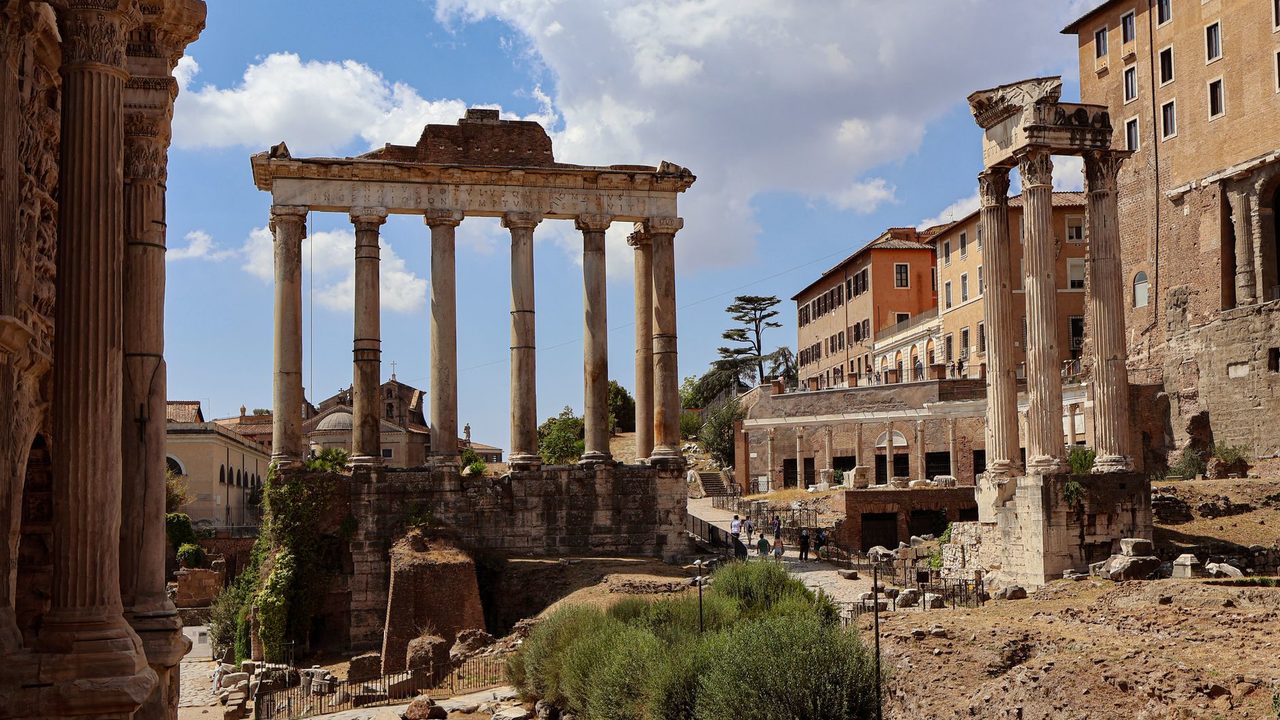
The ruins of the Ulpia Library, one of the great text repositories of the ancient world, are reopening to the public in Rome this week after a year of restoration. Visitors will be admitted only on Fridays, Saturdays and Sundays at first, in groups of 20 people every 40 minutes, according to The Associated Press.
The site sits in Emperor Trajan's Forum, next to the column that celebrates his victorious campaigns against the Dacians and the Roman conquest of what is now Romania. AP reported that it had been inaccessible for almost a century.
What visitors can see
A new permanent exhibition gives an idea of how the space once looked. It shows remains of the library's marble decoration, white for the walls and different colors for the floor and columns, The Independent reported. Immersive videomapping is projected onto the walls and tells the story of the library and its discovery.
Where scroll cabinets once stood, the space today holds broken Corinthian columns and pieces of sculpture.
Why the library was important
Claudio Parisi Presicce, an archaeologist and Rome's superintendent for cultural heritage, told AP the library was “certainly one of the most important” in the ancient world, after those in Alexandria in Egypt and Pergamon in Asia Minor. He pointed to the number of scrolls, which were called “volumina,” and to the quantity of documents it held.
He said the libraries were used by ordinary citizens who could afford a certain level of education, and also by magistrates who needed older documents or had to check the rules that governed community life. The library was a fundamental part of the Forum and, for centuries, drew citizens from across Rome with its large collection of edicts and documents.
How the site was found and rebuilt
The place was in ruins when it was discovered in 1932, during clearing work by Benito Mussolini's government for the road that became the Via dei Fori Imperiali. It was later covered in concrete and used as a storeroom for pieces from Trajan's Forum, the last and greatest of the imperial fora, built in A.D. 112.
Niches in the walls were evidently spots for cabinets holding scrolls, which signaled that this was one of the two two-story buildings that made up the Ulpia Library in ancient texts, Presicce said. Archaeologists from the city's cultural heritage office identify it as the western building, which ancient texts indicate held Greek-language scrolls.
Restoration started in 2025 and lasted about a year. The cost was 1.75 million euros ($1.92 million), paid from the European Union's pandemic recovery funds. AP noted that the project is one of many restorations Rome is carrying out across the city with EU money.
What this means for visitors
For travelers and Romans, the reopening restores access to a site that was inaccessible for almost a century. Entry is limited at first to three days a week, with 20 people admitted at a time and a visit slot every 40 minutes, so the number of visitors each day will be small.
Only one of the library's two buildings is open to view. The eastern building, which held Latin-language scrolls, remains buried beneath an 18th-century church on the other side of Trajan's Forum, and there are no plans to excavate it.
Around Prague, based on reporting by ABC News, The Independent