Russian Nuclear Satellite Claims: How the Warnings Built Up and What NATO Says
USD 22,36
Popular
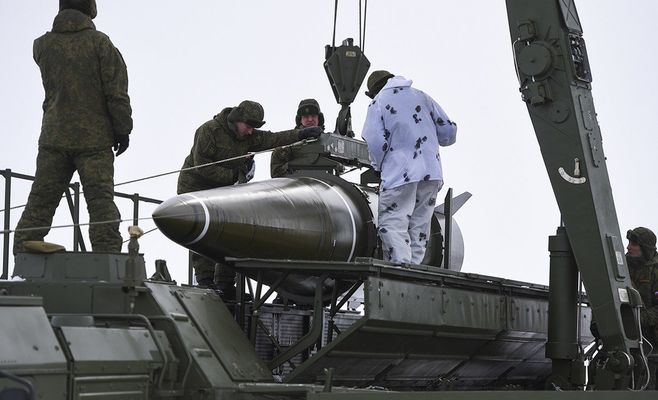
German media reported on Nov. 23 that Western intelligence services fear Russia could launch a satellite carrying a nuclear weapon within 60 days. Moscow rejects the claim, and the reports have not been independently confirmed in public. NATO Secretary General Mark Rutte responded by promising to defend the alliance against threats in space.
The reports, from broadcasters NDR and WDR and the newspaper Sueddeutsche Zeitung, cite anonymous German military and intelligence sources. According to The Independent and Fox News, the satellite is called Sputnik-S, was assembled years ago and is kept in the Moscow region. The German military's Space Command reportedly judged that a December launch was possible.
How the warnings built up
- 1967: The Outer Space Treaty, which Russia signed, bans weapons of mass destruction from orbit, according to the BBC.
- February 2024: The U.S. said Russia was developing a space-based anti-satellite weapon armed with a nuclear warhead. Fox News noted that Biden administration officials said then that no such weapon had been deployed. Russia denied the accusation, and Putin said at the time that Moscow opposed putting nuclear weapons in space, the BBC reported.
- March: Gen. Stephen Whiting, head of U.S. Space Command, told the Senate Armed Services Committee that Russia has capabilities meant to disrupt U.S. space assets, including the potential placement of a nuclear weapon in orbit, The Independent reported.
- April: Whiting told The Times that a nuclear anti-satellite weapon in orbit would violate the treaty and endanger all satellites in low Earth orbit, which he said number over 10,000.
- September: U.S. Air Force Secretary Troy Meink said the U.S. has “on-orbit, space-control weapons,” without giving details, according to the BBC. Kremlin spokesman Dmitry Peskov replied that space must be free of any weapon.
- October: The U.S. Defense Intelligence Agency said in a public assessment that Russia is developing a satellite designed to carry a nuclear weapon, Fox News reported.
- Early November: Intelligence warnings were shared among several NATO countries, according to Fox News. The BBC said German outlets placed the exchange this month and that it was unclear which country wrote the reports.
- Nov. 23: The German reports were published, and officials in Berlin, Brussels and Moscow responded.
What officials said
Speaking in Berlin alongside German Chancellor Friedrich Merz, Rutte said NATO would “defend every inch of NATO territory,” and that this includes space. He added that the alliance has response options that are not always visible to the public and will update its deterrence where needed.
Merz neither confirmed nor denied the reports, the BBC said. He called them a sign of how far Russia is prepared to escalate, and said concerns about Russian nuclear plans in space are not new but remain shocking. A German government spokesman said Berlin is taking the reports very seriously but warned against excessive nervousness over hypothetical dangers, AFP reported.
Peskov said he had not seen the report and that its many “alleged” and “possible” claims were “hardly worth taking seriously,” according to The Moscow Times. The Russian embassy in Berlin called the reporting an unfounded propaganda campaign. Fox News said the embassy also described Russia's space activities as peaceful.
What this means for everyday life
The concern goes beyond the military. Fox News noted that satellites support GPS navigation, international communications, financial transactions, weather forecasting and critical infrastructure. The Defense Intelligence Agency warned that a space-based nuclear weapon could cause a rapid loss or degradation of thousands of satellites run by governments and companies worldwide, and of the services they provide.
Unlike a weapon aimed at a single spacecraft, a nuclear detonation in orbit could disable many satellites through radiation and electromagnetic effects, Fox News reported. The Independent added that Ukraine relies heavily on the Starlink satellite network in its defense against Russia's invasion.
What is still unclear
Accounts differ on the satellite itself. The BBC said the reports describe it as equipped with a nuclear warhead, while Fox News described it as designed to carry one. Fox News also noted that it is unknown whether the satellite already carries a warhead and whether Western agencies have independently verified the launch preparations.
On possible responses, Maj. Gen. Armin Fleischmann of Germany's Cyber and Information Space Command said Berlin could hope to develop “counterspace capabilities” able to neutralize nuclear-armed satellites, The Independent reported.
Read next
Russian Satellite Came Within Meters of a U.S. Commercial Radar Craft in Orbit
What NATO's Response to Russian Missiles in Poland Means for the Eastern Border
One Nuclear Blast in Space Could Cripple Nearly Every Low-Orbit Satellite
Around Prague, based on reporting by The Independent, Fox News, BBC News