Webb Telescope Finds Dust Clues That a Star's Layers Merged Before It Exploded
USD 22,36
Popular
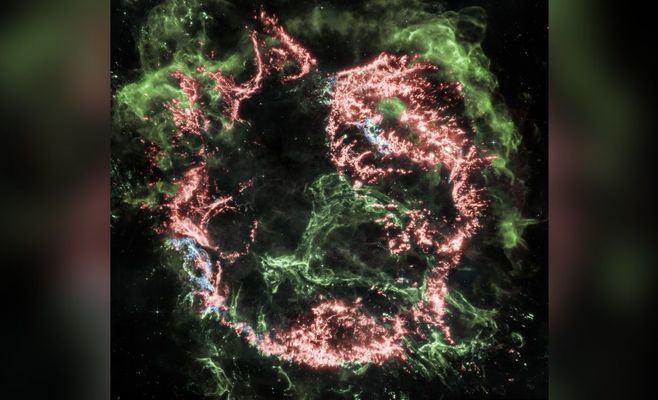
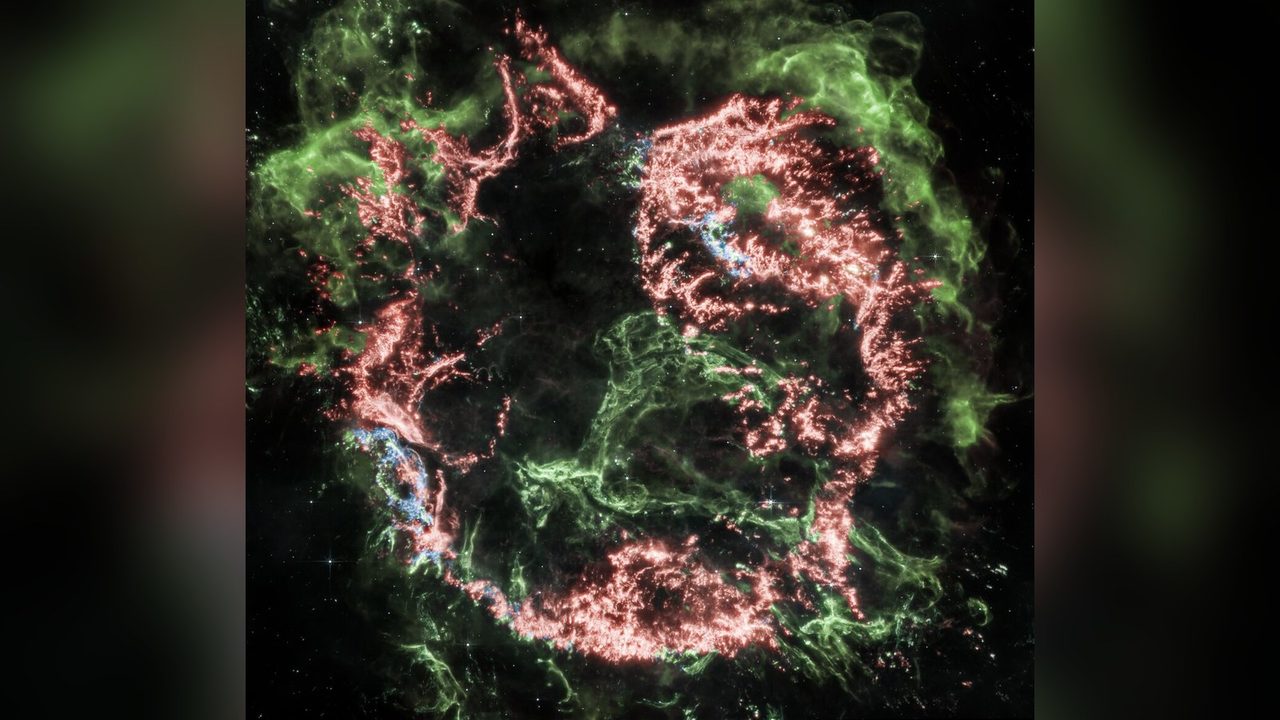
A new study using the JWST suggests that the massive star behind the supernova remnant Cassiopeia A went through a "shell merger" shortly before it exploded. Researchers reached that conclusion by studying dust in individual clumps of debris, according to a report from Universe Today on research published in The Astrophysical Journal Letters.
The finding matters because astronomers cannot look inside a living star. They have to study the wreckage after the star blows itself apart, and the dust in that wreckage preserves a record of what the star was like inside.
What did the researchers study?
The team focused on Cassiopeia A, often shortened to Cas A. Universe Today describes it as one of the best-known supernova remnants. It lies about 11,000 light years away, and people on Earth observed the explosion around 1667. Astronomers value it because analyzing its contents reveals details about the exploding star, known as the progenitor.
The paper is titled "JWST Resolves Dust Emission from Individual Ejecta Clumps in Cassiopeia A: Dominant Grain Compositions Point to a Shell Merger in the Progenitor." Tea Temim, a research scientist at Columbia University, is the lead author.
How did JWST make this possible?
The team used JWST's Mid-Infrared Instrument and its Medium-resolution Spectrometer, which splits light into its component wavelengths. According to the authors, the telescope's sharp mid-infrared view lets them separate dust emission from individual clumps of ejecta that are only arcseconds across. Earlier, the clumps blurred together into one mixed signal.
Universe Today reports that the clumps are huge, as large as our Solar System. Because the instrument isolates them, researchers could identify the main dust species region by region.
The team first used images from the Spitzer Space Telescope to pick out areas with different dust properties. They then examined three of them, labeled P1, P2 and P3, with JWST. All three show significant emission from warm dust, but the authors write that the shapes of their spectra differ considerably.
What is a shell merger, and what did the dust show?
Massive stars fuse elements in layers. Heavier elements form toward the core, up to iron, while lighter ones are fused in the surrounding shells. Temim said in a press release that material in these shells churns and circulates, which can make shells merge shortly before the star explodes. She gave the example of the oxygen-burning and carbon-burning shells combining. That would change the star's structure significantly and alter the chemical makeup seen later in the debris.
In the P1 region, the debris has been hit by a reverse shock, a shock wave that rebounds inward. It shows bright argon emission, and its dust is dominated by grains of silica, or SiO2. Universe Today reports that this region helps trace the outer layers of the ejecta, and that the finding supports a carbon-oxygen shell merger in the progenitor. P2 is centered on a feature astronomers call the "Green Monster."
Why does it matter?
The result has no direct effect on daily life, but it speaks to how the universe got its building blocks. Universe Today notes that massive stars make the elements heavier than hydrogen and helium, which are needed for rocky planets and living organisms. Without them, the cosmos would be mostly hydrogen with some helium and traces of lithium.
When a star explodes, those elements are thrown into interstellar space. From there they can go into planets, life and the next generation of stars. Knowing how a star was structured before it exploded helps scientists understand how that material is made and what mixture gets released.
Universe Today says the observations improve understanding of the progenitor's overall structure and of the shell mergers it underwent just before exploding. As with any single study, the result describes one star and one remnant.
What are the supernova remnant's shock waves doing to the picture?
A supernova leaves behind an expanding shell of ejected matter driven by a shock wave. The shock heats the shell, producing some of the most striking displays in nature, according to Universe Today. Reverse shocks add to the mess. Even so, the outlet says patterns can be found, and molecules and dust forming in the shell carry information about what happened inside the star before it exploded. That is the kind of pattern JWST's resolution is now helping astronomers read.
Read next
Webb Telescope Finds Dense Star Clusters That May Have Birthed Black Hole Seeds
Webb Peers Through Dust to Reveal Young Stars Hidden in a Stellar Nursery
Webb Telescope Catches Two Stars Merging in the Andromeda Galaxy in Real Time
Around Prague, based on reporting by Universe Today