Sheikh Hasina Says She Will Return to Bangladesh Dec. 16; Government Vows Arrest
USD 22,36
Popular
Sheikh Hasina, the former prime minister of Bangladesh, says she plans to return home from exile in India on Dec. 16, a date the country marks as Victory Day. Bangladesh's government responded that she was convicted and would face the consequences, according to the Associated Press and the BBC.
Hasina is under a death sentence handed down in her absence, and officials in Dhaka say they want her extradited. Few expect her to be allowed to walk free if she arrives, which leaves the details of any return unclear.
What Hasina's camp announced
In a statement on Tuesday, Hasina's spokesperson, Syed Mozammel Ali, asked the Bangladeshi government to arrange a flight for her from Delhi to Dhaka. He argued that because she was flown to India on a Bangladeshi aircraft on Aug. 5, 2024, the state should now bring her back the same way. He also accused the authorities of forcing her into exile in violation of the constitution, the BBC reported.
Abu Obaidha Arin, an aide to Hasina, told the AP the date was deeply symbolic. He said she would spend the day among her people and that Bangladesh would advance toward peace and stability under her leadership. Victory Day marks the end of the 1971 war of independence from Pakistan, which was led by Hasina's father, Sheikh Mujibur Rahman, the country's first leader.
Earlier this month Hasina told the AP she would return in December at any cost. In August she told journalists in Delhi by audio link that she knew she might be jailed or killed but still had to go back, the BBC reported.
How the government responded
Abu Abdullah M Saleh, press secretary to Prime Minister Tarique Rahman, told the AP that the government's position had not changed. He said Hasina had been convicted by a tribunal and that Dhaka had asked for her extradition.
State Minister for Foreign Affairs Humayun Kabir was blunter at a Tuesday briefing. He said Hasina could not return as an ordinary passenger and that "she will be brought back in handcuffs," according to the BBC. He also accused Hasina and Delhi of backing unrest in Bangladesh and "terrorist activities." The BBC did not report any evidence offered for the claim.
India's foreign ministry did not immediately respond to the BBC's request for comment. In April, it said it was examining Bangladesh's extradition request and wanted to engage constructively with the new government.
How she lost power
Hasina fled to India after a student-led uprising ended her 15-year rule. It began as protests against quotas in government jobs and grew into a mass movement after a deadly crackdown. The UN estimates that up to 1,400 people were killed. A Bangladeshi court later sentenced her in absentia to death for crimes against humanity. She denies the charges and has said she is ready to fight the case once she is back.
A prosecutor said earlier that she missed the deadline to appeal and that there would be no legal basis to stop an execution. Presidential clemency is possible under Bangladeshi law, but Hasina has never sought it and has rejected the verdict outright, the AP reported.
Nobel Peace Prize laureate Muhammad Yunus led an interim government after her fall. It banned her Awami League party, which was then barred from the February election. That vote brought the rival Bangladesh Nationalist Party to power under Rahman. Jamaat-e-Islami, the largest Islamist party, returned to politics in that election and is now the main opposition. Many of its top leaders were executed on war crimes charges under Hasina.
What's at stake
For people in Bangladesh, the date raises the prospect of a politically charged confrontation on a national holiday. According to the BBC, Awami League supporters have continued street protests despite the ban and have called for nationwide shutdowns demanding Hasina's return.
The question also affects relations between Dhaka and Delhi. India was close to Hasina during her rule and hoped the new government would allow a reset in ties. The BBC reported that Rahman, nine months into office, has not visited India despite an invitation, though he has traveled to China, Japan and Malaysia. He also skipped a BRICS summit hosted by India in September. The two countries have resumed talks about a possible visit, but no dates have been announced.
It remains unclear how Hasina would travel or whether India would allow or facilitate her departure. Neither India nor Bangladesh has said how it would handle her arrival.
Read next
Hasina Requests New Passport to Return to Bangladesh Despite Death Sentence
What We Know About the Fire at Muhammad Yunus’ Family Home in Bangladesh
Solomon Islands Ends China Security Pact Ahead of Australia Treaty
Around Prague, based on reporting by ABC News, BBC News
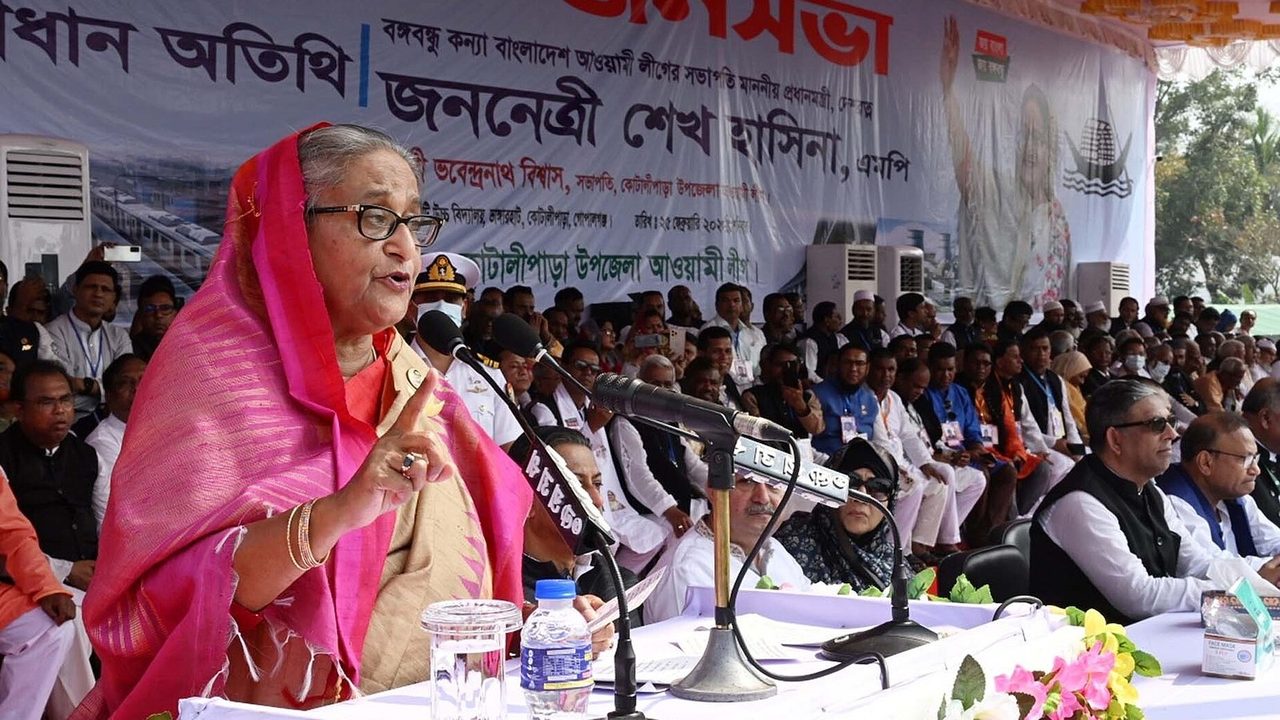
Cover photo: DelwarHossain / Wikimedia Commons, CC BY-SA 4.0, cropped