People
Prague real estate: interview with Home Real Estate’s owner
Prague
12°
Partly cloudy
Exchange rate
EUR 24,27
USD 21,65
USD 21,65
Petrol / Diesel44,88 · 47,63 Kč
Popular
Artem Melnikov is the owner of the real estate agency Home Real Estate. He sells property, handles strategic planning, and breaks up his working days with triathlon. Over the past year Artem has already completed the world-famous Ironman 70.3 distance four times. We talked about how to combine sport and business, and also discussed how the real estate market is developing in 2018. The conversation turned out to be not only interesting but useful: for Around Prague readers, the Home Real Estate team has prepared a gift waiting at the end of this interview.
Around Prague: Entrepreneur, real estate specialist, triathlete — all in one person. Artem, tell us how you manage to combine it all.
Actually, these are complementary fields. I’ve been in the real estate business for a long time, while triathlon only came into my life a year ago. But now I can clearly see that it helps with work. Concentration, endurance over a long distance, multitasking — these are traits that business and triathlon share. In training I develop qualities that are useful at work.
AP: Are there any parallels you can draw with your own business?
Of course. Take real estate, for example: I need to have a good grasp of the market situation, know the numbers and facts, and keep track of new laws and trends. It’s important to find common ground with clients and the team. And to run a business properly, you also need to be a good manager, develop a growth strategy and marketing campaigns. There are a lot of fronts, and you have to tie them together on the fly. It’s the same in triathlon: being a good runner alone isn’t enough to finish the whole distance. The half-Ironman course, which I’ve now completed four times, is 112.9 km: 1.9 km of swimming, 90 km of cycling and 21 km of running. To finish the whole distance, you need to be equally good at all three disciplines, have good endurance, and be able to stay focused on the goal.
AP: There really are similar traits. So how did it happen that you’ve done the half-Ironman four times?
First I signed up for Ironman 70.3 Syracuse, NY — that was my first race. I started in America and finished the course in 7 hours 3 minutes. Afterwards I realized that one day I’d like to complete the full Ironman distance, which is twice as long. But to reach that goal, you need to train intensively for more than a year. Enthusiasm tends to fade over time, so to keep my interest in triathlon alive, I signed up for the exact same race in Poland, Czechia and Slovenia. It was also a chance to beat my own record — in fact, I completed my second half-Ironman, in Poland, in 6 hours 3 minutes, beating my own time by exactly an hour.
AP: What mattered more to you — beating your own record or finishing among the first?
I’m always interested in competing with myself, in getting better day by day. Who I become tomorrow depends on what I do today. My result at an Ironman reflects how I’ve trained over the past few months. There’s no point competing with other athletes: one person might be strong at swimming, another at running. Everyone has their own starting point. The main thing is to keep getting stronger yourself. AP: You talk about triathlon so passionately — it’s hard to believe you only took up the sport recently.
Yes, I only started last autumn. Before training for Ironman, I was actually convinced that sport wasn’t my thing at all. I tried running but quickly gave it up — I ran out of breath, and my knees felt weak. It was only once I started working with a coach that it turned out my technique was wrong. I worked on my form, learned to breathe properly, bought running shoes with good cushioning — and the problems disappeared.
AP: Did you have to train a lot before your first race?
My coach drew up a plan that had me training 5–6 days a week. In total that’s 6–10 hours. For me the athlete, that was a great challenge, but for me the businessman, it was a real test. I was used to giving my favorite work 10–12 hours a day. Usually after 6pm I’d either stay at the office or keep working from home. Once Ironman came into my life, I had to tone down that enthusiasm a bit. I’m still completely immersed in work, but now I have to keep track of how many hours I devote to business. Because after training, the body doesn’t need another dose of work — it needs recovery: food and sleep.
AP: Do you manage to keep up with work matters on your new schedule?
Yes, although I have to admit that stress is simply a lifestyle for an entrepreneur. Actually, having less time opens up a second wind. When I have fewer working hours, I become more productive. What used to take me 4 hours, I now get done in 3. And the Home Real Estate team supports me too. In business you can’t do everything yourself — it’s more effective to delegate. Especially since our brokers are good specialists you can trust. Many of the tasks I used to keep entirely on myself, our people now handle brilliantly.
AP: Do your employees help with any key decisions?
Yes, I always try to give everyone a say. People are different, and someone might voice a point of view that changes my position and affects the final decision on an issue. Dialogue helps you find the right path.
AP: Do you have a big team?
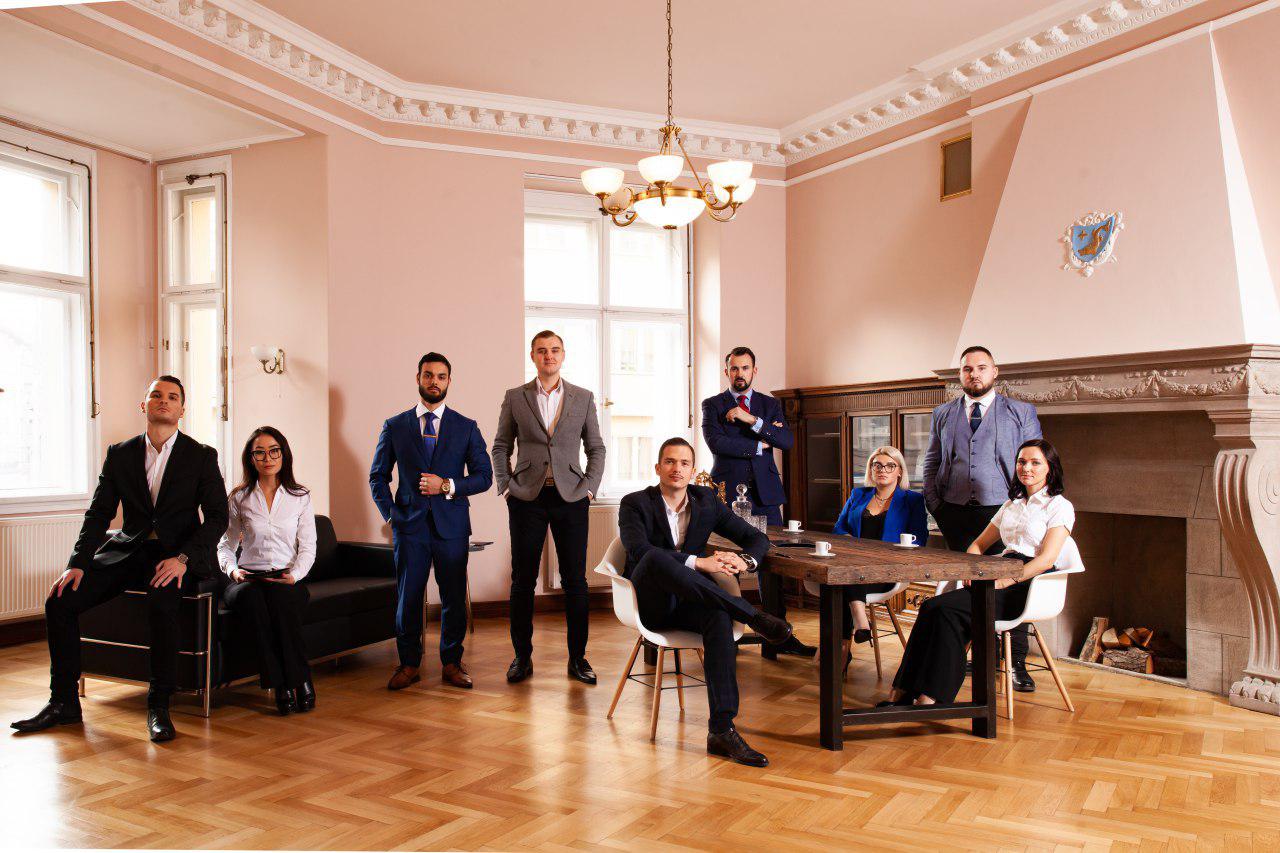
Right now Home Real Estate has 8 people — 4 in the rental department and 4 in sales. These are our staff members. We also work with a photographer who shoots properties for rent and sale, and we cooperate with Czech lawyers so that deals always go smoothly and in accordance with the law. The rules in real estate change often, small amendments get added to the laws, and an ordinary person might not even notice. And if a purchase agreement has errors in it, that can cause a lot of problems. Any real estate agency that cares about the outcome of its deals and full client satisfaction works with a lawyer as a matter of course.
AP: Indeed, there have been a lot of changes in real estate in recent years. How would you assess the market situation now? People say rents in Prague have gone up.
Yes. Not doubled, of course, but we have recorded a change. Getting a mortgage has become harder now — banks used to be able to lend up to 90–100% of a property’s value, but now even Czech citizens are required to put down a minimum 20% down payment. Mortgage applicants are now vetted more carefully, and the interest rate is now at least 2.6%, compared with a record low of 1.77% back in 2016. All of this has mainly hit young families. Where they used to be able to manage a small down payment and move into their own flat, now they have to look for rental housing instead. And after that, economic laws take over: demand for rentals rises, so supply becomes more expensive. Landlords raise the rent.
AP: What are the prospects for the residential property market? Will prices stop rising?
If we’re talking about buying a flat, you can breathe easy — no strong price growth is expected in the near future. Yes, between 2012 and 2017 the cost of residential property in Prague rose by 68% — that figure is even higher than in London. The growth has been enormous, and that trend will continue in 2018–2019, but now we’re only talking about a modest, fairly smooth rise in prices. There are no grounds right now for sharp jumps.
AP: And no sharp crash either? After all, 68% growth does sound like a bubble.
No, and most Czech and European analysts agree that the growth is quite natural. First, there’s been a long-running shortage of properties on the market. Building permits are hard to get, and the whole process from the creation of a project to the completion of construction can take around 10 years. For European countries, that’s a fairly long period. And because of the housing shortage, demand on the market significantly outstrips supply. Second, the Czech economy is developing actively. GDP has grown by 11.2% over the past three years. The crown is strengthening, people’s wages are rising, Czechia has the lowest unemployment rate in the EU, and the political situation is stable. So the rise in property prices is backed up by the country’s economic and political development — there’s no need to fear a bubble.
AP: Artem, any advice on where to read more about the real estate market situation — in terms an ordinary person without an economics background could understand?
This summer I prepared a big article for Forbes magazine, with figures and facts — you can read it there. The information is still current — the situation hasn’t changed much since July. I also talked more broadly about the situation in Central Europe here. And the Home Real Estate team and I have also put together a brochure with analysis for property owners.
AP: That’s interesting! Are you willing to share this brochure with our readers?
Of course. The brochure describes the current situation in detail and includes forecasts for 2019. We’ll share it with Around Prague readers for free. To get it, simply go to homerealestate.eu and send a request.