Health insurance for foreigners in Prague: an insider's view

USD 21,65
Popular
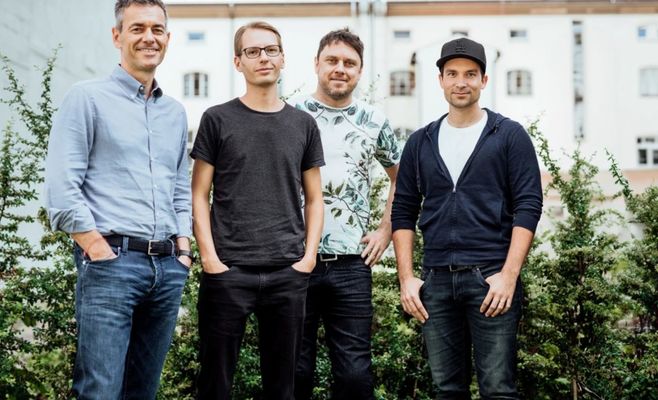
At least once a year, every one of us runs into the subject of insurance — and not just the choice of insurer and policy, but visits to the doctor and getting money reimbursed afterwards. In summer the topic becomes especially relevant, since it is time to file the paperwork for a visa extension. It would seem that buying and choosing an insurance company is nothing complicated, but that is not quite true — there are nuances and pitfalls everywhere. So for the new instalment of our “People” section, we decided to interview the founders of Red Panda, a young but already well-known insurance company.
We met Nikolai at the company's office, where candy, cookies, coffee, tea — and a panda — were already waiting for us. Unfortunately Rustam, the company's second co-founder, was away on a business trip, so Nikolai answered all the questions himself.
Around Prague: Tell us a bit about yourself — when did you move to Prague, where from, why did you decide to leave your hometown, where did you study, and what did you do during your first months in the Czech capital?
Nikolai: I'm originally from Novosibirsk. I'd wanted to move for quite a while — I've always been drawn to new experiences and adventures. In Russia everything was familiar and comfortable, so I decided to move somewhere where absolutely everything would be new, including the language. After I arrived, like 99% of local students, I studied at a language school, then wanted to get into Charles University and ended up… at ČZU (laughs).
While studying, I tried to pick up part-time work here and there, and then got a job at Ural Airlines, which is where I met Rustam.
AP: What was your first impression of Prague, and has it changed since then?
Nikolai: At first it was frightening — everything was new and unfamiliar. But it was also fascinating, because everything around me was completely different from home. These days Prague feels like a second home to me. I moved here at seventeen and have barely left the country since.
As for how Czechs treat Russians, the opportunities here and so on — from the start I felt that Czechs are mostly kind, friendly people, and that there's no shortage of prospects and opportunities here. Over time that impression has only grown stronger.
AP: How did you end up in the insurance business, and how did it all start?
Nikolai: Rustam and I were thinking about how we could be useful here and what kind of business to start. We tried launching an online language school, we tried building a small travel company, we launched an online shop. But, like for a lot of people, our first ventures weren't exactly a success. In the end we came out of all those projects with a small profit, by some miracle. What we did gain was useful experience and knowledge that has helped us ever since.
The idea of going into insurance came out of nowhere. I needed to buy a policy myself, and I thought it might not be a bad idea to become an insurance agent. It looked like an easy business — almost no costs, and ready-made clients in the shape of friends and acquaintances. That's always how it looks when you don't know all the pitfalls yet. As it turned out, I was very wrong. In the end, most of my friends and acquaintances never actually bought a policy from me, and the license, the office rent and the advertising costs were all far higher than I'd expected. But since we'd always enjoyed working with people, and the insurance market at the time was in a dreadful state — no real service, and everyone used to being treated like they were at a government registry window — we decided that a bit more smiling, better service and some unconventional marketing could set us apart from the competition.
AP: Competition among insurance companies is fierce. Was it hard to take the first steps?
Nikolai: The first steps were very hard for us. Insurance companies don't offer good commissions until you can show them large sales volumes.
We didn't even have an office of our own — we shared a small room with a friend of ours who did translation work. There was no investment, and competitors made quite serious attempts to push us out of the market. There was no shortage of threats, either. We put every bit of profit we made back into growing the business — into an office in the city centre, into advertising, into quality service. That's why it took us two years after opening the company before we took any money out for ourselves. The whole time, we combined the insurance business with our main jobs and earned nothing from it.
AP: Your company was originally called “Like Insurance.” What happened to that name?
Nikolai: Yes, that's the brand we started under.
AP: Why did you rebrand?
Nikolai: Back then we'd decided the company name absolutely had to include the word “Insurance,” and since we badly wanted everyone to like us, we added the word “Like.” But over time we realised nobody remembered the name, and huge advertising budgets were disappearing into thin air. We had nothing to lose. Practically no one really knew “Like Insurance” — but everyone knew that Rustam and Kolya sold insurance. That's when we decided we needed a radical rebrand, with a name and logo that broke completely with the usual insurance-industry template and was easy to remember.
AP: So why was this particular name chosen for the company? Who came up with it?
Nikolai: At one point we sponsored an event, spoke on stage, gave out gifts, and afterwards decided to mingle with the guests — and that's when we realised that literally no one remembered the name of our company. No one.
That evening we went back to the office, shut the door, and decided we wouldn't leave until we'd come up with something different enough from the competition to be instantly and permanently memorable. In the end, Rustam insisted the name had to include a cute animal, something like a panda, while I wanted to focus on colour and a clean, single-colour brand identity. My favourite colour is red, and our general partner Maxima also has a red brand identity, so I wanted to simply call us “Red” — and Rustam added the panda. That's how “Red Panda” was born.
We're well aware, of course, that a real red panda doesn't look anything like the black-and-white bear on our logo. But we still wanted exactly that black-and-white panda, and exactly that name.
AP: How did you manage to win over the market in such a short time and still leave the competition behind?
Nikolai: An enormous amount of luck, plus a lot of patience, effort, trial and error. But I think the main thing is our desire to be different from other companies. We believe one happy client will bring five friends, while one unhappy client will take ten away with them. So we try to give every person as much time as they need and to satisfy them in every way — even when it costs us money. Word of mouth, in my view, is the strongest marketing tool there is. And the only way to make it work is to actually impress the client.
AP: Every client of yours gets a panda or some other gift, and yet your prices are among the lowest on the market. How is that possible?
Nikolai: Emotions are a very important part of any business, especially when you're dealing with clients. Service in Czechia is, unfortunately, in a sorry state, so we always try to give every client a positive experience, so that buying insurance doesn't feel like an unpleasant, expensive bureaucratic formality, but something enjoyable and interesting.
AP: What are your plans for the company going forward? Will the list of services be expanded over time — will clients be able to get treatment at more hospitals, or will something like dental care eventually be included in the policy?
Nikolai: Dental care is already included. Maxima works with quite a few dentists, including Russian-speaking ones. Recently, for example, we installed a card payment terminal and started delivering policies to clients at home for free.
AP: Tell us — is it true that the company “Andrey and Rodion,” which handled student insurance for many years, recently closed down and handed all its clients over to you?
Nikolai: Yes, they wanted to move into a different line of work, so they handed over all their clients, people who'd been with them for years, into the reliable, furry paws of the panda (laughs).
AP: Let's talk about something a bit less cheerful for a moment. Are there many scammers and con artists out there who cheat foreigners?
Nikolai: Unfortunately, there have been considerably more of them this year. It wasn't a problem before. But as soon as insurance prices went up in January this year, a lot of fraudsters appeared, offering to sell policies for much less than the official price. Since insurance companies fine their representatives for giving discounts, the scammers' offers looked very tempting by comparison.
AP: Could you give us a couple of the most common tricks or scams the fraudsters use?
Nikolai: The most common one is selling a policy with an “incredible discount” — this year some of them even managed to sell a year-long policy for 1,000 crowns. Naturally, that price is far below cost, and the insurance company will simply never see the money the client paid, even though the client is handed all the necessary stamped documents. The scammer just pockets the money, then goes to the insurance company and cancels the policy that was earlier taken out in that specific person's name — so the cheated client ends up filing a now-worthless document with the police.
Another trick is selling the client a “non-coverage” policy (a tourist policy that covers essentially nothing — editor's note) instead of comprehensive insurance. Of course, you can't use it to extend a visa, and you end up having to buy a new policy anyway.
AP: Is there some reliable sign that lets a person tell: “I'd better not get insured with this company”?
Nikolai: Yes, it's quite simple.
1. Every insurance agent must have an office. If there's no office, you're definitely dealing with a scammer.
2. The agent must have an insurance license, which you can look up online or on the website of the Czech National Bank. If the agent gives you a number, but the license is registered not to them but to some random “John Doe,” that's a fraudster.
3. An insurance company publishes the list of its partners on its official website. If that's missing, that's another reason to be wary.
AP: You provide a list of hospitals where people are supposed to get treatment, but could you tell us about cases where your own or other clients, out of naivety or carelessness, ended up with treatment that wasn't covered by insurance? How can someone be sure their treatment will actually be paid for?
Nikolai: Yes, of course we provide that list. Insurance covers almost everything. The most common case where an insurance company won't cover treatment is injuries sustained while drunk or under the influence of drugs.
We had a case like that, for example. One of our clients, apparently having had a bit too much, was out on the street talking to dogs, telling their owners the dogs were unhappy with their living conditions and demanding the animals be set free. In the end an ambulance took him away, he spent several days in hospital, and was later billed almost 20,000 crowns. The insurance company refused to pay, since the client had knowingly and deliberately put himself in that intoxicated state.
AP: All right — tell us, is there a difference between the ambulance service in Czechia and in our home countries? What's the fundamental difference?
Nikolai: In Czechia there's no such concept at all, really. There are only “rescuers” (Záchranná služba — editor's note) — people whose job is to save lives. That's why the insurance company will only pay for an ambulance call-out if the patient's life was genuinely at risk, or if they were unable to get to the hospital on their own.
Since this year, calling an ambulance costs 5,000 crowns, so if you just have a slight fever, it's cheaper to call a taxi and get yourself to the hospital than to call an ambulance.
AP: All right, let's get back to your company. How do people react to your name and logo?
Nikolai: Generally, everyone loves it. Everyone loves pandas. It's memorable, and people often want to hug it when someone's out walking around in the costume. You don't see a panda walking around Prague every day — most people want to take a photo with it, or just give it a hug.
AP: And to finish, we wanted to ask the question that's on not just our minds, but our readers' too — who's actually inside the panda costume?
Nikolai: The Stig from Top Gear (laughs).
The Around Prague team would like to thank Nikolai for the interview, and wish him and Rustam great success in reaching all their goals.