Meet the drummer of Czechia's most successful tribute band
USD 21,65
Popular
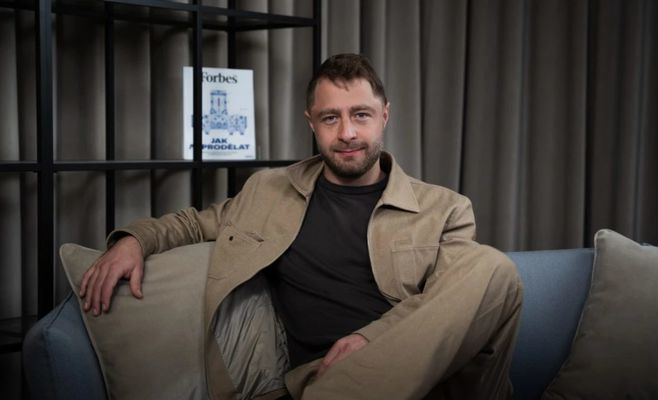
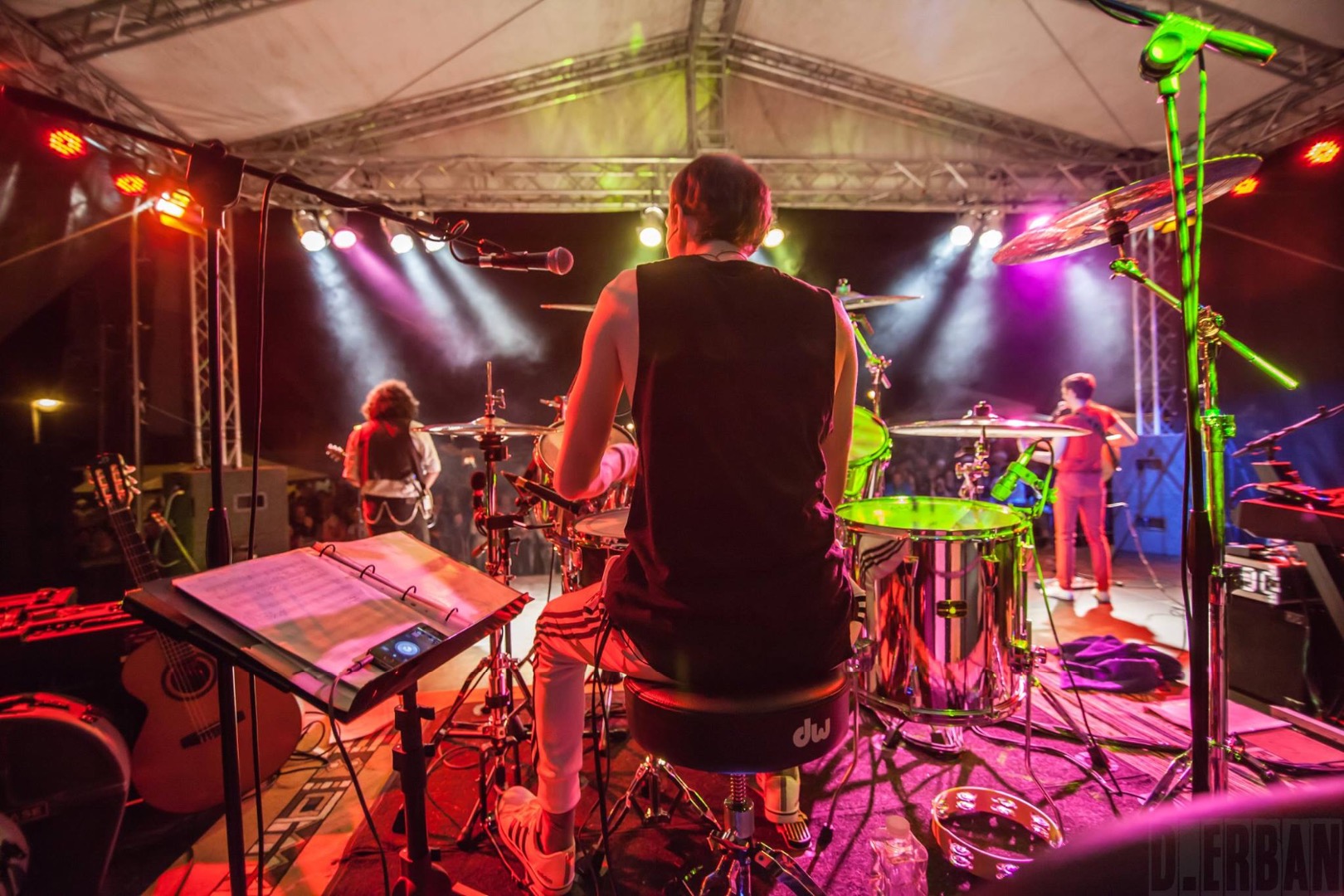
Today our interview is with a young musician named Gleb, the drummer of Queen Tribute Show. We talked to Gleb about what life is like for young musicians in Prague, how easy it is to balance a day job with the work you love, and what advice he'd give to performers starting out.
Around Prague: Tell us a bit about yourself — when did you move to Prague, where from, why did you decide to leave your hometown, where did you study, and what did you do when you first arrived in the Czech capital?
Gleb: I came to Prague in 2010 from Novosibirsk. My parents sent me to Czechia, so to speak — I knew I'd move to Europe sooner or later, but the idea came mainly from them, and I'm endlessly grateful to them for it. Back home I finished music college majoring in percussion, while also studying piano on the side. Before percussion I played the flute for eight years, sang in an opera house's children's choir, and even dabbled a little on the organ. My life in Prague went the way it does for everyone: language school, attempts to get into schools, the struggle to find your footing in a foreign country.
AP: Did you set out with the goal of moving to another country?
G: When I was 13, my parents sent me on a tour of Europe — Scandinavia, Germany, France, Holland, Belgium… I saw Paris at 13! It was a shock in the best possible way, and I just knew I would move to Europe one day. My parents gave me an invaluable gift — they gave me a dream, and then they helped me make it real.
AP: What was your first impression of Prague, and has it changed over time?
G: My first impressions were simply incredible! I felt at home almost instantly. On top of that, everything just fell into place — within a month of arriving in Prague I'd joined a Russian-speaking band and found Russian and Ukrainian friends who'd already been living here for a while and were slightly more seasoned expats. They showed me Prague from the inside right away, helped me settle in, adapt, learn the language. I also had a lot of friends from language school, and everyone wanted to learn as much as possible about the new country, its customs and local culture… I barely studied at all that first year — we were out and about, curious about everything, lots of parties and get-togethers!
That said, within a year things slowly started to change — some of my classmates, stepping outside the “Russian Prague” bubble, started heading back home, unable to adjust to Czech life. Those who stuck it out threw themselves into studying and work and started disappearing more and more. And I myself was no longer in the mood for partying — I had to rethink everything and start planning a new life.
AP: You mentioned you started out with a bike business — what went wrong, or why did it close down?
G: I wouldn't really call it a business, more of an amateur venture that came about by chance. In my second year in Prague I bought myself a bike and became an avid cyclist, riding all over the city and beyond. One day I saw a post from two girls wanting to rent two bikes, and my girlfriend and I lent them ours for 200 crowns each. That's how the idea came about — renting out bikes to people in Prague through social media. Unlike other Prague rental services, we had the lowest price, since we didn't have to pay rent for premises or wages for staff. And we lived in a great spot too: five minutes from the riverside, with a nice bike path right by the house.
In the end, this kind of rental caught on with the Russian-speaking community in Prague, and we started gaining momentum. I tried to improve our little business as much as I could and filled the whole flat with bikes. Over the four months of summer season we served 200 people and even organized a bike tour out of Prague. Naturally, the idea of turning it into a real business started to form: I looked at premises, went to Specialized's office to talk about buying bikes wholesale, but after a bit of simple arithmetic it became clear the whole thing was far from profitable and quite risky, too dependent on the season, and would need a decent amount of investment. So we had to drop the idea.
AP: Of course, the main focus of our conversation will be music, so please tell us how you wanted to get into a music academy. Was this in Czechia? What difficulties did you run into? What were the exams like? What was hard and unusual about it?
G: From the very start I found out about AMU — the music academy that is, in my view, the best music institution in Prague. And I set my sights on getting in straight away. My Czech was pretty poor back then, but I tracked down some Russian-speaking students who helped me find out everything and talk to the teachers. My problem was that after a year and a half in Prague, I'd lost all my technique. Percussion isn't just one drum — it's marimba, vibraphone, timpani, percussion instruments, xylophone, a drum kit. It's not like a violin that you can just take out of its case and practice whenever you feel like it. A percussionist has dozens of instruments right away, and you can't just set them all up at home, so we percussionists go and practice in a classroom. I needed exactly that kind of practice to get my lost skills back.
However, after talking it over, the Czech teachers wouldn't meet me halfway and wouldn't let me prepare for the exams at their school. So I started looking for a way to practice at home. I found an ad from a man in Slovakia who'd built a rickety homemade marimba, and I went out to his village on the border with Hungary. Then, on three trains with two changes, I hauled the whole thing myself — metal and wooden stands, rosewood bars, weighing around 30 kilograms. The last train was so packed that I had to stand in the vestibule for three hours; I'll never forget that night.
A bit later I bought up the rest of the percussion kit, filled the whole room with it, taped rubber onto every drum to muffle the sound, and practiced at home. At the exam I fell just a few points short, because I sight-read one of the pieces. You can't imagine how hurt I was. Later I tried to get into the Berlin Academy of Music, but didn't get in there either, for similar reasons: I'd simply lost my technique, having taught myself everything on my own, without a teacher, on “substitute” instruments.
AP: So how did it happen that you ended up with the drum show Groove Army?
G: Pretty simple, really. I saw a video on Facebook of a dozen drummers playing fiery rhythms on Brazilian percussion. It's run by Tokhi, a very well-known Czech percussionist who used to play with Karel Gott. A few years ago he put together a drum show with anywhere from five to twenty performers. I just messaged the group saying I'd like to join, came to a rehearsal, and within a month I was playing in the show. It wasn't hard — the group included non-professional musicians too. Anyone with a sense of rhythm but no formal music education can show up right now and give it a try; Tokhi takes almost everyone. Rehearsals are twice a week, and the pay is decent.
The show itself is great! I always stand in the front row, and sometimes I play a solo. There are also a few different formats: for instance, we do team-building events where every member of the audience gets a drum, and we turn them into a drummer on the spot. We've toured all over Czechia for various events, from private corporate parties to accompanying league football and hockey matches.
AP: Tell us the story about the cruise ship casting — did they not take you, or did you turn it down for some reason?
G: While trying to find work as a musician, I found out about a very unusual job. If you can sight-read music and handle every musical style on your instrument, you can get a spot in the orchestra on a cruise liner, usually sailing from America toward the Caribbean and South America, though there are routes around Scandinavia too. For six months — the length of a standard contract — you live on the ship and play a show on its stage every evening. Almost every day brings a new program, a mix of jazz, pop music and stage numbers.
The audition is done over Skype like this: 30 minutes before it starts, they send you sheet music and backing tracks (depending on your instrument), which you have to learn and play within that half hour. You have to record the whole process on camera and post the video online. Based on that mini-film, they decide whether the musician is good enough for the job. I went through five such auditions for different agencies around the world, without expecting much, since I'd never played jazz, and sight-reading hour-long programs is a skill that takes years to build. Yet, by some miracle, two American agencies took me on. Over the next seven months I received several contracts by email, and the terms suited me, but I never actually got the job — apparently because of visa issues (I would have needed to get a Czech visa through Russia). I still get offers to this day, though I'm no longer eager to get on a liner.
AP: You said a Czech band got in touch with you after that — were they well known? What was it like working with Czech musicians? Did you ever get to work in music in Russia? If so, what are the differences? What are the pros, or on the contrary, the cons?
G: While I was trying to get the cruise-ship job, I made a video of a song I liked, to send along with my résumé for the audition, and posted it online. Then I sent it on Facebook to Czech drummer groups, saying I was looking for work, even though by that point I was sure it was unrealistic to make money from music in Czechia! Less than a week later, a guy from the band So Fine replied — they played covers of popular songs at parties. I learned the setlist in no time, came to rehearsal, and two days later I was already playing a gig with them. My first fee that evening was equal to what I could normally earn in three days, and that was for just two hours of playing great songs, with the caveat “sorry, but today it’s the minimum rate.”
I was thrilled to be taken into the band, and I was over the moon myself: I was doing what I loved, and getting paid for it on top! I also became close friends with the singer, Jed Maloney from New Zealand. We just clicked right away — we both couldn't stand Czech songs and would quietly laugh about it, and we talked about everything under the sun; chatting in English with an Englishman was far more interesting and fun for me than chatting in Czech with Czechs. So Fine is a typical event band — weddings, corporate parties, festivals. We played quite a lot, touring the whole country. I'd never had that kind of experience in Russia, where I'd only ever seen musicians in dire financial straits.
AP: And, of course, the big question — what is this band Queen Tribute Show? How did you end up in it?
G: An incredible coincidence: while playing another gig with the drum show one day, an acquaintance I barely even talked to mentioned in passing that this band, which had been playing for 10 years already, was looking for a drummer, since the previous one had health problems. I tracked them down on Facebook and messaged them personally; they replied very slowly and reluctantly, but eventually sent word that an audition would be held in a week and a half, for which I had to prepare seven Queen songs of varying difficulty and showmanship. I buckled down and spent hours polishing the songs — this band could become the proper job I'd always dreamed of, and I didn't want to be disappointed or lose out. In the end I didn't quite finish learning a couple of the songs, but I showed up to the audition anyway.
The keyboardist, the oldest member of the band, was suspicious of me at first — “some Russian guy trying to compete with the Czechs.” But the moment we started playing, all the musicians came alive, and I felt a special kind of energy too — it was the first time I'd played with real professionals. We played almost the entire set, and I left feeling happy. Then came a week of waiting, until they finally wrote to say they liked me and were ready to give me the spot. Just a couple of rehearsals later, and we were off to Slovakia for our first concert together.
AP: What other projects have you been part of in Prague?
G: My first band was New Edge, where we played electronic music with added guitar and drums. A fantastic project that unfortunately fell apart — the guitarist moved back to Russia, and our DJ didn't like performing live. Later I joined Marina, a post-hardcore band and one of the best in the genre in Czechia. We toured Austria and Slovakia, and later flew to St. Petersburg and Moscow for concerts. After a long break, I joined what was probably the best band I ever had in Prague in terms of creativity — Diary Of My Misanthropy. It's atmospheric instrumental post-rock, played together with my long-time Prague friend Vladislav Tsarenko and bassist Vladimir Sakharenko. We recorded a single that's due to come out within the month. I thought of this project as my own, but I had to leave it because of work. I should also mention the band Saiga, where I play from time to time — it's stoner, something psychedelic that draws me in for reasons I can't quite explain. And then there's one more project, The Vinogrooves — a very energetic European blues-rock band. The lineup is entirely non-Czech: me, plus a singer and a guitarist from England, a second guitarist from America, and an Italian bassist.
AP: Is it hard to pass a casting and get into a band in Czechia?
G: That depends on what you're looking for. There are literally thousands of amateur bands across Czechia, and the level is fairly mediocre. Finding paid work as a musician — that's hard. You need to get into the Czech music scene, network, and keep track of information. Auditions are, as a rule, not publicly announced!
AP: Is it the case in Czechia that money and connections decide everything in the music world, or does talent still matter most?
G: My case is still something quite remarkable, but money doesn't decide everything here. Making it big as a band in this country is incredibly hard — only a handful ever break through. It's all down to Czechs' particular taste, the country's insularity, and its small size. Though it all depends on whether you want to turn your band into a commercial project. The way I see it, it usually goes like this in Czechia: a young band that already knows full well it won't get paid for its shows keeps going purely on the members' own drive, their desire to play their own music. Since I've personally never come across any kind of producer-driven system for promoting a band in Czechia, musicians have no one to rely on but themselves when it comes to management and marketing. They'll keep putting money into the band for a while, play some gigs, even at decent venues, for themselves and their friends, until their motivation runs out — and then the lineup starts to change, and so it goes until the band falls apart.
The professional scene in this country consists of town and village festivals, fairs, celebrations, and around forty acts that have been working for a long time. Talent… Not every professional musician here shines with real talent, and the overall level of musicianship is “beautiful in its simplicity.” I've only heard a couple of acts I'd want to listen to again, and no more than that.
AP: So right now you're performing in Queen Tribute Show?
G: Queenie Tribute Band has been a gift to me. I'll say, without much modesty, that it's currently the most successful tribute band in Czechia. Over its 10-year history it has become well known across Czechia and Slovakia, toured Europe, and is now actively pushing into markets abroad. We have arrangements with several agencies for shows in Scandinavia twice a year: regular tours across Sweden, Denmark, Norway, as well as Germany. In recent years 70 percent of those shows have sold out. Over its long run the band has earned a reputation for an exclusive-quality show, largely thanks to the hugely talented singer Michal Kluch, who reproduces Freddie Mercury's voice and manner of performance with remarkable accuracy.
The show, which we call a “concert theatre,” is performed in authentic costumes and in the original keys Queen played in. The instruments are also worth noting: guitarist Rudy Neumann uses custom-made Brian May signature guitars — Red Specials — with 3 VOX AC30 CC2 amps lined up in a row. Bassist Martin Binhack plays a 1977 Fender Precision Bass, the model John Deacon used. As for me, I decided against buying a new drum kit in order to achieve maximum authenticity, going for a vintage one instead — in Czechia we managed to find a 1994 Tama Artstar ES with large toms in that '80s style. We had chrome wrap made for them, which makes them look even more like the kit Queen's drummer Roger Taylor played. A custom costume and wig are already being made for me.
AP: Do you really play 100 concerts a year? When you went on your first tour, was it hard to get used to the constant work, or is there still enough time for your personal life and rest?
G: Right now I've only been playing with this band for three months, but their total number of shows a year tops 100 — that's true, and demand just keeps growing. At first it really was tough, and even after three months the stress doesn't go away, since you have to keep a million things in your head. I don't know how long it will take me to make it all automatic, but I consider this the best job in the world. You mostly perform on weekends, or really just two days — Friday and Saturday. There are often two concerts in a day, followed by five days off. The tricky part is that there's never a break longer than a week, so you can't just go off somewhere on a beach holiday, for example. On the other hand, you have plenty of free time to do whatever you like — your own projects, growing a business, and so on.
AP: Which countries will you visit with Queen Tribute Show?
G: There are about three weeks left until my first “tour month” — in October we're flying to Sweden. First to two cities for big shows, then we come back and play four concerts in Slovakia. Later there's a flight to Denmark for three concerts, and then back to Sweden for three more. All in all, this October is going to be extremely packed.
AP: Which concert or performance has stuck with you the most?
G: Strangely enough, the most unusual concert I've ever played wasn't with Queenie Tribute Band. It was a gig with So Fine, organized by Amazon. They invited us to their main Czech warehouse near Prague. We thought we'd be playing an ordinary corporate event, or what's called a Family Day, when a company puts on a mini-festival for its employees and their families. Instead, we were led onto a small balcony overlooking a huge warehouse floor, where we set up our instruments and gear. From up there you could see a hundred workers fulfilling orders and packing parcels for shipping. And that's when it dawned on us — we were going to be playing as a soundtrack to their work; Amazon, wanting to reward its employees, had arranged a live performance just to brighten up another ordinary weekday for them. We played for three hours on that balcony while the workers below handled packages from all over the world.
As for Queenie Tribute Band, I'm still waiting for that one unforgettable concert, though the feeling of playing for several thousand people for the first time was simply wonderful!
AP: As an experienced musician, what would you say are the first steps a beginner performer should take if they come to Czechia, say from Russia, wanting to break into the music scene?
G: To be honest, if I'd known from the start what the music scene here was really like, I'd never have come. But I was always given a chance, which I grabbed immediately, and I consider that experience priceless. A lot of factors come into play here: your drive, your skills, how well you get along with people, how well you get along with Czechs. The one thing that always works is to try — try everything you can, gain experience, and don't be afraid. The main thing is knowing what you want; that will save you a lot of time.
AP: Is it worth pushing hard for castings, or is it better, as many do today, to film videos and post them on social media, build your own audience on your own, and wait for an attractive offer to come along?
G: Again, it depends on what you'd like to do. Musically, Czechia, unfortunately, develops you slowly; before long you'll hit some kind of ceiling and get stuck. How many Czech bands do you know that are wanted anywhere else in Europe or beyond? Queenie Tribute Band has been a gift to me in that respect — there's demand abroad.
For a musician from Russia who's just finished school, it's definitely better to go straight to a Prague music university — where else is music this concentrated? Here you'll meet and get to know different musicians who have connections one way or another, and you'll meet the people you actually need to know. Czech professional musicians are quite approachable, you can run into them in everyday life. As for me, it took six years to find the right people in the music world. You absolutely need to seek out castings and go through them — waiting around in a country that's slow in every field anyway makes no sense.
AP: What are your plans for the future?
G: I'm still new to the professional music scene here in Czechia, and of course I want to tour the country with Queenie Tribute Band and gain more experience. In December the band celebrates its tenth anniversary, and to mark it there'll be a concert in Brno with a children's choir and an orchestra — tickets are almost sold out already. I'd love to tour Europe, and take part in tours across America and Japan next year. That said, I know I won't be playing in a revival band my whole life, and I see Queenie Tribute Band as a stepping stone — a way to work as a musician, get good equipment and instruments, keep improving my skills, so that one day I can join a top-tier act and move from Czechia to a country where I'll really feel at home, playing in projects that genuinely interest me.
Around Prague would like to thank Gleb for a fascinating interview and wishes him the best in making his plans a reality.