Richard Ramiš quit corporate life to blow Czech glass art
USD 21,66
Popular
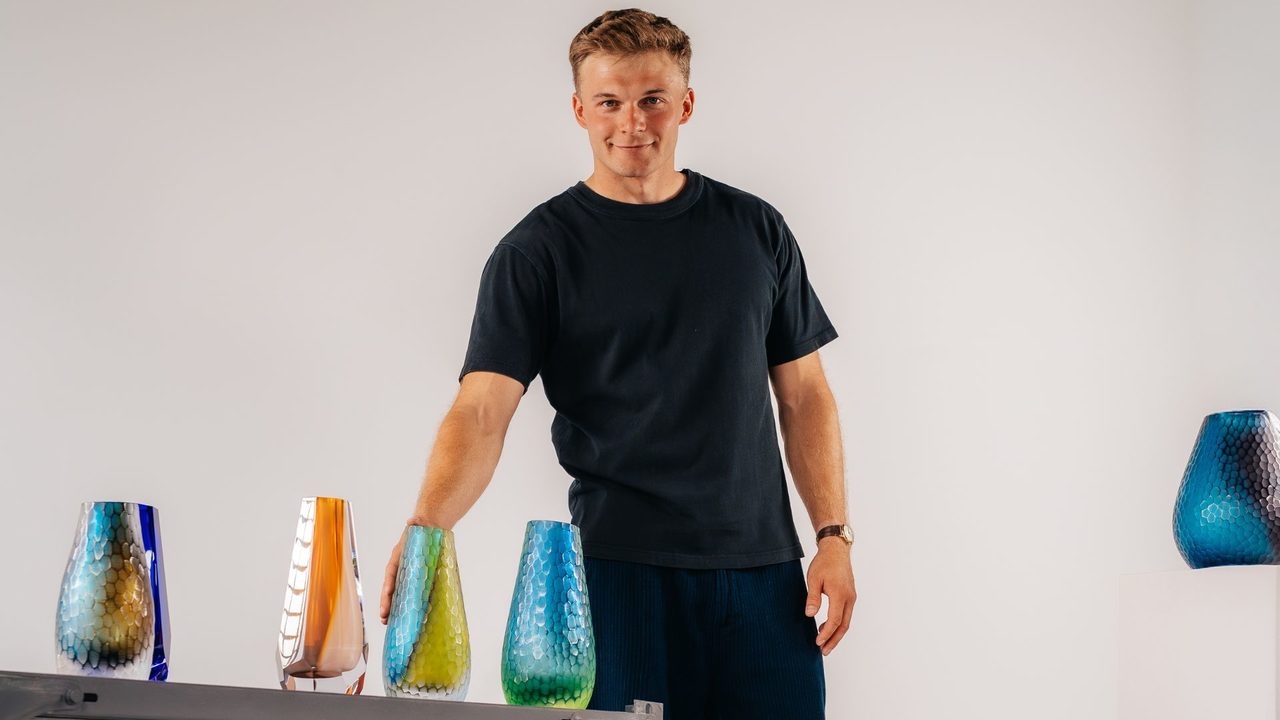
Richard Ramiš quit his office career at a logistics company to devote himself entirely to his own handmade glass brand, Shardart. Today his thick-walled, faceted vases sell in the Prague galleries Glassimo and Artisème, as well as in Trondheim, Norway, with some pieces fetching tens of thousands of crowns.
Ramiš comes from Nový Bor, a town he calls “the heart of Czech glassmaking.” He is not a trained glassblower, though — he stumbled into the craft through a summer job in the workshop of renowned glassblower Vladimír Žila, who made trophies for the Golden Spike athletics meet and worked with clients from abroad. It was there that Ramiš first saw how much respect foreign buyers had for Czech glass.
The idea for his own production line was born while he was studying innovation management at Prague’s Czech Technical University (ČVUT) — for his thesis project he wanted to create glass objects, which were originally meant to be shoes. Together with his childhood friend, glass grinder Filip Lukavec, he priced out the project, but costs running into the tens of thousands of crowns and the university’s refusal to grant funding put the idea on hold.
The plan was revived by another university friend, Petr Musil, who suggested they set up their own company. That is how Shardart was born — the name combines the English words shard and art. The two friends made their first batch of vases with their student savings, then carried samples in suitcases to a six-month Erasmus exchange in Trento, Italy, where they went from gallery to gallery and design shop to design shop — and found their first buyers.
For a long time the business remained just a side project: after graduating, Ramiš took a job in a corporate sales department for air freight. But within a year he realized that the standardized office routine was stifling his creativity and causing constant stress. He quit, moved to part-time work at a designer planter manufacturer, and freed up time to grow his own brand.
For the past year Ramiš has run Shardart almost full-time — though of the original team of three friends, he is now the only one left. Each vase takes five to ten hours of hand-grinding, while large custom pieces take dozens of hours of work, which is what drives their high price.