Robert Chvátal: how Allwyn’s CEO made Czech Sazka a global giant
USD 21,65
Popular
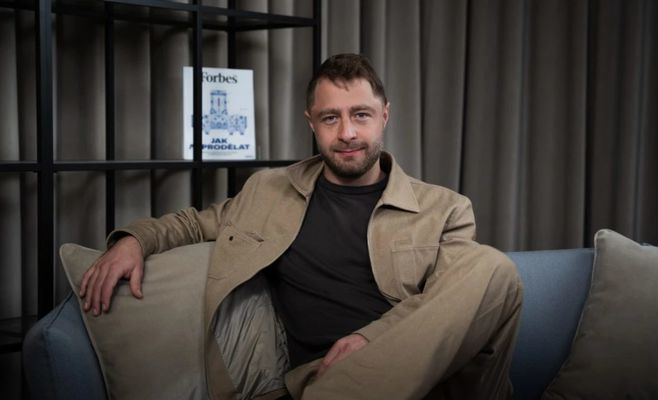
Robert Chvátal, CEO of the Allwyn group, explained how the former Czech national lottery company Sazka transformed in just a few years into one of the world’s largest players in the gambling industry — with operations spanning Greece, the United Kingdom and the United States, a partnership with Formula 1, and talks with Google and Meta.
The occasion for the conversation was an interview in the Forbes Misfits Talk series, held at the Karlovy Vary International Film Festival. Chvátal heads Allwyn, a company most Czechs still associate chiefly with Sazka. Today, however, the Czech market accounts for only around six percent of the group’s entire business.
This January marked a symbolic change: after seventy years, Sazka was renamed Allwyn. From a former national lottery company it had grown into one of the world’s biggest players in the gambling industry, and that, says Chvátal, is exactly why the time was right for a rebrand. “Allwyn is a Czech brand with international potential,” he says. This year the company became the main consumer-facing sponsor of the Karlovy Vary festival for the first time.
Although Czechia today holds only a modest share of the group’s overall business, Chvátal does not see the company’s Czech origins as something to hide. Quite the opposite. In the past, he says, Czech companies often ran into distrust when entering Western markets, but the situation is different today. “We should act as if, in 2026, this simply isn’t an issue anymore. Because what Eastern Europe was before 1989 and what Czechia is in 2026 are two completely different stories,” he says.
One brand instead of dozens of local names
The rebrand is part of a far broader strategy. The group used to operate as a collection of strong local companies; now it is building a single brand recognised internationally. Its own technology plays an equally important role. “We’re moving in that direction. It will be about one brand rather than a family of brands, and about technology that we need to own and develop ourselves,” Chvátal explains.
That, he says, does not mean headquarters will run everything from Lucerne, Prague or London. In most acquisitions the founders stay on in leadership, and Allwyn gives them considerable autonomy. “In many of our companies the founders stay on. We let them keep developing what they’re good at. Allwyn acts more as an overseer, sharing the group’s knowledge, than as a micromanager,” he says.
Individual countries continue to make their own decisions on product and customer relations. What the group builds together, however, is technology, the brand, and negotiations with global digital platforms such as Google and Meta. This, in Chvátal’s view, is exactly where the strength of an international group shows — something none of the individual companies could ever achieve alone.
Formula 1 as a ticket to the big leagues
One of the most visible steps in the new strategy was the partnership with the prestigious Formula 1 series and the McLaren team. According to Chvátal, this is not a marketing gimmick but a deliberate investment in building a global brand. “The fact that the Allwyn group can afford to activate a partnership with McLaren and F1, and do so professionally, matters a great deal — it proves we’re serious about building an international brand,” he says.
The reason is simple: Formula 1 today is one of the most popular sports platforms in the world, with roughly 750 million fans, about 1.3 million of them in Czechia, and tens of millions of social media followers. Few sporting events offer that kind of global reach.
The partnership is not limited to a logo on the car. “Building brand awareness isn’t enough. You need to fill it with something that means something to people, and then be able to monetise it. That’s always the hardest part,” Chvátal notes. Beyond Formula 1, the group also supports cultural projects, such as the Future Frames programme at the Karlovy Vary festival, and does not rule out new international partnerships in the future.
What a family business teaches you
Before joining Allwyn thirteen years ago, Chvátal spent much of his career at Deutsche Telekom. He considers comparing a large corporation with a company controlled by Karel Komárek one of the most important professional experiences of his career.