Slavomír Beňa on why Czechia punishes failure and his J&T move
USD 21,62
Popular
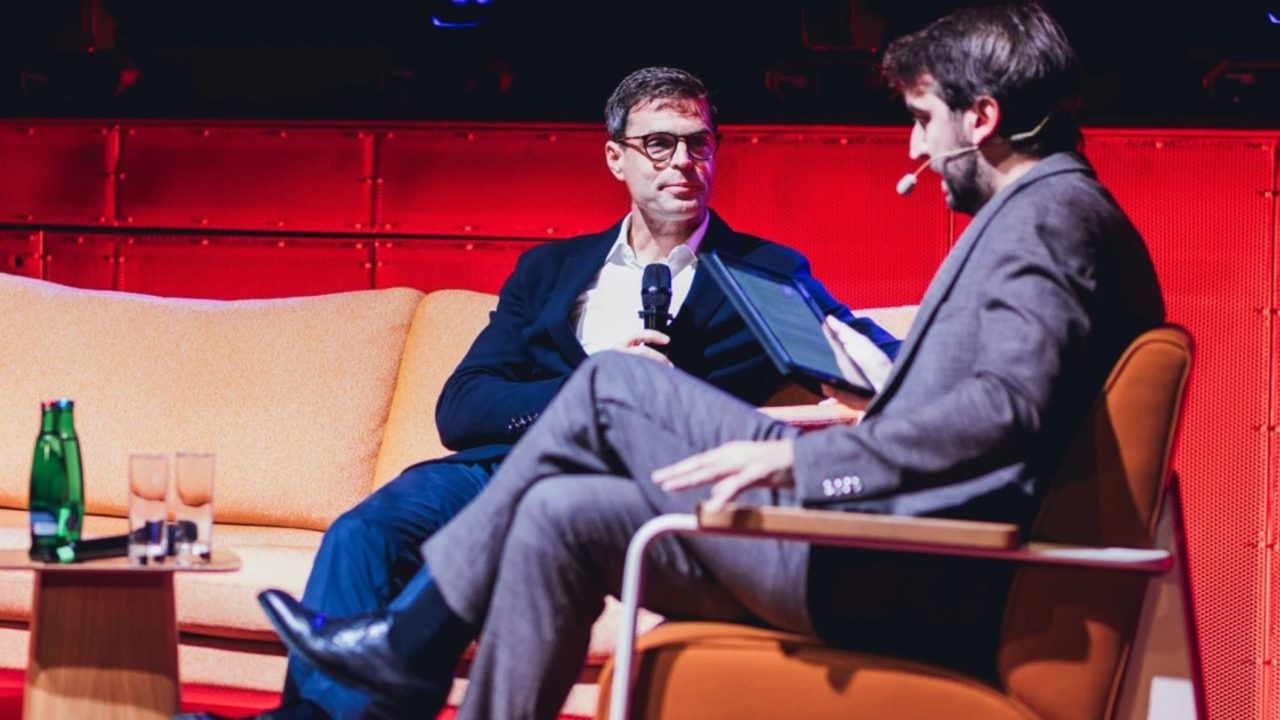
Slavomír Beňa, who headed UniCredit’s Czech and Slovak markets, voluntarily left a large international group for J&T Banka. At the Forbes “Lepší Česko” conference, he explained why he swapped a “sure thing” for an entrepreneurial mission and what he believes the Czech economy is missing.
Beňa left at the peak: from Prague he ran two markets, and he calls 2025 the best year in the bank’s history and the strongest of his own career. “I was doing well there, no point hiding it. I ran a big bank, could lean on the balance sheet of a large European group and do big deals. But it was already a bit of a sure thing. When I looked five years ahead, I knew exactly where that bank would be,” he admits.
The J&T offer attracted him with the chance to build something of his own. According to him, J&T Banka not only lends to entrepreneurs but is much closer to their businesses, often stepping into complex transformation situations where an ordinary commercial bank finds it harder to help. He points out that Czechia is the only large Central European market without a dominant bank with domestic capital. Beňa’s goal is to turn J&T Banka into a top-class asset manager and, at the same time, a merchant bank for entrepreneurs whose scale will reach beyond Czechia. “It is more of an entrepreneurial mission. And in it I still want to fulfil my dreams.”
Here, failure is still punished
Beňa compares several European markets at once: he worked in Austria for eight years and has experience in the Balkans, and then in Czechia and Slovakia. In the Czech environment he finds qualities to build on: hard work, discipline, pragmatism and a healthy distrust of authority. He also considers the country’s financial shape relatively good: despite the disputes over public finances, Czech debt remains manageable by European and global comparison, and household balance sheets are strong.
He sees a far larger reserve in the willingness to take risks. “In the US, if you fail, at least they give you credit for trying. Here you fail once, twice, and the third time you are written off,” says Beňa. In his view, Czechia has no shortage of capable entrepreneurs: many are already expanding abroad and buying companies and assets, and J&T Banka accompanies those deals. But he would like to see a wider circle of people willing to leave their comfort zone. “It all starts with ambition,” he stresses.
The state will not “deregulate” us into a bright future
The desire to do business, in Beňa’s view, will not appear from a single law or a new subsidy programme. He considers an efficient state that handles the basic tasks necessary, but he criticises the European habit of waiting for an impulse toward prosperity from above. “We often look at the state and expect it to somehow deregulate us into brighter tomorrows. But the foundation of a society’s development, in my view, is the initiative of the individual.”
Entrepreneurs themselves, he believes, should take a stronger position in Czech society: they create jobs, and many of the most successful are involved in education, culture and philanthropy. “We should value entrepreneurs. They create opportunities for others, and many of them give a lot back to society. We need to create good conditions for them and wish them success.”
We no longer compete only with Germany
With the arrival of artificial intelligence, Beňa says, looking beyond Europe is becoming more important. The technology could fundamentally change the economy and everyday life within a few years, and Europe is entering this phase without dominant AI models of its own. By his logic, measuring ourselves only against Germany or Austria is no longer enough.