8 Castles Near Prague: Where to Go for a Day Trip from the Czech Capital
USD 21,69
Popular
Czechia is rightly called the land of a thousand castles, most within easy reach of Prague for a day trip by train, bus or car. This guide is for those who've already seen Prague Castle and Charles Bridge and want to explore Gothic towers, Baroque interiors and royal treasuries beyond the capital. We've put together the most famous and easily accessible castles — from the hugely popular Karlštejn to the less touristy Křivoklát.
Karlštejn (Karlštejn)
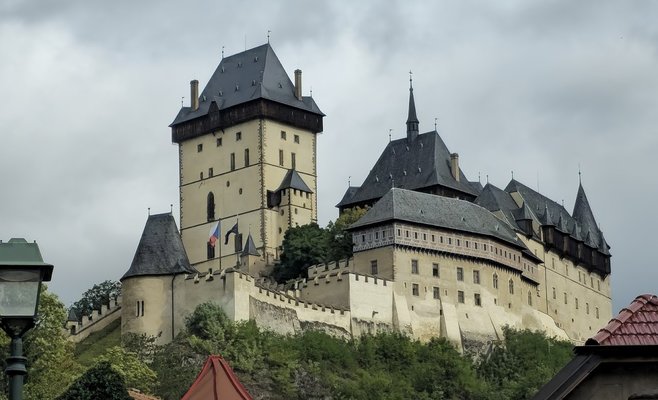
The most famous castle in Czechia sits about 30 km from Prague, reachable by train from Hlavní nádraží (Main Train Station) or Praha-Smíchov — the castle stands on a hilltop (72 meters), on limestone cliff terraces above the Berounka river. The journey takes around 40 minutes, and from the station it's another roughly 2.5 km uphill on foot to the entrance. The castle was founded in 1348 as a summer residence for Holy Roman Emperor and King of Bohemia Charles IV. Entry is guided-only: the tour of the emperor's private chambers costs from 190 Kč (full ticket), the route to the Chapel of the Holy Cross from 500 Kč, and climbing the Great Tower's viewing platform from 150 Kč. Keep in mind that guided-only entry is the rule at all Czech castles.
Konopiště (Konopiště)
This castle is located near the town of Benešov, about 45 km from Prague — take a train from Hlavní nádraží to Benešov station, then continue on foot or by bus. Konopiště Castle is known as the last residence of Archduke Franz Ferdinand of Austria, whose assassination in Sarajevo triggered the outbreak of World War I — the bullet fired by Gavrilo Princip is now on display in the castle museum. Inside you'll find an impressive collection of weapons and hunting trophies: tours run along three different routes — the south wing halls and hunting corridor (50–55 minutes), the north wing plus armory and library (55–60 minutes), and the private chambers of the archduke and his family (60–70 minutes). The castle is open from April 1 to October 30, closed Mondays, and in November open only on Saturdays and Sundays. Surrounding it is a vast park with a rose garden, free to stroll through.
Křivoklát (Křivoklát)
One of the oldest castles in Czechia sits about 40–50 km from Prague in a forest above the Berounka river. Built in the 13th century as a stronghold of the Přemyslid dynasty, it long served as a royal residence. Getting there independently is a bit trickier — take a train with a transfer in Beroun: trains from the Main Train Station run to Beroun, where you switch to a local train to the village of Křivoklát, followed by a 20-minute walk. This spot is great for those who've already seen the popular castles and want something less touristy — there are noticeably fewer guided groups here.
Hluboká nad Vltavou (Hluboká nad Vltavou)
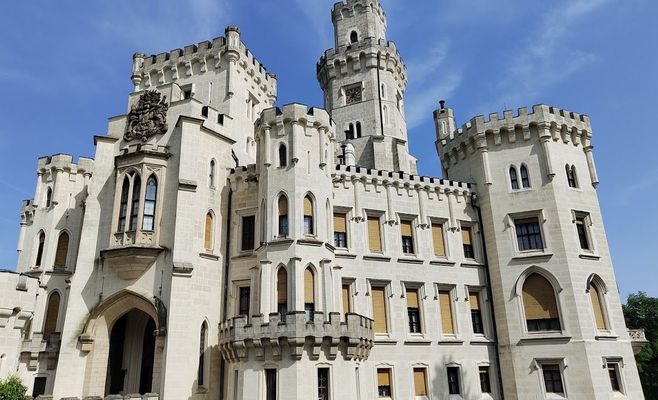
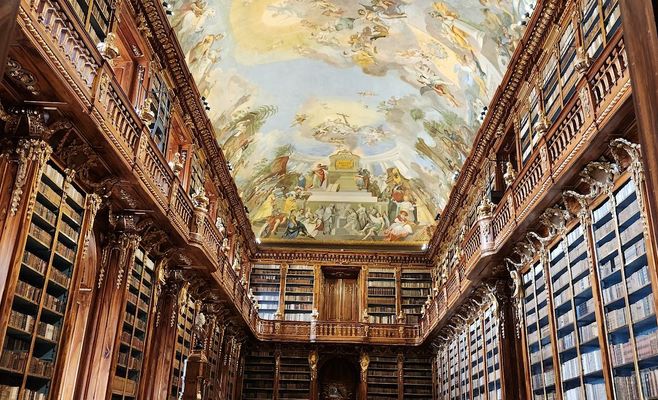
This snow-white neo-Gothic castle, reminiscent of England's Windsor Castle, is located in South Bohemia, 140+ km from Prague — the trip takes about 2.5–3 hours with a transfer in České Budějovice. Hluboká Castle is considered one of the most beautiful in Czechia, perched on a bluff above the Vltava river near České Budějovice, and is a national cultural monument. The castle complex has 140 rooms, a dining hall seating 72, the owners' bedroom, and a library of 12,000 books. Due to the distance, many travelers combine the trip with a visit to Český Krumlov — plan for a full day.
Český Šternberk (Český Šternberk)
This 13th-century Gothic castle stands on a cliff above the Sázava river about 60 km from Prague. Built in the mid-13th century in Gothic style, it's named after the Šternberk family, whose coat of arms adorns its facade. Trains depart every half hour from Hlavní nádraží (Main Train Station), passing through the village that shares the castle's name, making it a quick trip with no transfers. The castle is still owned by descendants of the ancient family, and tours are sometimes led by a family member in person.
Mělník (Mělník)
This Renaissance castle 30–35 km from Prague sits on a hill at the confluence of the Vltava and Labe (Elbe) rivers — the views here are among the finest in Central Bohemia. Just 35 km from Prague, the wonderful Mělník Castle offers a Renaissance-style medieval experience, and besides touring the interiors, visitors can explore the wine cellar and taste local Mělník wines, with vineyards stretching almost right up to the castle walls. It's a great choice for those wanting to combine castle architecture with Czech (or rather, local) winemaking — a rarity in a country famous mainly for beer.
Prague Castle (Pražský hrad) — For a Contrast "at Home"
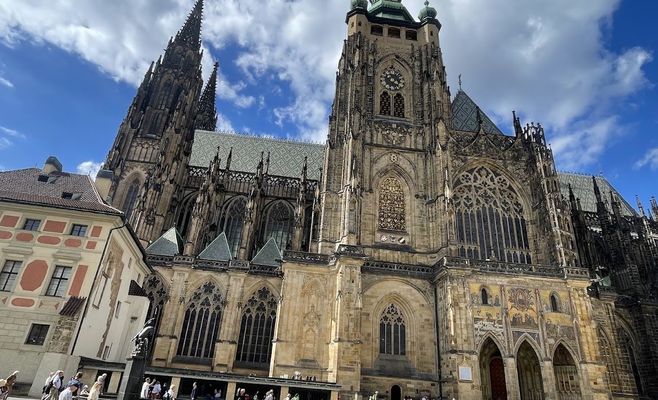
If a day trip out of the city isn't in the cards, remember that Prague itself, in the Hradčany district, is home to the largest castle complex in the world. Prague Castle is a historic complex of palaces and castles in the Hradčany district, one of Prague's most important landmarks, covering over 7 hectares and rightly considered the largest castle or fortress complex in the world. It's a convenient "starting point" — many day trips to countryside castles begin right from the Hradčany area or the nearby Hlavní nádraží.
Troja (Trojský zámek)
This summer palace in Prague's Troja district is an option for those who want a castle atmosphere without leaving the city. Troja Chateau is a country residence of the aristocratic Šternberk family, one of Prague's most beautiful castles, built in the 17th century for Count Václav Šternberk, who wanted a property resembling the greenery-draped villas of Rome. It's located right next to the Prague Zoo and Botanical Garden, so it's easy to combine several spots in one day's outing.
Točník and Žebrák (For Ruin Enthusiasts)
Near Křivoklát and Beroun lie a pair of lesser-known but atmospheric ruined hilltop fortresses — often recommended as a combined route with Křivoklát for those who enjoy hiking through the forested Český kras region. This part of the region is appealing because it's also near the Český kras nature reserve with its famous quarries: you can visit two quarries — Velká Amerika and Mexiko — walk through the forests and fields of the Český kras reserve, and see Karlštejn, making this a full, packed day out in Central Bohemia.
Each of these castles has its own charm: Karlštejn is perfect for the most postcard-perfect image of Czechia, Konopiště appeals to history lovers drawn to tragic stories, Hluboká to fans of romantic architecture, and Křivoklát and Český Šternberk suit those tired of tourist crowds. When planning your trip, always check the current opening hours on the castles' official websites — many are closed on Mondays and run reduced schedules during the off-season.