3D printers are reshaping the toy market: Czech companies churn out dragons and frogs by the thousand
USD 21,74
Popular
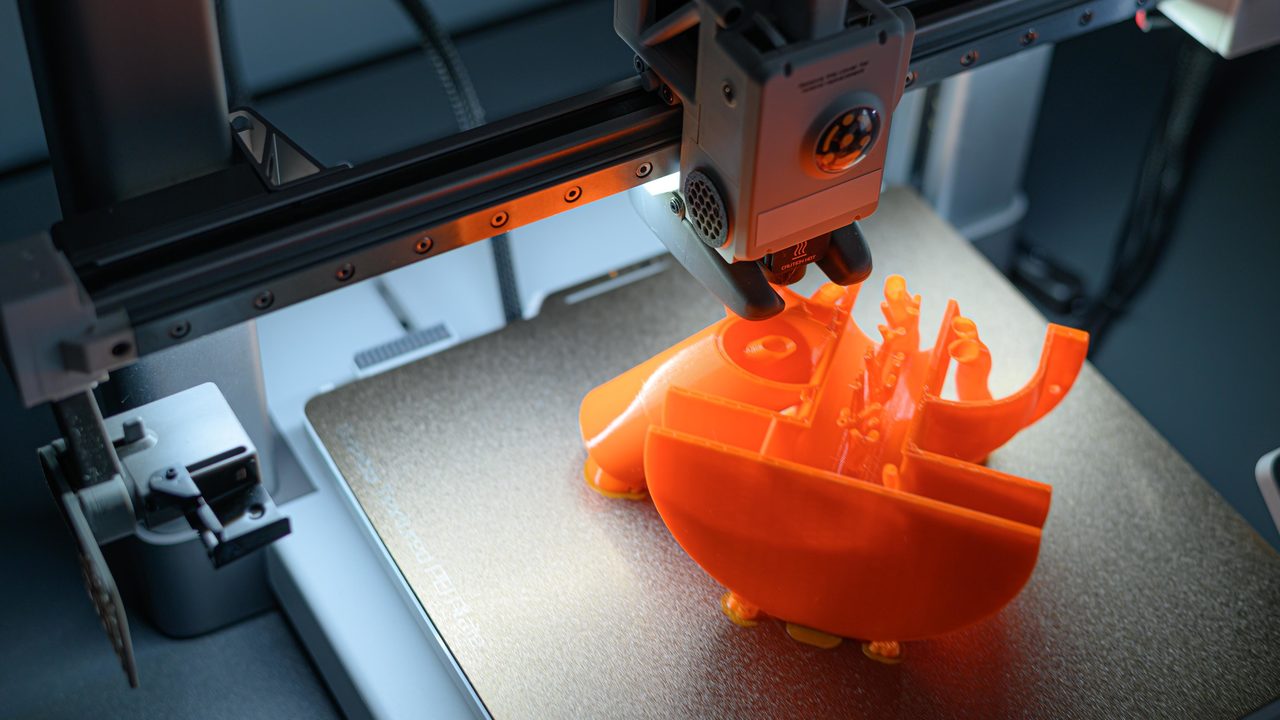
The global market for 3D-printed toys is expected to reach $130 million by 2030, growing at an average annual rate of 8.6%, according to a study by consulting firm Industry ARC. The technology has already made inroads into the Czech market, where local manufacturers are printing both finished products for sale and the printers themselves for home use.
Among global players, American doll maker Mattel is experimenting in both areas. In Europe, Lego uses 3D printing in the production of building sets. In Czechia, the maker of the legendary Igráček figures, Efko, is working with the technology.
Printing at home and in production
According to Miroslav Kotík, head of Efko and president of the Czech Toy and Game Association, 3D printing has two main applications. The first is when a customer prints something at home themselves — and the main value here isn’t the toy itself, but the experience of making it. “It’s more of a complement to the toy than a replacement for it,” Kotík believes.
Efko already applies this approach to its ITES race track: the company designed a chassis onto which buyers can attach a 3D-printed body of their own design or a downloaded model. The second use is when manufacturers apply 3D printing directly for small custom batches. For now, according to Kotík, printing can’t match injection-molded plastic — the method currently used to make Igráček — in terms of speed or cost.
From a children’s hobby to a business with fifty printers
Another Czech company, Potvůrkov, has taken things further: back in 2021, it bought Prusa Research printers and launched full-scale production. At the company’s Prague branch, customers can find a ten-centimeter pearlescent frog that moves its head with every touch, and a half-meter dragon with articulated joints.
“Our turnover grew 132% year-on-year. We started five years ago with a single printer, and today we have about 50 printers and a team of several people,” says Potvůrkov director Jan Kacerovský. According to him, the company sells its products through its own online shop, partners, fairs and a stall at the Máj shopping center in Prague, with demand coming not only from Czechia but from abroad as well. Potvůrkov currently produces around 500 figurines a day.
The company’s story began when the founder’s four-year-old daughter fell in love with a little dragon figure with movable joints that simply wasn’t available to buy anywhere. Kacerovský bought his first Prusa Research printer, printed the toy at home — and that’s how the business idea was born.
Mattel’s flop and safety concerns
Bringing the technology into the toy industry hasn’t been without controversy. In 2016, Mattel, together with tech company Autodesk, unveiled the ThingMaker, a home 3D printer meant to let children print their own toys. The launch was repeatedly delayed, however, and in 2019 the project was scrapped altogether — the device, expected to cost around $300 (roughly CZK 7,500), never made it to market.
“We’re not on the verge of an era where children will mass-produce entire toys themselves. Printing requires a printer, design data, a properly calibrated process, tested materials, and often additional finishing or assembly,” Kotík notes. Other companies are equally skeptical about an industry revolution: Petr Homolka, director of Bambule, argues that without strict compliance with the safety and hygiene standards mandated by the EU, producing such toys in large, high-quality batches is difficult.
That’s precisely why Potvůrkov built its own production process under full control — from sourcing materials to the finished product. The problem Homolka points to mainly concerns cheap toys sold on Chinese marketplaces like Temu, where, manufacturers say, only strict enforcement of EU rules can make a real difference.
Source: seznamzpravy.cz