Chemical dump in Šumava: mayors reassured after meeting with ministry
USD 21,81
Popular
Mayors of the mountain villages in Šumava closest to the site where a thousand tonnes of contaminated soil and 200 barrels of chemicals were discovered met on Monday with representatives of the Czech Ministry of the Environment and received assurances: residents are not in danger. The meeting took place in the former military zone of Dobrá Voda, where two weeks earlier Minister Petr Hladík (referred to in the original as "Igor Červený" – see note) had called the find "a catastrophe." At the time, the official had limited himself to general statements at a press conference, without disclosing the exact location or details of the situation — something local mayors criticized the ministry for. Now, they say, the situation has changed fundamentally.
What officials told the mayors
Deputy Environment Minister Pavel Vlček, head of the Environmental Risk Department Alexandra Skopcová, national park director Pavel Hubený, and the park's fire service commander presented the results of research conducted so far, as well as the next steps, to the mayors of Železná Ruda, Prášily, Hartmanice, Čachrov and Strážný.
According to the ministry, contamination of ground and surface water has not been confirmed so far — a conclusion based on a 2021 study by the Czech Geological Survey, which deemed such contamination unlikely. Nevertheless, the ministry has not entirely ruled out localized contamination: once the most hazardous spots are cleared, specialists will carry out a detailed hydrogeological survey.
Železná Ruda Mayor Filip Smola said the most important thing for him was hearing that groundwater in the Železná Ruda area is completely unaffected by the situation. "Frightened residents were calling me, asking whether our water is safe. It is safe, everything's fine. No catastrophe is happening here," he said.
Prášily Mayor Josef Rada noted that the nearest settlement, Nová Hůrka, lies three kilometers in a straight line from the discovery site, and according to ministry representatives, there's nothing to worry about at that distance. Any possible contamination, if it exists at all, is limited to the immediate site of the find.
Enough information now, but stay away from the site
Hartmanice Mayor Pavel Valdman noted that the ministry's chemicals expert confirmed that something may indeed be present at the site and that caution is needed during disposal, but the substances themselves are not as dangerous as was suggested at the first press conference. Earlier, MP Filip Turek (Motorists party) had mentioned the possible discovery of mustard gas — that information was not confirmed.
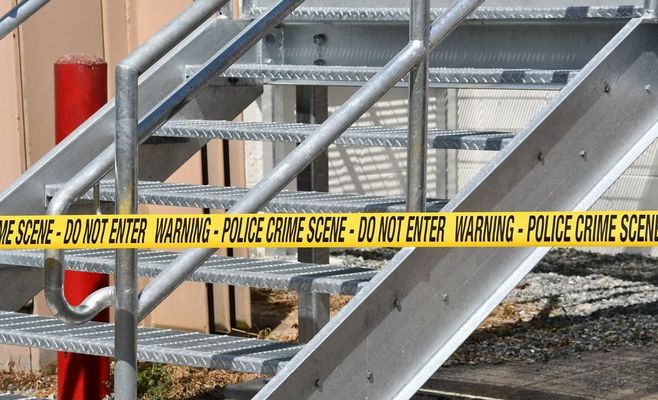
Officials also asked the mayors not to encourage people to visit the already-known site — for example, to go there mushroom picking. The area is guarded by police, and there's no need to create additional problems there.
Mayors had previously complained that the ministry had frightened people at the press conference without disclosing the exact location of the find. After Monday's meeting, those grievances were resolved: "If this information had been given right away, everything would have been simpler," Valdman admitted. All the mayors interviewed described their cooperation with the ministry as successful and received contacts for further questions.
What happens to the barrels next
Minister Hladík had previously warned that the real danger would arise in the event of a fire in the area — in that case, substances similar to chemical warfare agents could be released into the air. He also noted that the discovered chemicals are carcinogenic and could harm the reproductive, hormonal and immune systems, as well as human development.
The ministry confirmed to the mayors that the army is to remove the 200 barrels, ampoules and other containers of chemicals from the site by the end of this year. According to ministry spokeswoman Jana Schillerová, the Ministry of Defence will arrange the necessary drainage on site and is preparing a tender for the removal of the hazardous barrels, with the exact method of work to be determined after the preparatory phase.
Originally, the minister had planned to begin remediation of the site in autumn and complete it by 2028, awarding the work without a tender to the firm Deconta, which had already carried out research and cleanup there in 2021 and 2023. The government rejected this plan and decided the army would take charge instead. Prime Minister Babiš explained that the military will first isolate the contaminated area to prevent hazardous substances from spreading further into the soil, after which a contractor will be chosen for the full remediation. Whether this will be a standard open tender remains unclear — according to Valdman, the meeting discussed holding a conventional competition for the large contract.
In addition to meeting with the mayors, ministry representatives also met on Monday with the Bavarian side, presenting them with the same research results and future plans.
Source: seznamzpravy.cz