Bokouš near Kuks: a vanished Czech village of carved trees
USD 21,83
Popular
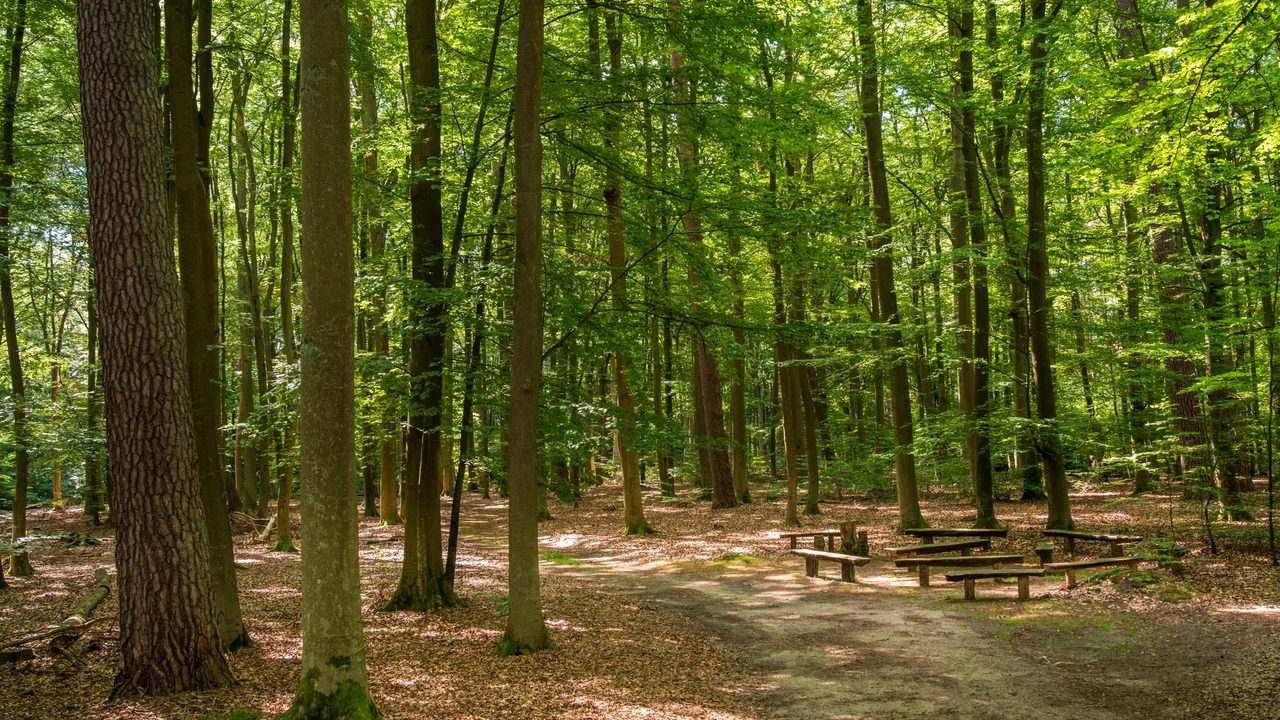
The former forest village of Bokouš, not far from Velká Bukovina in East Bohemia, was once considered a “neighbour” of the famous Kuks: Count Franz Anton Špork set up a hunting settlement here, and in the 1730s biblical heroes, saints and ancient sages were carved into its living beech trees. Today all that is left of the village is a chapel, a cross and a single house.
Count Špork’s hunting pastime
Count Špork founded the settlement, first called Buschhäuser and later Bokausch, for hunting on the eastern edge of his estates; he often rode out here from his residence in Kuks. Some sources, however, date the first mention of Bokouš to 1476, and what stood on this spot before the count is unknown today. Official records speak of a deserted village called Bukovsko, but it is possible that the name referred only to the local forest.
In 1724 the valley with the spring of the Virgin Mary was named Hubert’s Valley, because the count particularly revered Saint Hubert. People did not only hunt here but also trapped birds: at the bird-catching grounds in Kocbeře and Bokouš, 2,167 birds were caught in 1707 and 5,700 in 1708. In 1721 two new houses, a cellar and a kitchen were built, and a kennel, a small kitchen and a cellar appeared by the spring. Ten years later the sculptor Matthias Bernard Braun erected a statue of the Virgin Mary here for 140 gold coins; most sources consider it the same one that was moved to Velká Bukovina in 1742 and is now attributed to Jan Pacák.
Saints that grew on trees
Bokouš became famous as the carved “double” of Kuks. Two crossing beech avenues ran around the hunting lodge, dividing the forest into regular shapes, and in 1731–1732 the painter and carver Andreas Schübler cut biblical figures, statues of saints and ancient sages into the living trees: prophets, evangelists, apostles, Judas hanged from a tree, the Holy Family, Saint Mary Magdalene, monks, hermits and the seven Greek sages. One tree even bore a Way of the Cross in seven spiral bands and a sorcerer with an inscription in which the word Fagvs, the Latin name for beech, concealed an acrostic of the count’s name.
The carvings suffered most during the military campaigns of the 18th century, especially in 1778. But not every soldier was ruthless: according to the local historian J. Kropáček, the famous pandur leader Baron Trenck, marching through here during the Prussian war, did not allow even a twig to be broken off the trees. By 1836 the figures had become very indistinct, and in 1906 the figure of a monk could still be made out on one tree above Kopaniny. This is the place where, in the words of the original, “saints grew on trees”, and it is mentioned in the works of Pavel Albieri, František Josef Čečetka, Antonín Schulz and Josef Svátek.
How the village emptied
In the early 19th century there was still a manorial sheepfold here. In 1843 33 people lived in four houses, mostly forest workers and servants; wooden houses were gradually replaced by stone ones. In 1849 Bokouš became part of the municipality of Velká Bukovina. In 1869 47 people lived in four houses, in 1880 there were five houses with 23 Germans and one Czech, and in 1900 there were 26 residents in five houses. From 1 January 1905 the settlement belonged to the post office in Horní Vlčkovice.
After Czechoslovakia was founded, some of the German-speaking residents felt like second-class citizens, which led to disputes with their Czech neighbours and the authorities. In 1930 the number of houses stayed the same, while the population was three lower. From 1938 to 1945 Bokouš was part of the Greater German Reich. After the postwar expulsion of the Germans the village stood empty, and none of the Czech settlers wanted to live in this backwater. Bokouš became merely a water source for the Velká Bukovina water supply: electricity arrived in December 1950, and in spring 1951 the old hydraulic ram was replaced by an electric pump. In 1961 Bokouš was merged with Velká Bukovina into Chvalkovice, and from 1 January 1974 it formally disappeared as part of the municipality, although in practice it had long ceased to exist.
What you can see today
On the site of the former village, once a scout camp of the Junák organisation from Český Skalice, stand a stone chapel from 1932, a cast-iron cross on a stone base from 1717, and house no. 501, which by its numbering belongs to Kopaniny. The coordinates of the place are 50.421, 15.937. Bokouš is also recalled in books, notably Antonín Schulz’s “Resurrection” and František Josef Čečetka’s “Petr Brandl”.
Around Prague, based on reporting by turistika.cz