Science & Space By

Betelgeuse May Swallow a Hidden Companion Star and Outshine Venus, Study Suggests
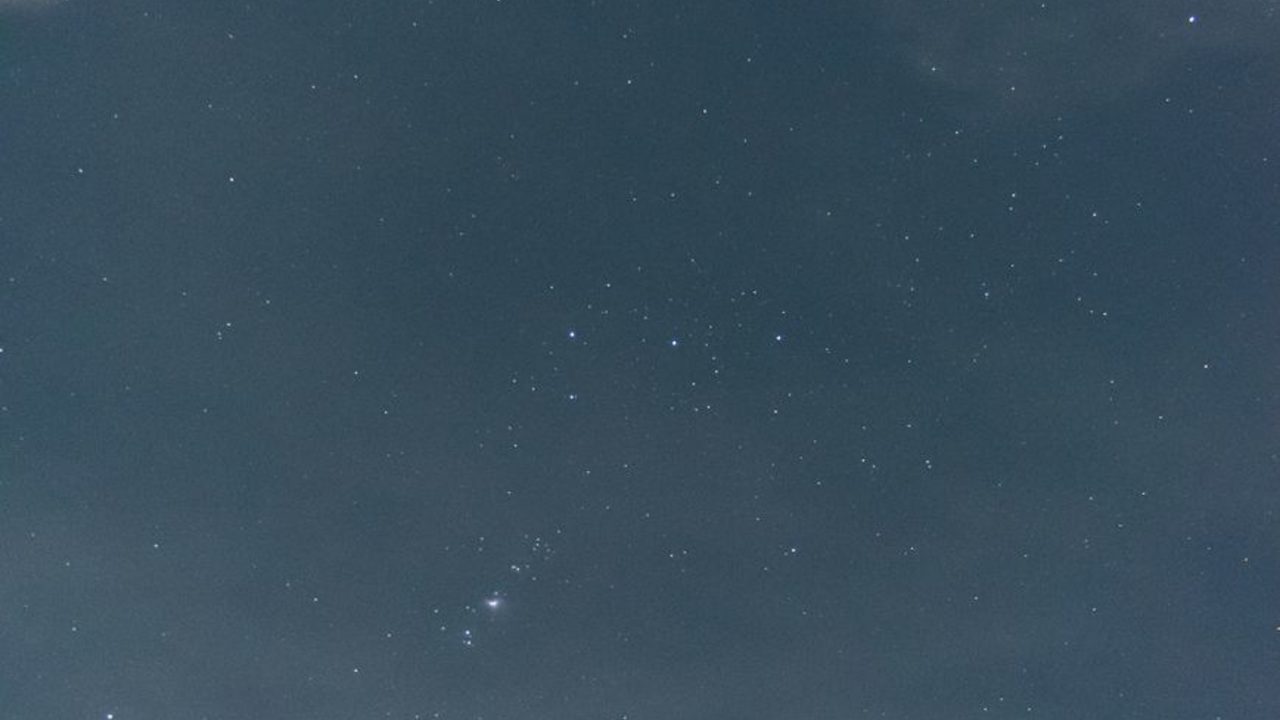
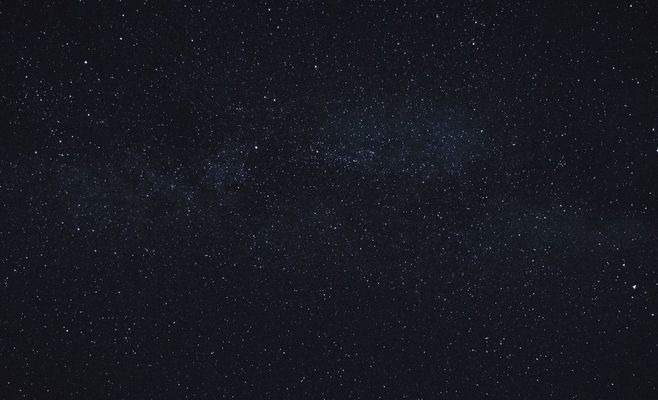
Betelgeuse, the red supergiant at the shoulder of the Orion constellation, may put on a spectacular show long before it explodes. According to Scientific American, a new preprint study suggests the star will swallow a recently revealed companion and erupt, shining brighter than Venus.

The authors say the outburst would likely come within the next 10,000 years. Because the work is a preprint, it has not yet been through peer review.

What the simulations show

Betelgeuse is the 10th-brightest star as seen from Earth, and observers have watched it for millennia, some noting a shift from yellow to red. It is expected to end as a supernova someday. The new study looks at a step before that.

Researchers led by Naunet Leonhardes-Barboza, a graduate student at the University of California, Santa Cruz, modeled how the system could evolve. In their simulations, the companion star spirals inward and is torn apart once Betelgeuse engulfs it. The team tested three possible masses for the companion, from 0.7 to two times the mass of the Sun.

Every case produced what astronomers call a luminous red nova. The heavier the companion, the more energetic and luminous the outburst. According to Leonhardes-Barboza, the eruption could be 1.5 to three times brighter than Venus as seen from Earth, which could make Betelgeuse visible even in daytime.

How the companion came to light

Astronomers have recently found signs that Betelgeuse has a hidden companion, with some of the strongest evidence appearing this summer. The idea raised a new question, Leonhardes-Barboza said: whether the end stages of the star's life would look different and whether the two stars would merge.

Betelgeuse already drew attention in 2019 during the 'Great Dimming,' when it faded and seemed ready to explode. Astronomers found that dust formed from material the star had ejected was blocking its light.

What it would look like

Leonhardes-Barboza compared the experience with that of 16th-century stargazers who marveled at a supernova, famously noted by astronomer Tycho Brahe, that stayed bright for 16 months. The Betelgeuse brightening would be shorter. It would last only a couple of days.

Jared Goldberg, an astrophysicist at the Flatiron Institute's Center for Computational Astrophysics who was not part of the study, called it something that would be incredible to behold for future generations.

Why it matters

Nobody alive will see this event, but the prediction is useful to astronomers now. Goldberg said more distant red supergiants may only be detected when they brighten in a similar way. Linking a predicted type of outburst to a merger helps astronomers calibrate their searches for such events, giving observers a roadmap for where to point telescopes and sift through data.

Leonhardes-Barboza said the lead-up is also valuable in its own right. Scientists have a lot of data on Betelgeuse's current state and can follow the system until the stellar merger, which she said is not possible for any other star.

The result rests on simulations and a preprint, so the timing and brightness could change as the work is reviewed and as observations of the companion improve.

Around Prague, based on reporting by Scientific American
Share: Telegram WhatsApp

More science news

Drones Built to Fly Into Volcanic Plumes Could Test Sun-Dimming Ideas
A team of scientists in Wales has completed its first successful test flights of a high-altitude drone designed to fly into a volcanic plume, Scientific American reported. The long-term hope is to rea
Black Hole Winds Are Shutting Down Star Birth in Massive Galaxies, Webb Finds
NASA’s James Webb Space Telescope has found a link between powerful gas outflows from the cores of massive galaxies and the rapid shutdown of star formation, according to a new paper in the journal As
A Cloud of Herring Sperm About 4 Miles Long Glowed Green in Satellite Photo
A satellite has photographed a giant underwater cloud of herring sperm that appears to glow green off the coast of Vancouver Island in British Columbia, Live Science reported. The plume stretched abou
How Ringing Black Hole Mergers Are Putting Einstein's Gravity Theory to the Test
When two black holes collide and merge, the newly formed black hole rings for a moment like a struck bell. A study published in Classical and Quantum Gravity says that ringing, observed in hundreds of
Astronaut Photo Shows Lightning, Fishing Fleets and Singapore Glowing From Orbit
One night-time photograph from the International Space Station packs lightning, a glowing city and a fleet of fishing boats into a single frame. According to NASA's Earth Observatory, an astronaut too
Hackers Hijacked a Website Testing Tool to Hit Visitors of HSBC, BBC and CNN
An attacker used a website testing tool from Optimizely to push malicious code to visitors of sites run by at least 178 organizations, including Zoom, HSBC, the BBC, Fox News and CNN, according to the

Related news

A team of scientists in Wales has completed its first successful test flights of a high-altitude drone designed to fly into a volcanic plume, Scientific American reported. The long-term hope is to reach the plume of an eruption big enough t
NASA’s James Webb Space Telescope has found a link between powerful gas outflows from the cores of massive galaxies and the rapid shutdown of star formation, according to a new paper in the journal Astrophysics and Space Science, as reporte
A satellite has photographed a giant underwater cloud of herring sperm that appears to glow green off the coast of Vancouver Island in British Columbia, Live Science reported. The plume stretched about 4 miles (7 km) from end to end and was
When two black holes collide and merge, the newly formed black hole rings for a moment like a struck bell. A study published in Classical and Quantum Gravity says that ringing, observed in hundreds of mergers, matches what Albert Einstein's
One night-time photograph from the International Space Station packs lightning, a glowing city and a fleet of fishing boats into a single frame. According to NASA's Earth Observatory, an astronaut took the image with a Nikon Z9 camera as th
An attacker used a website testing tool from Optimizely to push malicious code to visitors of sites run by at least 178 organizations, including Zoom, HSBC, the BBC, Fox News and CNN, according to the cybersecurity firm Report URI, as repor
One of the rarest coins in U.S. history, an 1885 silver trade dollar, is scheduled to go up for auction this week and could sell for more than $2 million, according to Popular Science. Only five of the coins are known to exist, and how they
Astronomers have spotted a new exploding star in NGC 1433, a spiral galaxy about 50 million light years away, according to Universe Today. That is relatively close for a supernova, and because it was caught early, researchers have a chance
NASA’s Perseverance rover has found a cluster of unusually bright rocks on Mars that are rich in hydrated silica, a mineral that can form in watery environments and can preserve tiny fossils. Candice Bedford, a research scientist at Purdue
SpaceX has caught the upper stage of its Starship rocket for the first time, and Elon Musk is already describing a larger successor. Space.com reported that the next-generation Starship V4 will be much longer, carry more propellant and use
The annual Leonid meteor shower reaches its peak on the night of Nov. 17-18, and the best viewing comes in the hours before dawn on Nov. 18. The Guardian and Space.com both say the shower is known less for its numbers than for bright, fast
A tiny piece of DNA that modern humans inherited from Neanderthals is tied to a slightly smaller occipital lobe, the vision-processing region at the back of the brain, and to a lower risk of schizophrenia, according to a new study in the jo