Science & Space By

Black Hole Winds Are Shutting Down Star Birth in Massive Galaxies, Webb Finds
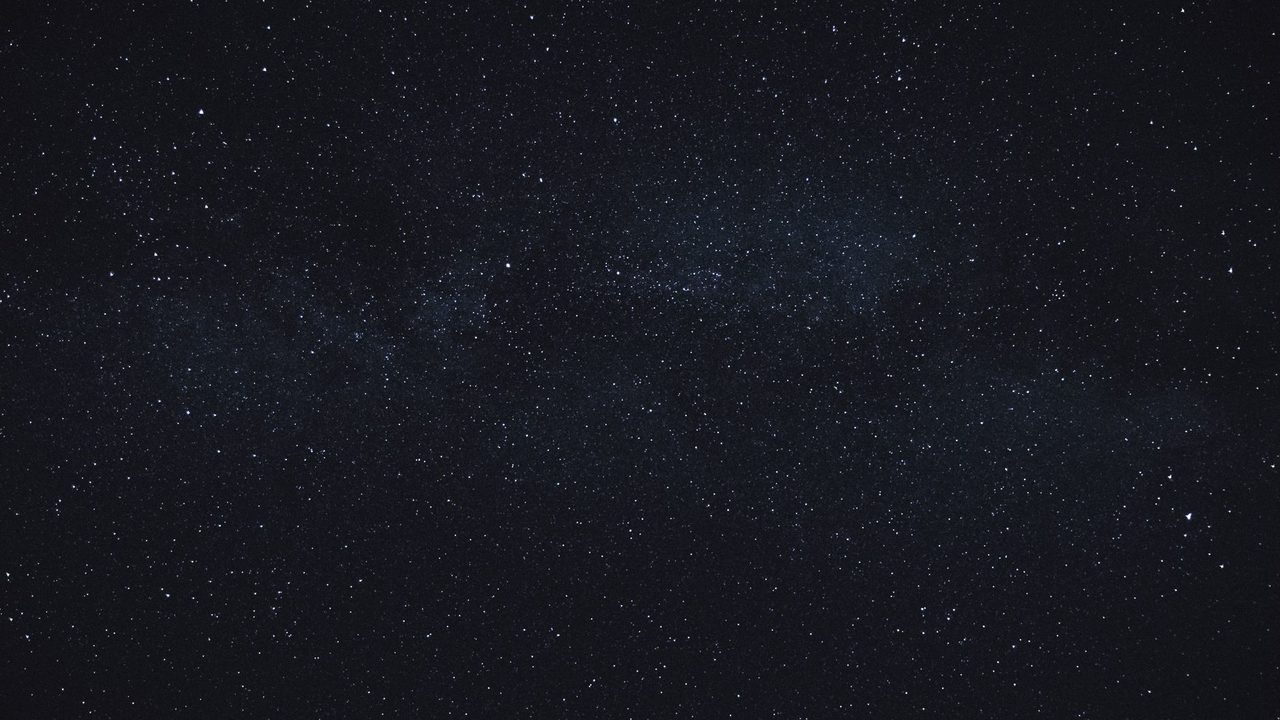
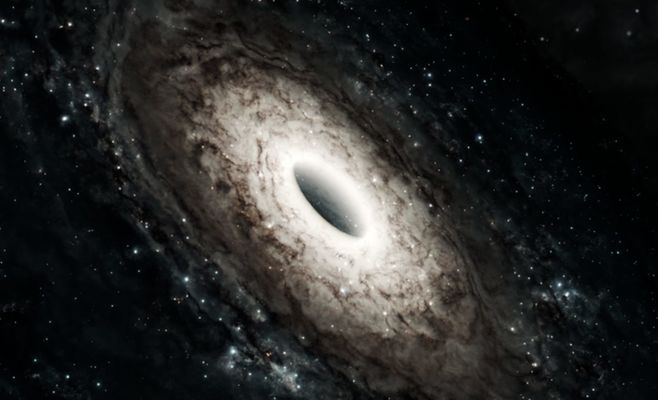
NASA’s James Webb Space Telescope has found a link between powerful gas outflows from the cores of massive galaxies and the rapid shutdown of star formation, according to a new paper in the journal Astrophysics and Space Science, as reported by Universe Today. The finding concerns a period known as cosmic noon, roughly 8-12 billion years ago, when the number of stars forming per unit volume in the universe reached its peak.

Astronomers had suspected for decades that the internal workings of massive galaxies, like the Milky Way, play an outsized role in controlling how many stars they make. The new Webb observations suggest that large-scale outflows of gas are a major part of that story.

What the outflows do to star formation

Outflows are large-scale streams of gas moving from inside a galaxy to outside it. They are usually driven either by supernovae or by energetic outbursts from supermassive black holes.

Normally, galaxies are rich in gas. When that gas becomes cold enough, it collapses under its own weight into dense clouds that form new stars. Outflows likely strip away a large share of that gas, leaving the galaxy unable to build new stars.

Sirio Belli, an associate professor at the University of Bologna in Italy and a co-author of the paper, told Universe Today that Webb has shown outflows to be more abundant and more powerful than previously thought. He said this suggests outflows strongly shape how galaxies evolve.

Rebecca Davies, the lead author and an astrophysicist at Swinburne University of Technology in Melbourne, Australia, said growing supermassive black holes at galaxy centers drive powerful winds that blow away gas that would otherwise form stars. With Webb, she said, researchers can measure how much cold, star-forming gas is being ejected.

Why galaxies stop making stars

Davies said quenching, the term for the rapid shutdown of star formation, can happen if a galaxy runs out of gas. It can also happen if the gas is too hot or turbulent to collapse into stars. Belli said one possibility is that the central black hole releases so much energy that it removes or heats the gas.

The process remains poorly understood. A key open question is what triggers outflows strong enough to quench a galaxy. Davies noted that outflows are very common in massive galaxies at cosmic noon, but most of those galaxies are not quenching. In most cases, she said, the outflows simply keep a galaxy in equilibrium and prevent it from turning all of its gas into stars too quickly. Possible triggers for the most powerful outflows include galaxy mergers and radio jets launched by the central black holes.

Our own black hole

As massive galaxies age, the active black holes at their centers become relatively quiet. Davies compared this with Sagittarius A*, the Milky Way’s supermassive black hole. She said it had a major flare just a few million years ago, and smaller outbursts only a century or two ago. It still flickers almost every day as hot gas swirls just outside it.

Why it matters for planets and life

Belli said that when a galaxy is quenched, new stars and planets stop forming, which has strong consequences for the chances of habitable systems arising. If the Milky Way had been quenched at cosmic noon, he said, it likely would not have formed many new stars in the last 10 billion years, and our solar system, which is only 5 billion years old, would not exist today.

Too much star formation can also cause problems. Belli said that when star formation is too strong, the large number of stellar explosions could harm the habitability of planets. The link between galaxy-scale processes and the habitability of planetary systems is only now beginning to be studied, he said.

Around Prague, based on reporting by Universe Today
Share: Telegram WhatsApp

More science news

A Cloud of Herring Sperm About 4 Miles Long Glowed Green in Satellite Photo
A satellite has photographed a giant underwater cloud of herring sperm that appears to glow green off the coast of Vancouver Island in British Columbia, Live Science reported. The plume stretched abou
How Ringing Black Hole Mergers Are Putting Einstein's Gravity Theory to the Test
When two black holes collide and merge, the newly formed black hole rings for a moment like a struck bell. A study published in Classical and Quantum Gravity says that ringing, observed in hundreds of
Astronaut Photo Shows Lightning, Fishing Fleets and Singapore Glowing From Orbit
One night-time photograph from the International Space Station packs lightning, a glowing city and a fleet of fishing boats into a single frame. According to NASA's Earth Observatory, an astronaut too
Hackers Hijacked a Website Testing Tool to Hit Visitors of HSBC, BBC and CNN
An attacker used a website testing tool from Optimizely to push malicious code to visitors of sites run by at least 178 organizations, including Zoom, HSBC, the BBC, Fox News and CNN, according to the
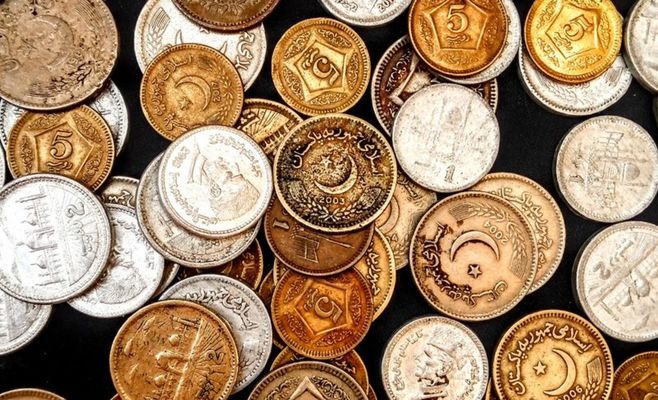
A Silver Dollar That Was Never Meant to Exist May Fetch $2 Million
One of the rarest coins in U.S. history, an 1885 silver trade dollar, is scheduled to go up for auction this week and could sell for more than $2 million, according to Popular Science. Only five of th
A Star Exploded 50 Million Light Years Away, and Astronomers Caught It Early
Astronomers have spotted a new exploding star in NGC 1433, a spiral galaxy about 50 million light years away, according to Universe Today. That is relatively close for a supernova, and because it was

Related news

A satellite has photographed a giant underwater cloud of herring sperm that appears to glow green off the coast of Vancouver Island in British Columbia, Live Science reported. The plume stretched about 4 miles (7 km) from end to end and was
When two black holes collide and merge, the newly formed black hole rings for a moment like a struck bell. A study published in Classical and Quantum Gravity says that ringing, observed in hundreds of mergers, matches what Albert Einstein's
One night-time photograph from the International Space Station packs lightning, a glowing city and a fleet of fishing boats into a single frame. According to NASA's Earth Observatory, an astronaut took the image with a Nikon Z9 camera as th
An attacker used a website testing tool from Optimizely to push malicious code to visitors of sites run by at least 178 organizations, including Zoom, HSBC, the BBC, Fox News and CNN, according to the cybersecurity firm Report URI, as repor
One of the rarest coins in U.S. history, an 1885 silver trade dollar, is scheduled to go up for auction this week and could sell for more than $2 million, according to Popular Science. Only five of the coins are known to exist, and how they
Astronomers have spotted a new exploding star in NGC 1433, a spiral galaxy about 50 million light years away, according to Universe Today. That is relatively close for a supernova, and because it was caught early, researchers have a chance
NASA’s Perseverance rover has found a cluster of unusually bright rocks on Mars that are rich in hydrated silica, a mineral that can form in watery environments and can preserve tiny fossils. Candice Bedford, a research scientist at Purdue
SpaceX has caught the upper stage of its Starship rocket for the first time, and Elon Musk is already describing a larger successor. Space.com reported that the next-generation Starship V4 will be much longer, carry more propellant and use
The annual Leonid meteor shower reaches its peak on the night of Nov. 17-18, and the best viewing comes in the hours before dawn on Nov. 18. The Guardian and Space.com both say the shower is known less for its numbers than for bright, fast
A tiny piece of DNA that modern humans inherited from Neanderthals is tied to a slightly smaller occipital lobe, the vision-processing region at the back of the brain, and to a lower risk of schizophrenia, according to a new study in the jo
While funding cuts and delays have hit public health and climate research during President Donald Trump’s second term, artificial intelligence and quantum science have found firmer footing, Science News reported. Researchers are excited abo
Nearly every early-career mathematician who responded to a new survey says they use artificial intelligence, yet many feel uneasy about what it means for their future, Scientific American reported. Seven in 10 respondents say they are now l