A Cloud of Herring Sperm About 4 Miles Long Glowed Green in Satellite Photo
USD 22,18
Popular
A satellite has photographed a giant underwater cloud of herring sperm that appears to glow green off the coast of Vancouver Island in British Columbia, Live Science reported. The plume stretched about 4 miles (7 km) from end to end and was visible for around 48 hours.
The image was taken by Landsat 9 on Feb. 19, 2026, over Barkley Sound, roughly 45 miles (70 kilometers) north of the U.S. border. It shows the aftermath of a Pacific herring spawning event in one of the species' favorite spots.
What exactly is the green cloud?
The cloud is made of milt, a fluid that contains sperm and is released by fish, mollusks and other aquatic animals. According to Live Science, Pacific herring reproduce by gathering in huge groups. The females lay eggs that stick to kelp, sea grasses and rocky surfaces. The males then release milt, which spreads through the water and fertilizes the eggs.
The most concentrated part of the cloud lies between the town of Salmon Beach and the smaller Forbes Island, whose northern coast also seems to glow in the image.
Local resident Ryan Cutler said the herring spawn is a spectacular time to be out on the water, according to CBC News. The satellite view gives a much wider picture of the same event, showing how far the milt spread around the shoreline and the island.
Why does it look green if the milt is white?
The milt is actually white. Live Science explained that it looks green in the photo because it sits closer to the surface than the surrounding seafloor, so less of the reflected light is absorbed by the water. The same effect makes shallow water look turquoise from above.
Why do herring spawn here?
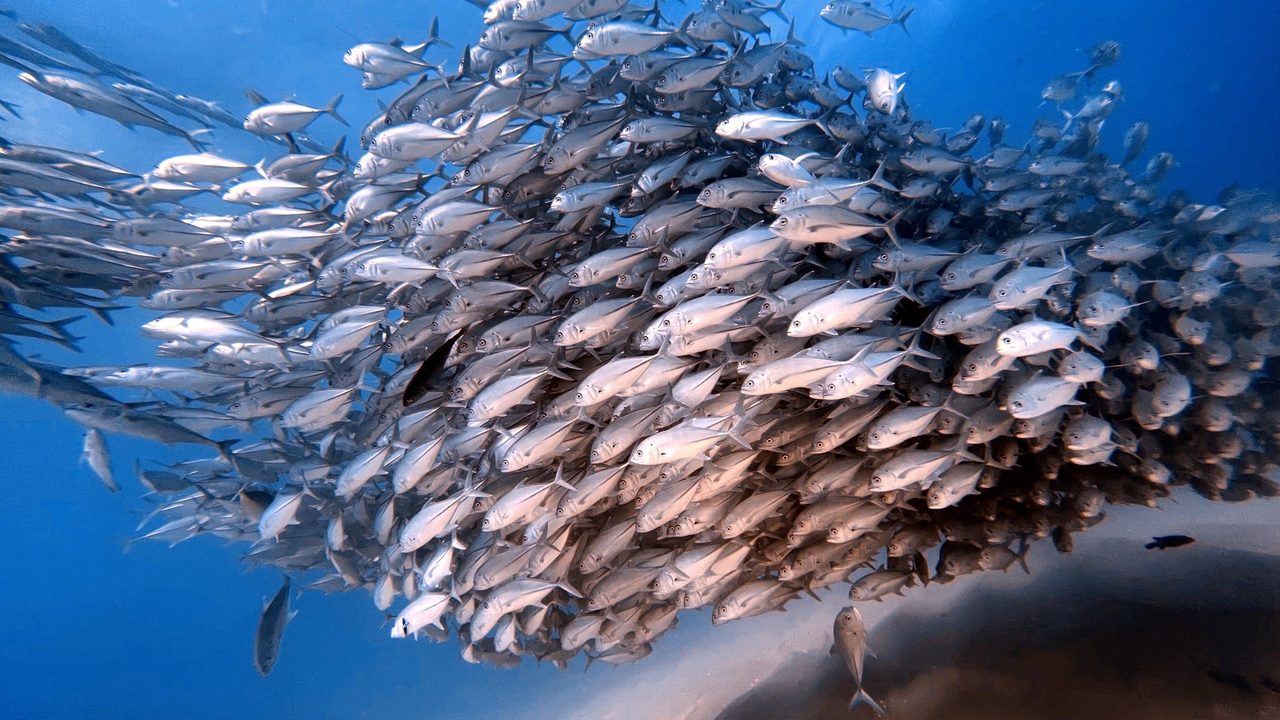
NASA's Earth Observatory says Pacific herring, which grow to around 10 inches (25 centimeters) long, often gather at this spot in late winter or early spring. They spend several weeks together before releasing their sex cells.
Jessica Moffatt, a biologist with the Island Marine Aquatic Working Group, told the observatory that herring prefer places that are more protected, have rocky ground and offer water with reduced salinity. She said Barkley Sound hits the “sweet spot” on many of those points.
Who else turns up for the spawn?
The event draws a crowd. The Earth Observatory says large fish, whales and sea lions come to feast on the herring, and eagles, wolves and bears are more likely to appear on land. According to CBC News, local First Nation groups also hunt the herring.
Cutler used a drone to take close-up photos of this year's spawn, CBC News reported.
Why does it matter?
Pacific herring are an important species in the region. Live Science reports that they are a primary food source for Chinook salmon, the fish that gave Salmon Beach its name.
The picture also shows how researchers watch these events. Spawning can last anywhere from a few hours to several days, and according to the Earth Observatory, scientists are increasingly using satellite images to monitor them. In this case, the cloud could be seen for around 48 hours.
Around Prague, based on reporting by Live Science