Drones Built to Fly Into Volcanic Plumes Could Test Sun-Dimming Ideas
USD 22,18
Popular
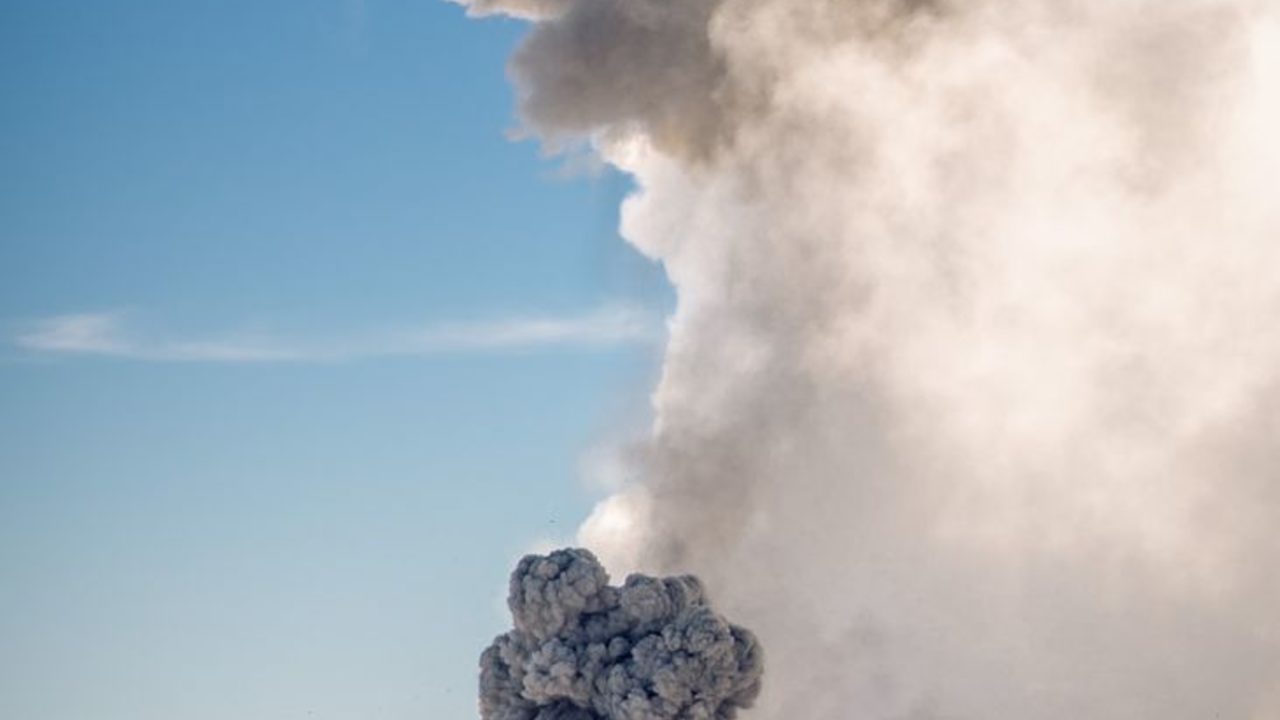
A team of scientists in Wales has completed its first successful test flights of a high-altitude drone designed to fly into a volcanic plume, Scientific American reported. The long-term hope is to reach the plume of an eruption big enough to cool the planet, though nobody can say when or where that will happen.
The work matters because a large, sulfur-rich eruption does something similar to a proposed climate technology called solar geoengineering. No deliberate experiment has come near the scale needed to see climate effects directly, so researchers see volcanoes as a rare chance to collect data.
What the drones are meant to measure
Matthew Watson, a professor of volcanoes and climate at the University of Bristol in England, led the test flights at Llanbedr Airfield on the Welsh coast with a team of eight researchers. He has nearly £4.3 million from the U.K. Advanced Research and Invention Agency, or ARIA, to design two lightweight aircraft.
The aircraft will carry sensors to measure how volcanic aerosols and cloud droplets form and change at altitudes from the lower troposphere to the lower stratosphere. Watson told the magazine his team's attempt would probably be the first with climate engineering as its scientific driver.
The drones are unmanned and electric. They must climb to extreme altitudes where thin air gives little lift. According to the report, engine exhaust from conventional aircraft could contaminate the emissions being measured, and sending pilots into a plume is inherently dangerous.
How we got here: key dates
- 1991: Mount Pinatubo in the Philippines erupted. More than 800 people died, many when roofs collapsed under wet ash, and lahars buried villages. The eruption sent nearly 20 million tons of sulfur dioxide into the stratosphere, where it formed sulfate aerosols that reflected sunlight. Global temperatures fell by about one degree Fahrenheit, and the cooling lasted about two years.
- 2021: A Harvard-led project called the Stratospheric Controlled Perturbation Experiment, or SCoPEx, planned a balloon flight over Sweden that would have released nothing. It was called off after strong opposition from environmental and Indigenous groups.
- 2024: The SCoPEx team ended the project without ever reaching the sky.
- 2027: If all goes to plan, Watson's team will deploy the drones to volcanoes in Guatemala, Montserrat and Chile that erupt often or release gas passively.
Why researchers turn to volcanoes
One widely studied proposal, stratospheric aerosol injection, would release sulfur dioxide or similar substances into the stratosphere to form reflective particles. Scientific American described the idea as deeply controversial. Major uncertainties surround effects on regional rainfall, and the report said it could weaken Asian and African monsoons. Some climate experts and politicians oppose even studying it, arguing it distracts from cutting emissions and could be captured by fossil-fuel interests.
Florida, Louisiana and Tennessee have passed laws banning intentional atmospheric releases meant to affect temperature, weather or sunlight, according to the report.
James Haywood, an atmospheric scientist at the University of Exeter in England, called volcanoes natural analogs. He said they let researchers track plumes, test their models and study how aerosols disperse and how long they last in the stratosphere. Ying Chen, an atmospheric scientist at the University of Birmingham in England, said that without more data, understanding climate engineering will be harder. When field experiments fail to win public support, she said, “volcanoes give us an opportunity to do this.”
Why it matters for everyday readers
Pinatubo is the main real-world evidence that sulfate particles in the stratosphere can cool the planet, and it has not been repeated. For readers, the practical point is that debates over sun-dimming technology rest on a thin record of past eruptions and computer models, not on controlled tests.
The drone project does not release anything into the air. It aims to observe what a natural eruption already does. Whether any of that data would change the political fight over geoengineering is not something the report claims, and the technology itself remains unproven and contested.
What happens next
The team plans its volcano deployments for 2027. In the meantime, according to Scientific American, the work consists of waiting for a suitable eruption and preparing the aircraft.
Around Prague, based on reporting by Scientific American