Czechia at the Frankfurt Book Fair: Topol and Denemarková shine
USD 21,75
Popular
Czechia is this year’s guest of honour at the 78th Frankfurt Book Fair, the world’s largest literary event, which draws around a quarter of a million visitors annually. The national delegation of 75 writers aims to raise the profile of Czech literature worldwide and strengthen Czechia’s image as a confident, creative country. It seems to be working: the huge Czechia sign on one of the halls is visible as soon as you arrive on the city train.
Havel, hidden from the secret police
The whole room hangs on writer Jáchym Topol’s every word. He presented the German translation of Václav Havel’s book “I Hid It Somewhere” (Někam jsem to ukryl), an account of the publication of Charter 77 and the four months Havel spent in custody. After his release Havel wrote it and hid it from the communist secret police so well that the text was found only after his death. “It is like a Hollywood action film: Havel and three friends are driving in a car surrounded by police, there is a chase, and in the end secret policemen drag Havel out of the car. But before that he manages to say: this is how our fight for human rights begins,” Topol recounts of the events of January 1977.
All of the more than one hundred seats in the Czech pavilion are taken, and people are standing at the back. Topol seems unsure at first, but soon starts gesturing, imitating voices and even stands up to show the Germans how State Security officers tried to break Havel. “This book is invaluable for historians, but it is interesting for me and other readers too. It shows that, had he had the time, Havel could have written brilliant prose. It is in the tradition of Czech literature — think of Jaroslav Hašek or Bohumil Hrabal,” he says.
The “country on the coast” pavilion
The Czech pavilion on an upper floor of one of the halls is dominated by multi-metre-tall soft, inflatable white objects with orange dots, complemented by buoys and a lighthouse. Everything follows the overarching theme “Czechia: a country on the coast”, a reference to a famous literary mistake: in The Winter’s Tale, Shakespeare placed landlocked Bohemia on the seashore. It is busy inside all day, with performers taking turns on two stages every hour. Several Germans are buying translations of novels by Alice Horáčková and Lucie Faulerová, and one couple heads a floor down to a pub serving Czech food.
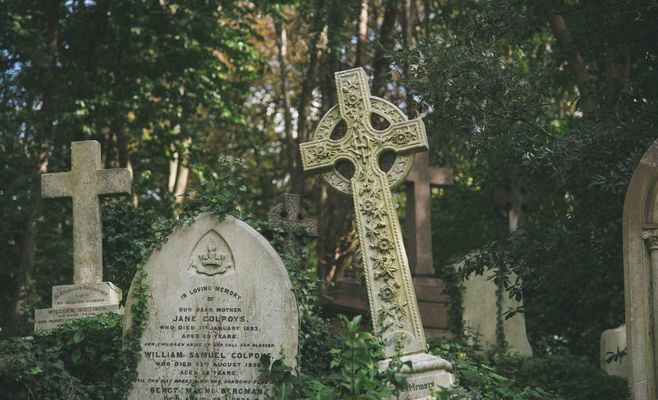
The Czech writers best known in Germany have also made it into the fair’s main programme. Jaroslav Rudiš, author of the novel The Sky Under Berlin and the graphic novel Alois Nebel, jokes on the stage of the public broadcasters ARD, ZDF and 3sat that he was turned down as a train driver because of his dioptres, and wins applause. He is presenting his second novel written in German, Wo die Toten sprechen, which will be published in Czech in autumn 2027 as “Where the Dead Speak”. It is a road trip of three young people through Central European cemeteries. “I think we are still haunted by everything that happened in Central Europe. The silence in families about our ancestors’ tragic experiences plays a role in the book. We have to confront the past, and writing about it is a kind of psychotherapy for me,” he explains. During the half-hour interview in German, Rudiš mentions Franz Kafka, Jaroslav Hašek and Bohumil Hrabal twice, with whom Czech literature in Germany remains strongly associated.
Meanwhile, literary agents are negotiating rights. Agent Veronika Chaloupková of the Argo publishing house holds an average of ten meetings a day: half-hour slots in which they discuss specific books and how the book market works in a given country. Thanks to Czechia’s guest-of-honour status, she even managed to lure Americans to the Czech stand. Her best performer is Alice Horáčková’s 2022 novel “The Split House”, which was published by the prestigious Diogenes. Dutch Czech-studies scholar and agent Edgar de Bruin, who represents Topol, considers the German market the most important: once a book is translated into German, rights are much easier to sell to other countries. Agent Dana Blatná says Kateřina Tučková’s book “The Expulsion of Gerta Schnirch” has sold more than 6,000 copies in Germany, while the Austrian publisher Wieser has already published five books by Alena Mornštajnová and may buy the rights to “Blind Map”.
Denemarková and the ovation for criticising the minister
The biggest Czech star of the fair is writer Radka Denemarková, whose opening speech on Tuesday was covered by leading German media: in it she criticised Culture Minister Ota Klempíř of the Motorists party. Hundreds of people came to her Friday discussion on the main stage. The host introduces her as “a Czech author everyone is talking about right now” and recalls the ovation she received for criticising the minister. “I think we should repeat that applause,” the host says, and the hall bursts into applause. Then the conversation turns to literature: her essays Odradek und die Prager Schwalbe, her novel about domestic violence Kobold, and the novel “Chocolate Blood”, in which the author also writes about Božena Němcová.
“Němcová is an icon of Czech nationalists, but it was Czech nationalists who in her day practically let her starve to death. She was so modern and so free that in the end she got on the nerves of both men and women,” says Denemarková. “No literary scholar asks whether Thomas Mann or Milan Kundera could peel potatoes, so let us look at great talents born in a woman’s body only through the lens of their talent.” In the evening came the world premiere of the documentary “I Vouch for My Word with My Life”, made about Denemarková by Slobodanka Radun. On both Friday appearances the writer invited Germans to join her in her pre-Christmas ritual of visiting Božena Němcová’s grave. “It is a beautiful, cheerful and hopeful gesture. I think we need that in these times,” she concluded.
Source: seznamzpravy.cz