Czech shop sold dangerous synthetic drug disguised as "collectible" packets — fined 27,000 crowns
USD 21,62
Popular
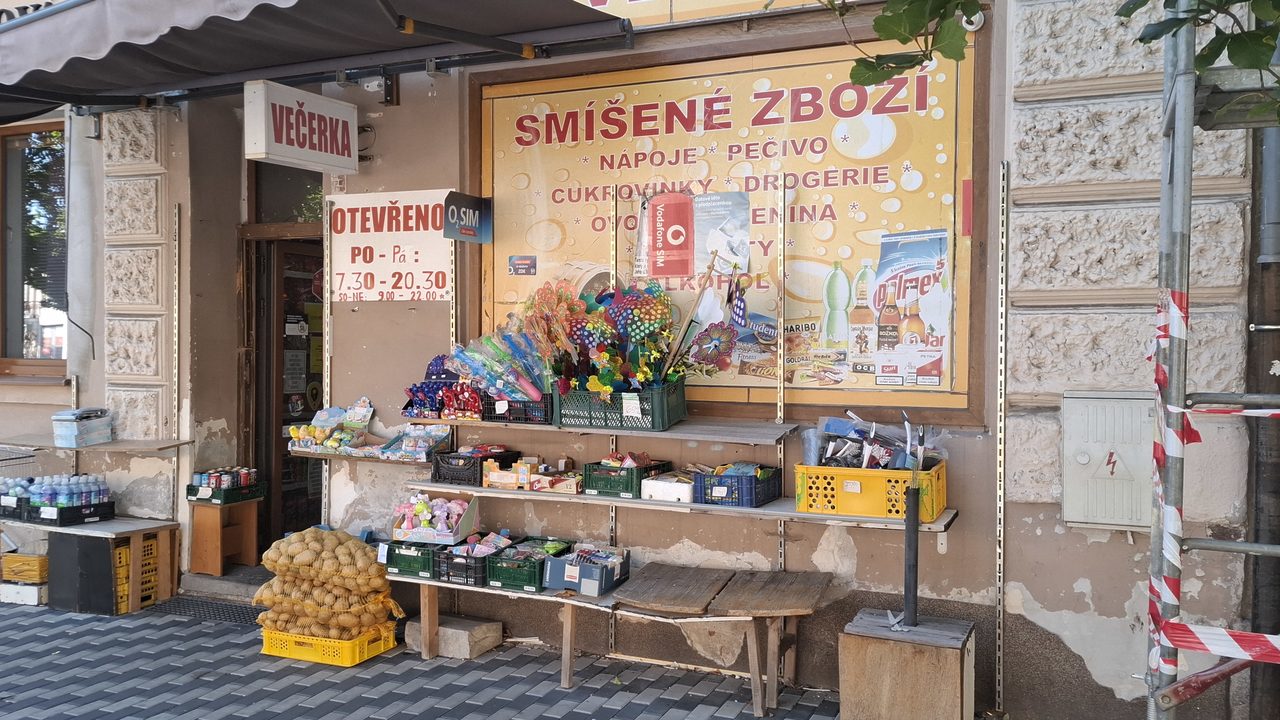
On the morning of May 5, at half past eight, inspectors and police officers entered a general goods shop on the main square of Nejdek in the Karlovy Vary Region. A 49-year-old shopkeeper had bright packets displayed on the counter next to smoking accessories, labeled "Mount Everest 99% HHC 420" — the range also included "Classic Skunk," "Purple Chill," and "Silver Dream," along with products featuring a Rastafarian monkey mascot called Legal Cannabis Sweety Tropical Rush and Citrus Bomb. Anyone could buy them, with no age restrictions whatsoever. Police seized 41 packages.
According to the press office of the Karlovy Vary Regional Police, the woman was charged with distributing substances that promote drug abuse — she was selling hemp products whose names and packaging glorified marijuana and cannabis use. However, laboratory analysis revealed a far more serious problem: the seized goods contained MDMB-PINACA, a substance listed among banned psychoactive compounds.
As dangerous as heroin
This synthetic cannabinoid is sprayed onto the tops of industrial hemp and is comparable in danger to heroin or methamphetamine. Dozens of children across the country have already been hospitalized in intensive care after smoking it or consuming it disguised as sweets, and one teenager in the Liberec Region has died.
"PINACA is an extremely dangerous, highly addictive synthetic cannabinoid. It binds very strongly to brain receptors, and the body's reaction can be extreme. After use, people can experience psychosis, loss of consciousness, and vomiting; some end up in psychiatric wards and are pulled out of normal life for a long time. The consequences are even more severe in children," explained Martin Kuchař, head of the forensic analysis laboratory for bioactive substances at the University of Chemistry and Technology in Prague.
The substance has officially been on the banned list since November 2025. According to the National Anti-Drug Headquarters, between January and May 2026 there were 161 recorded cases of synthetic substance poisoning, 119 of them involving children and teenagers. This new phenomenon has already claimed at least four lives.
A fine instead of a trial — and a lawyer's criticism
The case was handled by Judge Ondřej Fiala of the Karlovy Vary District Court, who issued a summary judgment without a full hearing. The woman was found guilty of distributing substances that promote drug abuse. The ruling noted that she deliberately placed the banned products next to smoking accessories to encourage customers to buy them for immediate use, even though the packaging stated they were "collectible items" and "not intended for consumption." The court concluded she knew otherwise.
The shopkeeper was fined 27,000 crowns. The verdict has not yet taken legal effect, as it still needs to be translated into the woman's native language. When a journalist visited the shop, its owner initially denied that hemp products had been found on the premises, then admitted: "The police confiscated everything. I don't sell that stuff anymore. I don't remember who the supplier was or how many people bought it. A packet cost about 140 crowns. I'll pay the fine."
Attorney Jan Voborzil, who has long specialized in drug-related crime, called the verdict completely inadequate: "I consider this a failure on the part of the prosecuting authorities, one that sends a dangerous, misleading signal to society — as if this were essentially a minor legal infraction." He said he couldn't understand why prosecutors hadn't applied Article 283 of the Criminal Code, which covers the production and trafficking of narcotic and psychotropic substances, instead opting for a milder and less fitting charge.
The prosecutor explains the tactical choice
District prosecutor Jan Svato, who oversaw the case, admitted that the easiest route was chosen. "I'll be honest: this was the first case of its kind, and we wanted to test what the court would and wouldn't accept. That's why we went with the charge of distributing substances that promote drug abuse. Had we applied Article 283, proving the case would have been much harder — it would have required additional expert assessments and reports," he explained.
The main difficulty, he said, is that the defendant could have defended herself by producing an invoice from her supplier and claiming she had no idea what the packets actually contained. Proving that she knowingly sold potent chemical substances without any control over their composition would have been difficult. "I did not appeal the verdict, since my request was granted. The woman received a fine of 27,000 crowns — that amount seems proportionate and sufficient to me," the prosecutor stated.
According to the Karlovy Vary District Prosecutor's Office, around ten cases involving the sale of synthetic cannabinoids have been recorded since the beginning of the year, four of them linked to children being poisoned. Some of these cases are connected to a nationwide police operation codenamed "Corundum," during which up to a quarter of a million suspicious products were seized and tested. "In this particular case, we were unable to prove sales to minors or a link to child poisonings. Other cases may be assessed differently — that remains to be seen," Svato noted.
Read also: Free Czech courses for foreigners: where to learn
Source: seznamzpravy.cz