Czechia launches the country's largest energy storage facility
USD 21,74
Popular
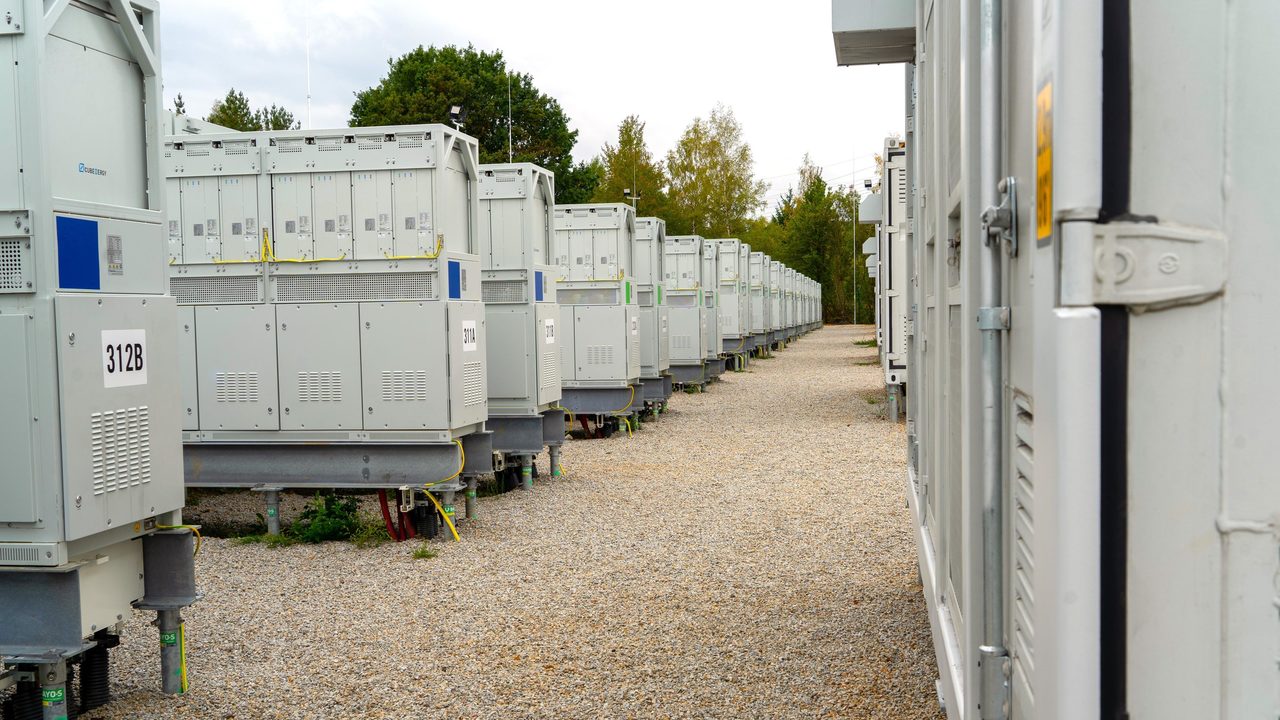
Czechia has commissioned the country's largest battery-based energy storage system — BESS Lipnice. With a capacity of 57 megawatts, the facility can absorb surplus electricity from the market and feed it back into the grid, while also helping to stabilize the power system and providing services to ČEPS (the Czech Transmission System Operator).
According to Jiří Strnad, board member of BESS Lipnice and Czech director of the Slovak energy investment group Energy Investment Fund, it wouldn't make economic sense to build the battery's business model solely around providing technical flexibility. Instead, the main focus will be on the day-ahead and intraday electricity markets.
The storage unit's operation will depend directly on current electricity prices. Its control system analyzes conditions across various markets in real time and decides, based on a set strategy, when to buy, store or sell energy. "We've developed our own control algorithm for the storage facility, which continuously assesses market conditions and significantly improves the project's economics. If attractive prices emerge on the balancing services market that fit our chosen strategy, we will of course use the battery there as well," Strnad noted. According to his estimates, under the current usage scheme, the investment should pay off within five to eight years.
1,500 tonnes of equipment
The complex consists of 144 battery cabinets, 18 power converter assemblies and nine transformer units. The total weight of the equipment exceeds 1,500 tonnes. The battery cabinets are connected to power converters, which convert the direct current from the batteries into the grid's alternating current. Transformers then adjust the voltage to the level required for connection to the distribution or transmission network.
The system features several layers of protection: operating parameters are constantly monitored, and the battery can automatically shut down if any deviations from normal conditions are detected. Fire protection for the equipment is also built in.
Balancing solar power and evening demand
The importance of such storage systems grows alongside the share of weather-dependent energy sources. This applies above all to solar power plants: during sunny hours, electricity output can exceed demand, while in the evening generation drops sharply. A battery can help offset this gap — absorbing surplus energy and releasing it back into the grid later, while also helping to balance production and consumption.
BESS Lipnice is part of the energy asset portfolio of the Sokolovská uhelná and SUAS Group. The company is already preparing to build another storage facility of similar capacity at the Tisová power plant site.
The new Lipnice storage facility has a capacity of 57 MW and a capacity of 120 MWh. This means that, running at full power, it can supply 57 megawatts to the grid for roughly two hours before depleting its energy reserves. The battery can be recharged from the grid in the same amount of time and at the same power level.
Source: novinky.cz