Czechia's largest castle ruin set for major restoration
USD 21,62
Popular
- today at 06:20
- News
- Czech Republic
Jílové u Prahy: the royal town that grew on gold
- today at 05:50
- News
- Czech Republic
Easy hiking route from Obří hrad to Kašperské Hory
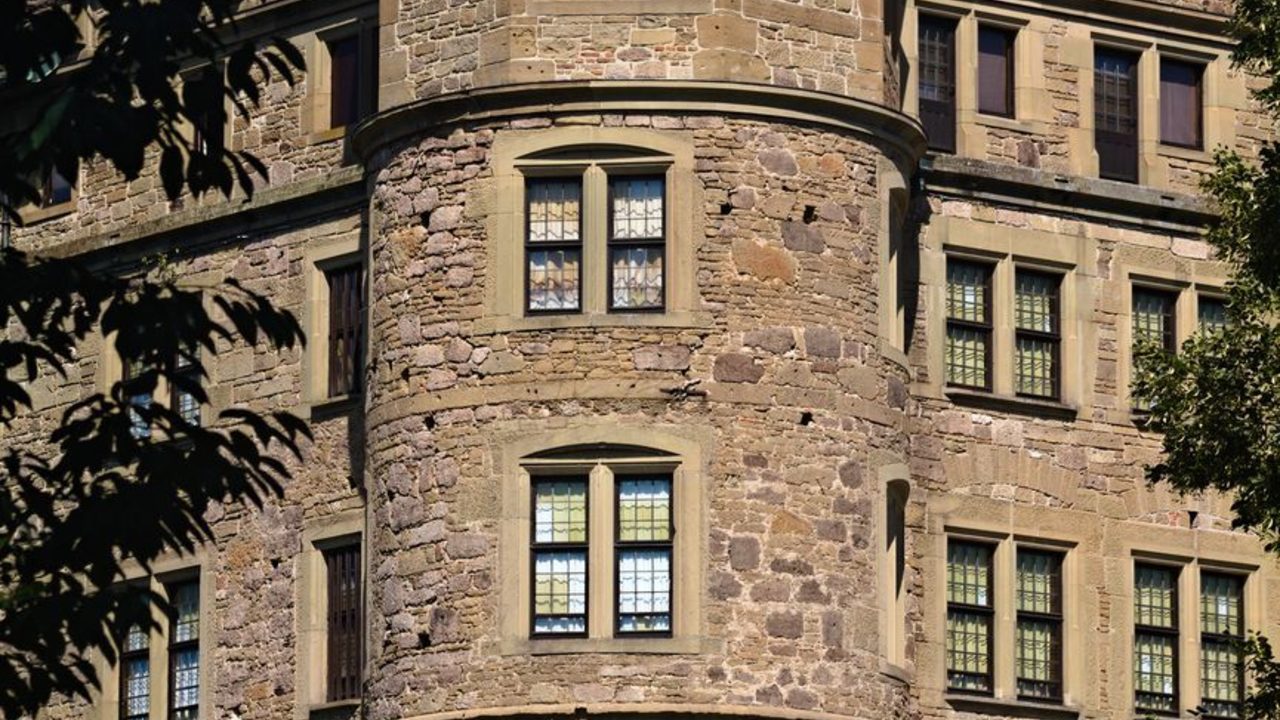
Rabí Castle in the Plzeň region — the largest castle ruin in Czechia — is facing a major rescue operation: repairs to its walls, the roof of the Royal Palace and the limestone rock the castle stands on are due to begin next year and will take about five years, said Markéta Slabová, spokesperson for the National Heritage Institute.
Cracks in the walls and in the rock
According to Slabová, the masonry of the parkán (outer bailey) wall and the south-western fortification wall urgently needs reinforcement and conservation — as does the wall of the former kitchen, where some stones have already come loose. Water is leaking into the Royal Palace, so the viewing terrace will need to be waterproofed again and the damaged tiles replaced.
The limestone rock itself, on which the castle was built in the Middle Ages, also needs separate treatment. It was last reinforced back in the 1970s, when rock bolts were installed and concrete grouting was carried out. Now the rock needs protecting again: the deterioration has progressed further, visible cracks have appeared in the stone, and there is a risk that large blocks could break off, Slabová noted.
Visitors may not notice some of the problems, but others are visible even to a layperson, says castle warden Hana Rudová: “The floor in the Royal Palace has already reached the end of its service life, the tiles are damaged, and visitors can sometimes feel them creak underfoot.”
Work will stretch over five years
The repairs will likely cost more than 20 million crowns, will start next year and will take about five years. The work will proceed in stages, with one stage following from another — the exact order will only be determined once funding is confirmed, Rudová explained.
What it means for visitors
This summer the castle was visited by more than 31,000 tourists — two thousand more than the year before — so the question of how much the construction will disrupt visitors is a pressing one. According to the warden, when, for example, the palace wall is reinforced from the outside, it will have almost no effect on visitor flow. But overall, the work at the site will involve increased noise, machinery traffic and dust — which will somewhat reduce visitor comfort, she admitted.
Restoration without end
The last major reconstruction of the castle took place in 1980–1985: at that time the Royal Palace's dilapidated condition was fixed, the stable in the large courtyard was uncovered and restored, the masonry of part of the fortification walls was reinforced, and the access road to the castle and the building that now houses the ticket office were put in order. In the 1990s, work continued in the oldest part of the complex — that was also when a wooden staircase was built at the top of the residential tower.
After 2005, Rabí Castle underwent several further, smaller-scale interventions. And when will the current repairs be finished? “Caring for the castle complex never really ends. We're planning to renovate the former stable in the castle's large courtyard, as well as tackle the last stretch of the fortification walls — the northern section of the late-Gothic artillery fortifications,” Slabová concluded.
Read also: 9 restaurants in Prague with the best city views: where to go for dinner and a panorama
Source: novinky.cz