Number of Foreigners in Czechia Tops 1.5 Million
USD 21,75
Popular
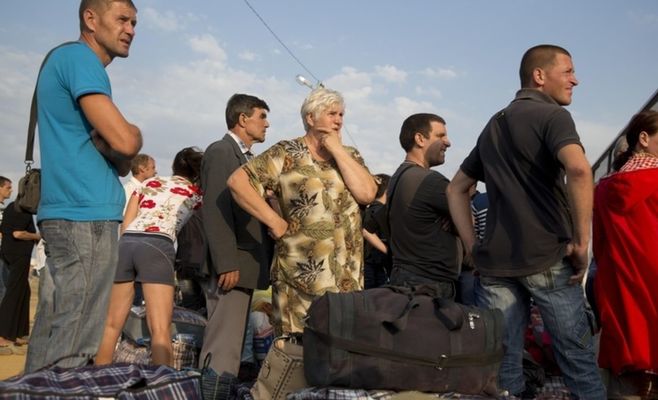
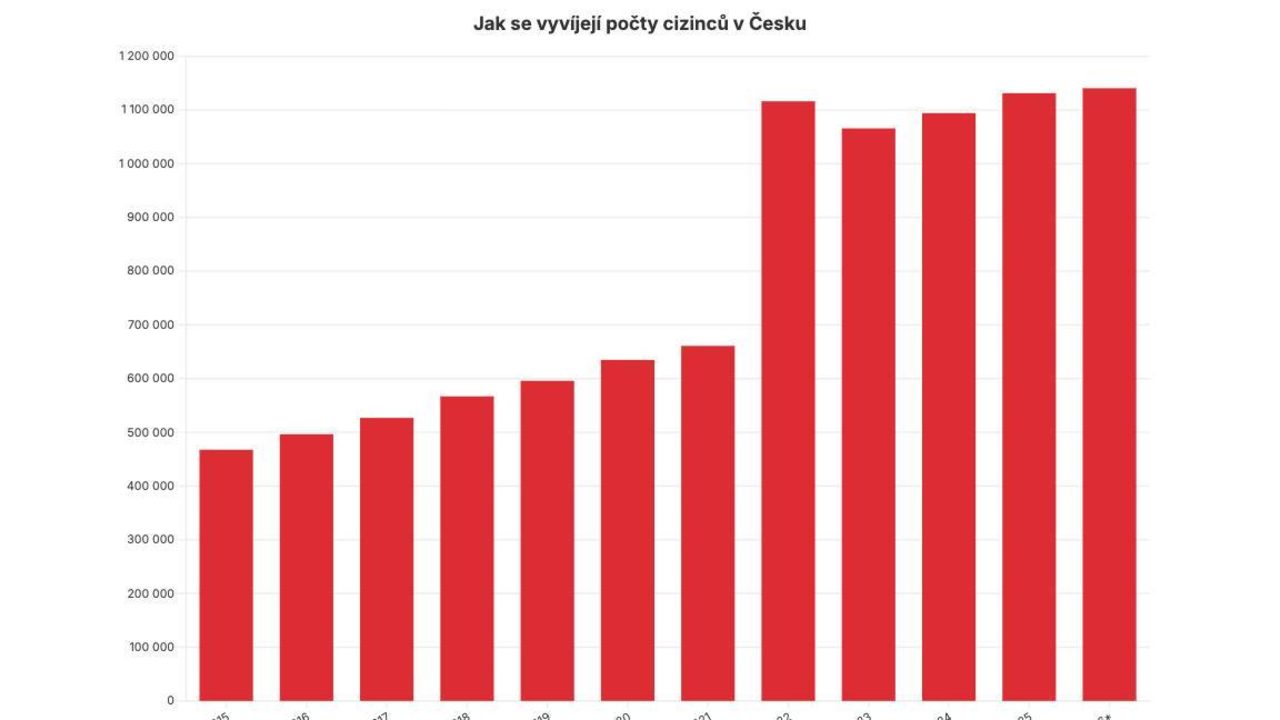
According to statisticians' estimates, up to 1.52 million foreigners were living or working in Czechia at the end of December. The figure is based on national accounts — statistical data covering the state of the entire Czech economy.
"The estimate also includes foreigners who live and work in Czechia without official registration. At the same time, quite a few EU citizens — mainly Slovaks — work here fully legally but aren't registered at their place of residence," explained statistician Vladimír Kermiet in the journal Statistika a my.
Ukrainians Shifted the Balance
According to Kermiet, the ratio between EU citizens and those from the rest of the world has changed dramatically over the past decade. In 2015, the majority of foreigners in Czechia came from EU countries. Ten years later, nearly two-thirds of all foreigners in the country are citizens of non-EU states.
"This shift is largely tied to the war in Ukraine, though the long-term growth trend actually began several years before 2022. Between 2015 and 2021 alone, the total number of foreigners grew by 477,000, while the number of Ukrainians rose by 188,000," Kermiet noted.
The growing number of foreigners is a long-standing trend reshaping Czechia's demographic makeup. Back in 2000, foreigners made up just 2% of the population; today they account for roughly a tenth.
Mostly Employed, Not Self-Employed
Foreigners show a notably higher share of working-age people. In 2024, this applied to nearly 81% of all legally residing foreigners, compared to less than 64% among Czech citizens, according to calculations by statistician Tereza Tomková.
Foreigners tend to settle in urban agglomerations, where job opportunities are more plentiful. Per Tomková's data, Prague remains the top draw — the most attractive region for the six largest national communities: Ukrainians, Slovaks, Vietnamese, Russians, Romanians and Bulgarians. The Central Bohemian Region, with its industrial hub in Mladá Boleslav, ranks second, followed by the South Moravian Region, dominated by Brno and its surroundings.
Most foreigners in Czechia are employees rather than business owners. The number of foreign entrepreneurs is growing — last year there were 139,000 — but that still represents only about a tenth of the total.
Slovaks Out-Earn Czechs
According to data from the Information System on Average Wages, Czechs employed at private companies earned an average of 52,235 CZK last year. That's less than what Slovaks, Poles and Romanians working in Czechia earned, but noticeably more than what Ukrainians made.
Slovaks earned an average of over 65,044 CZK, Poles 52,644 CZK, and Romanians 55,412 CZK. Ukrainians, meanwhile, had to make do with an average of just 38,050 CZK.
"The contrast is even sharper at the top of the pay scale. The top ten percent of highest-earning Slovaks made over 114,571 CZK a month. For Czechs, the same threshold stood at 84,664 CZK," noted Lukáš Kovanda, chief economist at Trinity Bank.
He believes the gap is partly explained by a selection effect in migration: those who move from Slovakia to Czechia are often people for whom relocation makes professional sense — university graduates, specialists, and workers with a concrete career offer already in hand. In other words, it's primarily more educated people who emigrate — and who consequently earn more.
Part of the difference may also stem from regional distribution, since foreigners tend to cluster in regions offering a wide range of study and job opportunities. That said, region alone doesn't explain the Slovaks' advantage, since the share of Ukrainians living in Prague is actually even higher.
Ukrainians' lower incomes are largely explained by the fact that they're often employed in manual, poorly paid jobs — though frequently in sectors that have long struggled with labor shortages, such as construction, agriculture, catering and healthcare. As a result, half of all Ukrainians earn less than 34,500 CZK a month before tax, and a tenth earn less than 31,700 CZK.
Read also: Brno: What to See and Where to Go
Source: novinky.cz