Mustard Gas Has Been Leaking Into the Soil in Šumava for Three Years

USD 21,62
Popular
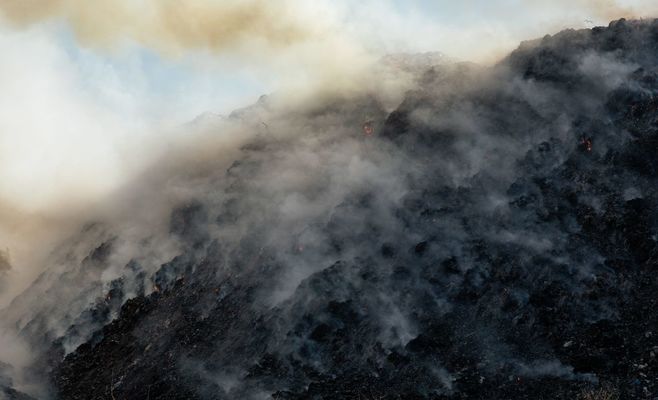
In a former military zone near the village of Prášily in the Klatovy region (Šumava), the chemical warfare agent mustard gas has reportedly been seeping into the soil for more than three years. This was confirmed by Deputy Prime Minister and Defence Minister Jiří Turek, backing up earlier information given at a government meeting by MP Kristián Červený about toxic substances "completely uselessly" leaking into the ground.
According to Turek, the substance in question is indeed a chemical warfare agent — mustard gas. He also confirmed reports by Czech Radio that the leak is occurring near Dobrá Voda u Prášil, the site of a former military training ground that was decommissioned in December 1991. Turek promised to reveal further details on Tuesday morning at a press conference at the Ministry of Defence.
Accusations against former Environment Ministry leadership
Following the government meeting, MP Červený accused the former leadership of the Ministry of the Environment of having known about the presence of toxic substances there as far back as three years ago, yet failing to take any action. Former minister Petr Hladík (KDU-ČSL) rejected the accusation, saying that at the time, as minister, he was only informed that the national park was carrying out a site clean-up, and he received no further information beyond that.
Who handled the site cleanup
The removal of chemicals from the former military zone around Prášily was carried out by the firm Dekonta, which, alongside site remediation, also provides environmental emergency services. According to contracts published on the website of the Šumava National Park administration, the company carried out three projects there in 2021 and 2023.
The first project took place in May–June 2021, when the firm was paid 352,885 crowns for removing chemical substances from a bunker in Prášily. Two further contracts followed in 2023: a survey of the former military training ground and another phase of chemical removal from bunkers around Prášily. For this work, the company received more than two million crowns.
Dekonta is owned by Dekonta Holding, whose supervisory board previously included Klára Sovová, the leader of the Motoristé party's Prague candidate list. She first appeared in the register as a supervisory board member in early June 2021 — right around the time the first Prášily contract was being carried out — and remained on the board until June of this year.
What is known about mustard gas
Mustard gas takes its name from the Belgian city of Ypres, where the German army first used it in July 1917 — against which even gas masks offered no protection, since mere skin contact was enough to cause harm. The substance is highly persistent and can contaminate an area for hours or days, damaging the skin, respiratory tract, eyes and digestive system, and causing severe chemical burns.
Available records indicate that mustard gas was also produced in pre-war Czechoslovakia, used to fill artillery shells and mines at factories in Žilina and later in Zemianske Kostoľany. In 2019, buried mustard gas dating from the Protectorate era was reported to have been found near Prague: in 1933, the Military Technical Institute buried several hundred kilograms of chemical warfare agents near Hostivice, and shortly after the start of the German occupation, an additional 100 kg of mustard gas and 50 kg of arsine were dumped at the same site.
Source: novinky.cz