Lagos and Alexandria Are Sinking Faster Than Thought, Satellites Show
USD 22,31
Popular
Some of Africa's biggest coastal cities are sinking faster than previously thought, according to new research reported by the BBC. Lagos in Nigeria and Alexandria in Egypt stand out: the study found they are subsiding much faster than the UN's climate body, the Intergovernmental Panel on Climate Change (IPCC), estimated in 2021.
Because sinking ground sits lower against the ocean, it adds to the flood risk from sea level rise caused by climate change. The paper, published in Science Advances, estimated that seven million people and $180 billion of assets could be at flood risk by 2050.
How scientists measured the sinking
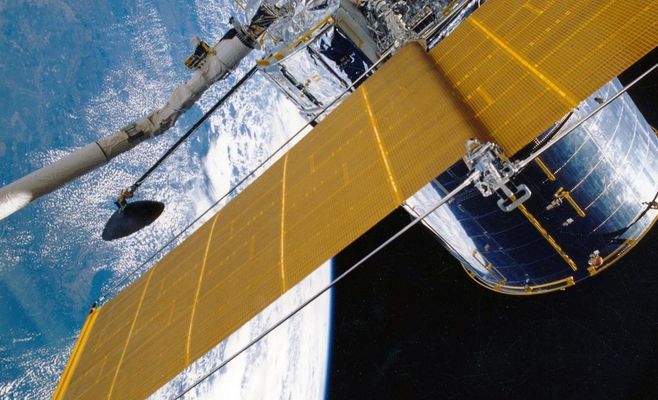
Researchers from Virginia Tech used radar imagery from the European Space Agency's Sentinel-1 satellites to map how much land had moved beneath 20 African coastal cities. Until now, a lack of monitoring stations had kept scientists from getting up-to-date, localized subsidence data in Africa, lead author Oluwaseyi Dasho said.
The method works by bouncing radar signals off the ground. Senior author Manoochehr Shirzaei, a geosciences professor, explained that the satellite sends the signal, it hits the ground and returns, and the process repeats over many revisits. The time between sending and receiving is recorded, and changes in that value over time reveal how much the land has moved. The satellites pass over the same region every six to 12 days, and the team could detect movements as small as 1mm per year.
Which cities are sinking most
The ground under Alexandria sank an average of 6mm per year, and under Lagos 5mm per year. If that rate continued, sea levels around Alexandria would rise 36% more by 2050 than the IPCC predicted under its middle estimates for emissions growth, the BBC reported.
Luanda in Angola has also sunk significantly. Other cities, such as Durban in South Africa, have stayed stable or even risen slightly. Shirzaei said showing where the IPCC underestimated risks, and where it overestimated them, could help planners spend resources more effectively.
What is causing it
Some causes of subsidence are natural, but many come from human activity, such as pulling groundwater from beneath the surface. Too much extraction can compact the soil and make the surface sink, and rapidly growing cities use more water.
The study also points to local factors. The Aswan Dam on the Nile may be trapping sediment upstream, which keeps it from replacing sinking land in Alexandria. In Lagos, possible causes include land reclaimed from the ocean to build artificial islands and buildings put up on loose ground.
Why it matters for people in these cities
Dasho said the effects of subsidence are often invisible in everyday life, but over decades they can substantially increase flood exposure. That makes the risk easy to miss for residents and city officials alike.
Shirzaei said the man-made drivers are usually extremely local, which means they can be tackled with local policies. Options he mentioned include supplying other sources of water and growing less water-intensive crops. For what cannot be prevented, he said, the aim is to adapt, for example by building flood defenses or moving key infrastructure to higher ground.
What comes next
Shirzaei said developing countries have been left out of much of the planning for sea level rise because of limited monitoring. He suggested the techniques from this study could help fill the knowledge gap in other regions, such as the Pacific islands. Dasho said he hopes the paper helps African governments prepare for future challenges and for future generations.
Read next
A Marsquake Deep Under Mars' Giant Canyon Shows the Planet Still Cracks
King Tide Flood Warnings on the West Coast: How It Works and What to Watch
What the Villa Vie Odyssey Suspension Means for Residents Who Lived at Sea
Around Prague, based on reporting by BBC News