One Million Satellites Could Streak Telescope Images, Says ESO of SpaceX Plan
USD 22,31
Popular
The European Southern Observatory has publicly condemned a SpaceX plan to launch one million satellites that would act as an orbital AI data center, after the U.S. Federal Communications Commission approved it, according to Universe Today. ESO says its technical analysis shows the constellation would change the night sky for everyone and harm astronomy.
The system, which Universe Today said SpaceX calls Starmind, would sit in low-Earth orbit. The satellites would run on nearly constant sunlight, cool themselves with liquid coolant pumped through radiative panels, and stay in contact with one another by laser.
The numbers behind the objection
- One million satellites: the size of the approved constellation, which Universe Today described as the first orbital AI data center.
- About 60,000: the size up to which, according to the peer-reviewed paper ESO cites, a constellation has a negligible but not imperceptible effect on observations.
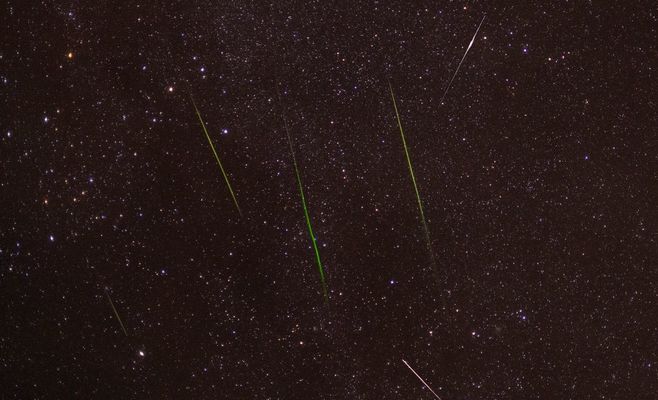
- More than eight: the average number of satellite trails per image at zenith in a 300-second exposure with the spectrograph at the Very Large Telescope, even about 1.3 hours after the end of astronomical twilight.
- More than 20: the number of trails that would cross some individual images, according to the same analysis.
- 39 meters: the width of ESO's upcoming Extremely Large Telescope in Chile, which Universe Today said will face a more difficult sky.
What ESO says
ESO's Director General, Andreas Kaufer, said the approval would fundamentally alter the night sky for everyone on the planet and that ESO had raised its findings with the FCC, as had other organizations worldwide. He said the decision shows an urgent need for international mechanisms to assess activities whose effects cross national borders and touch what he called a global common good. Universe Today noted that many people are asking why a U.S. agency alone can approve such a project.
ESO operates the Very Large Telescope, the Atacama Large Millimeter/submillimeter Array, the ESO 3.6-metre Telescope and the planned Extremely Large Telescope, all in the Atacama Desert in Chile.
How the study measured the damage
The analysis was published in Astronomy and Astrophysics in March 2026, and Universe Today said it is peer-reviewed. It examined constellations ranging from current deployments to mega-constellations and very bright reflector concepts, looking at trails, diffuse background light and scattered sky brightness. The authors wrote that quantifying the cumulative sky-background glow is essential for assessing the full impact of existing and proposed systems.
The paper found that at one million satellites, trails become pervasive and affect the majority of long exposures. Long exposures matter for faint and distant objects, as well as for high-resolution spectroscopy and deep surveys. Astronomers can take short exposures and stack them to cope with some trails, but the study's modeling covered the Vera Rubin Observatory's camera as well: a 15-second exposure there would be affected in a similar way to the 300-second Very Large Telescope image.
What this means for people who look up at the sky
The concern reaches beyond professional observatories. Kaufer said the approved project would change the night sky for everyone, not just researchers. For stargazers, the paper's modeling suggests that very large constellations add both visible trails and a diffuse glow of scattered light.
For astronomy, the practical issue is lost data. If most long exposures contain satellite streaks, observations of faint objects become harder, and the researchers described the effect on the field as serious.
What is not settled
ESO's calls for international assessment are a request, not a rule. The FCC has approved the application, and the sources do not describe any formal international process that could review it. The satellites' brightness figures come from modeling of a proposed system, not from observations of satellites in orbit.
Read next
SpaceX Starmind: FCC Approves 1 Million Orbital Data Center Satellites
SpaceX Sends 27 More Starlink Satellites Into Orbit on a Halloween Launch
Hubble Images a Galaxy Warped Into Arcs as NASA Preps for Roman Telescope
Around Prague, based on reporting by Universe Today