Science & Space By

A Star Exploded 50 Million Light Years Away, and Astronomers Caught It Early
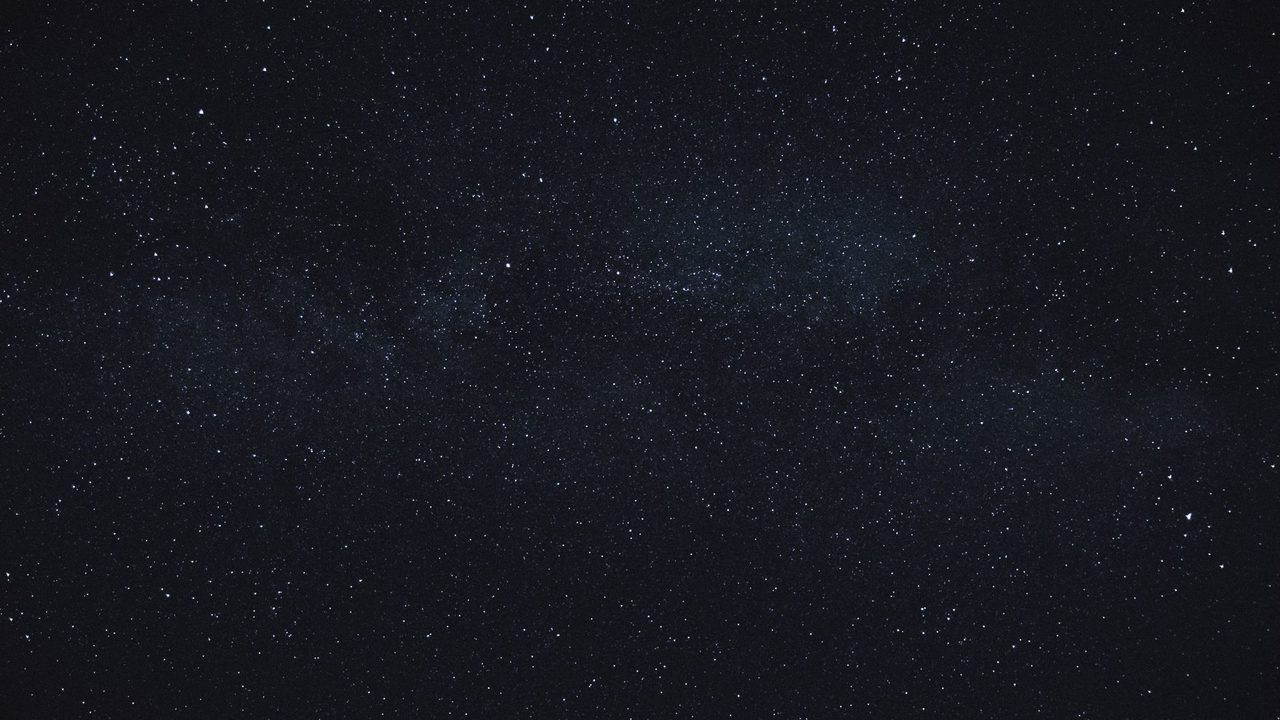
Astronomers have spotted a new exploding star in NGC 1433, a spiral galaxy about 50 million light years away, according to Universe Today. That is relatively close for a supernova, and because it was caught early, researchers have a chance to study it in unusual detail.

The explosion, named SN 2026ahvu, is a Type Ia supernova, a kind of blast that happens in a binary star system and is prized by astronomers for measuring distances in the universe.

How the supernova was found

The Asteroid Terrestrial-impact Last Alert System, or ATLAS, discovered SN 2026ahvu on Nov. 2. ATLAS is built mainly to detect near-Earth objects shortly before they reach Earth, but it also picks up other transient events in the sky. According to Universe Today, the name’s suffix marks it as the 41,855th transient found in 2026.

New transients are logged on the Transient Name Server, a registry sanctioned by the International Astronomical Union. ATLAS posts short notes there for objects it considers worth the community’s attention, including those that are close or have some other interesting feature. This one is both near and still brightening.

What makes a Type Ia supernova different

This is not a core-collapse supernova, in which a massive star runs out of fuel and collapses. In a Type Ia event, the exploding star is a white dwarf in a binary system. The white dwarf pulls material off a companion star, and that material builds up on its surface. When the white dwarf passes the Chandrasekhar limit, about 1.44 solar masses, it explodes and is destroyed. A Type Ia supernova can also happen when two white dwarfs merge.

Why catching it early matters

When SN 2026ahvu was discovered, its apparent magnitude was 17. A few days later it had reached 13.5. A lower magnitude means a brighter object, so the supernova was getting much brighter, which lets astrophysicists watch it from an earlier point in its evolution.

Images from the Dark Energy Camera and the Gemini South telescope are already available, and more observations are expected. These include a detailed look at how the explosion’s light changes over time.

Type Ia supernovae are typically brightest for about 6 months, though their brightness inevitably fades. Peak brightness lasts several days and is powered by the decay of an unstable nickel isotope, nickel-56. The decay of cobalt-56 into iron-56 then produces a weaker tail of light. About 2 or 3 months after the explosion, the ejecta will have thinned and expanded enough to form a nebula, and astronomers examining its spectra can see the makeup of the entire exploded star rather than just its core.

Why it matters

Type Ia supernovae serve as standard candles in the cosmic distance ladder, the system astronomers use to find distances to objects too far away for direct methods such as parallax. Universe Today said that each additional Type Ia supernova studied helps make that ladder more accurate. The progression of these explosions is fairly well understood, the outlet noted, but more observations can still refine it.

The supernova is also within reach of astrophotographers, so amateur images may follow. The Crab Nebula, probably the best-known supernova remnant, was photographed by Hubble less than 1,000 years after its star exploded, and Universe Today noted that future generations could see something similar from SN 2026ahvu.

Around Prague, based on reporting by Universe Today
Share: Telegram WhatsApp

More science news

Mars Rover Finds Ghostly Pale Rocks That Could Preserve Ancient Fossils
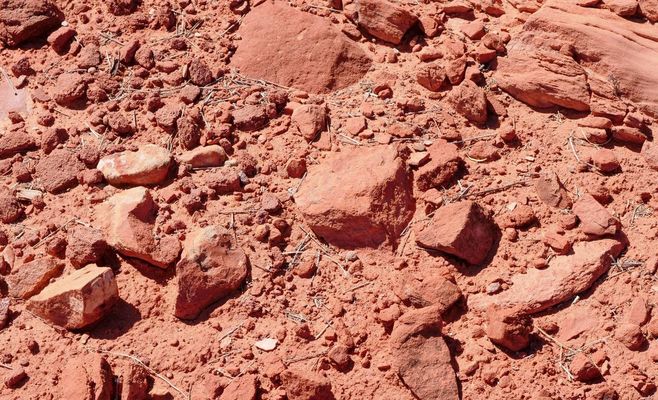
NASA’s Perseverance rover has found a cluster of unusually bright rocks on Mars that are rich in hydrated silica, a mineral that can form in watery environments and can preserve tiny fossils. Candice
After First Starship Catch, Musk Says Next Version Will Be Nearly 500 Feet Tall
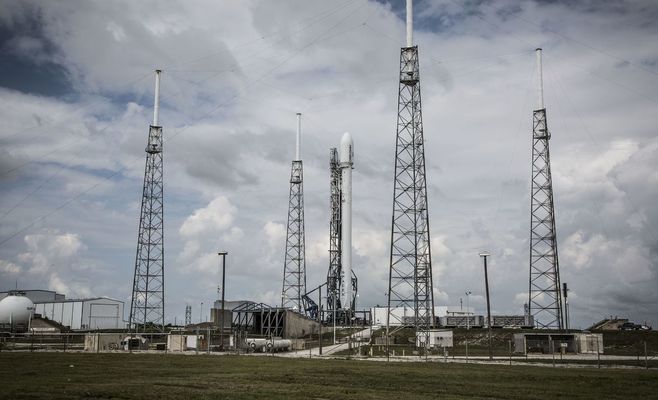
SpaceX has caught the upper stage of its Starship rocket for the first time, and Elon Musk is already describing a larger successor. Space.com reported that the next-generation Starship V4 will be muc
Leonid Meteors Peak This Week, Striking the Sky at 71 km/s Beside Mars and Jupiter
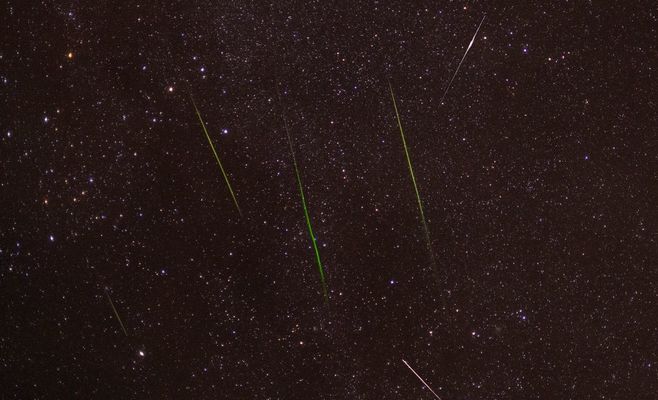
The annual Leonid meteor shower reaches its peak on the night of Nov. 17-18, and the best viewing comes in the hours before dawn on Nov. 18. The Guardian and Space.com both say the shower is known les
Neanderthal DNA Tucked in Our Genes Shrinks a Brain Region and Lowers Schizophrenia Risk
A tiny piece of DNA that modern humans inherited from Neanderthals is tied to a slightly smaller occipital lobe, the vision-processing region at the back of the brain, and to a lower risk of schizophr
How a $5 Billion AI Push Is Reshaping Which U.S. Science Gets Funded
While funding cuts and delays have hit public health and climate research during President Donald Trump’s second term, artificial intelligence and quantum science have found firmer footing, Science Ne
Young Mathematicians Are Using AI Daily, and Most Say It Is Making Them Rethink Their Careers
Nearly every early-career mathematician who responded to a new survey says they use artificial intelligence, yet many feel uneasy about what it means for their future, Scientific American reported. Se

Related news

NASA’s Perseverance rover has found a cluster of unusually bright rocks on Mars that are rich in hydrated silica, a mineral that can form in watery environments and can preserve tiny fossils. Candice Bedford, a research scientist at Purdue
SpaceX has caught the upper stage of its Starship rocket for the first time, and Elon Musk is already describing a larger successor. Space.com reported that the next-generation Starship V4 will be much longer, carry more propellant and use
The annual Leonid meteor shower reaches its peak on the night of Nov. 17-18, and the best viewing comes in the hours before dawn on Nov. 18. The Guardian and Space.com both say the shower is known less for its numbers than for bright, fast
A tiny piece of DNA that modern humans inherited from Neanderthals is tied to a slightly smaller occipital lobe, the vision-processing region at the back of the brain, and to a lower risk of schizophrenia, according to a new study in the jo
While funding cuts and delays have hit public health and climate research during President Donald Trump’s second term, artificial intelligence and quantum science have found firmer footing, Science News reported. Researchers are excited abo
Nearly every early-career mathematician who responded to a new survey says they use artificial intelligence, yet many feel uneasy about what it means for their future, Scientific American reported. Seven in 10 respondents say they are now l
Scientists now have two possible explanations for a puzzling discovery on Mars: a field of rocks made of nearly pure elemental sulfur. NASA's Curiosity rover first found them in 2024, according to ScienceAlert, and two studies published thi
Body-mass index may misclassify obesity for a meaningful share of people, according to a new international study published in Nature. ScienceAlert reported that the researchers compared BMI with a broader definition of obesity proposed by e
President Donald Trump heads to Asia this week for a trip that will end with an unprecedented three-way summit with Chinese President Xi Jinping and Russian President Vladimir Putin, according to The New York Times, The Guardian and the Hon
Thousands of people in England who are at higher risk of esophageal cancer could soon be offered a seven-minute test on the National Health Service that involves swallowing a small capsule on a string. The National Institute for Health and
Researchers who analyzed online chess games say strong engines keep the board in a state of high strategic tension deep into a game, while human players tend to simplify their positions as the game goes on. Scientific American reported on t
SpaceX caught its Starship upper stage with the giant mechanical arms of its launch tower on Saturday, after the vehicle returned from a full orbital flight. La Voce di New York reported that it was the first time a rocket's upper stage has