Science & Space By

Neanderthal DNA Tucked in Our Genes Shrinks a Brain Region and Lowers Schizophrenia Risk
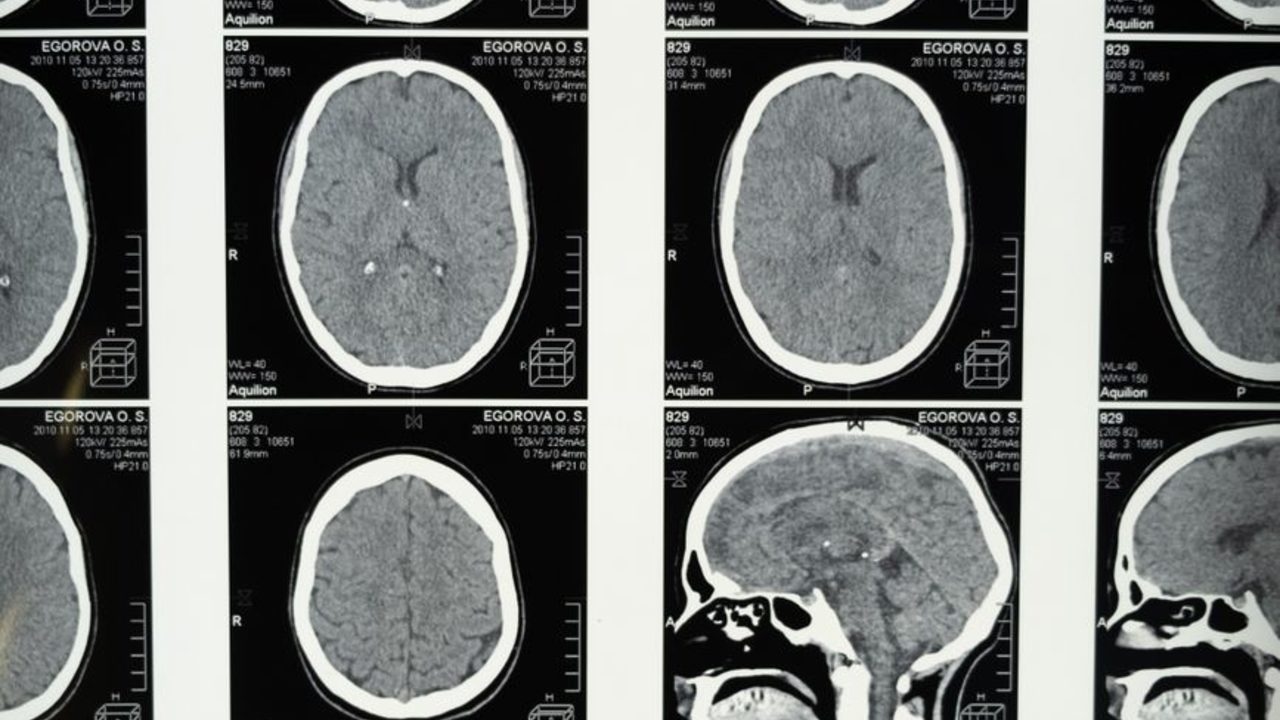
A tiny piece of DNA that modern humans inherited from Neanderthals is tied to a slightly smaller occipital lobe, the vision-processing region at the back of the brain, and to a lower risk of schizophrenia, according to a new study in the journal Proceedings of the National Academy of Sciences.

The finding adds to a growing list of ways ancient interbreeding still shapes human biology. Scientific American and ScienceAlert both covered the work, which comes from researchers Svante Pääbo and Hugo Zeberg.

What did the researchers find?

Earlier genome studies had pinpointed four places in the human genome linked to the volume of the occipital lobe. Zeberg and Pääbo asked whether any of them came from Neanderthals. Three of the four turned up in populations in sub-Saharan Africa. The fourth, a deletion of just four DNA letters on chromosome 14, was found only outside that region.

According to Scientific American, people who carry the variant have a risk of developing schizophrenia that is almost 10% lower. The researchers found no link to other psychiatric conditions, including depression, bipolar disorder or ADHD, and no link to intelligence.

How do they know the DNA came from Neanderthals?

The team compared the variant with ancient DNA from five Neanderthals and two Denisovans, another extinct human group. All five Neanderthals carried the deletion, while neither Denisovan did, ScienceAlert reported.

That alone could not rule out a much older common ancestor. So the researchers examined the stretch of DNA around the deletion. Over generations, inherited DNA is gradually broken up, so a variant passed down from a distant ancestor should sit in a more fragmented region. The stretch they found was nearly 60,000 DNA letters long, far longer than expected for such an old inheritance. That points to a more recent origin through interbreeding.

How big is the effect on the brain?

Using data from the UK Biobank, the study found that each copy of the variant is linked to an occipital lobe about 0.85 cubic centimeters smaller. People with two copies, one from each parent, have a reduction of 1.7 cubic centimeters, Scientific American reported.

The result looks odd at first. Fossil skulls suggest Neanderthals had proportionally larger occipital lobes than Homo sapiens, yet people carrying the Neanderthal variant have smaller ones. ScienceAlert noted that brain shape depends on many genes and on other factors such as the size of the eyes and body, so a single variant says little about the Neanderthal brain on its own.

What is the gene involved?

The deletion sits near a gene called DAAM1, which plays a role in early brain development. The researchers suspect the variant may influence how the gene is expressed. Zeberg said exactly how the two interact is still unclear, according to Scientific American.

Why does it matter?

For most people, nothing changes day to day: this is a statistical association found in large datasets, not a test or a treatment. The study does not show that the variant causes the lower schizophrenia risk, and the effect on brain volume is small.

What it does offer is a concrete clue. Pinning a brain-related trait and a psychiatric risk factor to a specific piece of inherited DNA gives scientists a starting point for studying how the brain develops. Nadav Ahituv of the University of California, San Francisco, who reviewed the paper for the journal but did not take part in the research, called it fascinating that a Neanderthal variant is tied to differences in brain anatomy today.

The finding also fits a broader picture. Scientific American noted that Neanderthal genes have been linked to changes in muscle mass, immune function and even the risk of dying from COVID. Pääbo said most Neanderthal DNA in people today appears to come from one interbreeding event around 47,000 years ago.

What happens next?

Zeberg and Pääbo plan to keep searching the genome for other consequential pieces of Neanderthal DNA. Zeberg said more discoveries are coming: “You might hear from us again.”

Around Prague, based on reporting by ScienceAlert, Scientific American

Share: Telegram WhatsApp

More science news

How a $5 Billion AI Push Is Reshaping Which U.S. Science Gets Funded
While funding cuts and delays have hit public health and climate research during President Donald Trump’s second term, artificial intelligence and quantum science have found firmer footing, Science Ne
Young Mathematicians Are Using AI Daily, and Most Say It Is Making Them Rethink Their Careers
Nearly every early-career mathematician who responded to a new survey says they use artificial intelligence, yet many feel uneasy about what it means for their future, Scientific American reported. Se
How Did a Field of Pure Sulfur Rocks End Up on Mars? Two New Studies Offer Answers
Scientists now have two possible explanations for a puzzling discovery on Mars: a field of rocks made of nearly pure elemental sulfur. NASA's Curiosity rover first found them in 2024, according to Sci
BMI Alone Missed Obesity in Up to 8.6 Percent of People in a Study of 844,108 Adults
Body-mass index may misclassify obesity for a meaningful share of people, according to a new international study published in Nature. ScienceAlert reported that the researchers compared BMI with a bro
Trump’s Asia Trip Ends With First Summit Among Him, Xi and Putin
President Donald Trump heads to Asia this week for a trip that will end with an unprecedented three-way summit with Chinese President Xi Jinping and Russian President Vladimir Putin, according to The
Sponge-on-a-String Test for Esophageal Cancer Risk Recommended for NHS Use
Thousands of people in England who are at higher risk of esophageal cancer could soon be offered a seven-minute test on the National Health Service that involves swallowing a small capsule on a string

Related news

While funding cuts and delays have hit public health and climate research during President Donald Trump’s second term, artificial intelligence and quantum science have found firmer footing, Science News reported. Researchers are excited abo
Nearly every early-career mathematician who responded to a new survey says they use artificial intelligence, yet many feel uneasy about what it means for their future, Scientific American reported. Seven in 10 respondents say they are now l
Scientists now have two possible explanations for a puzzling discovery on Mars: a field of rocks made of nearly pure elemental sulfur. NASA's Curiosity rover first found them in 2024, according to ScienceAlert, and two studies published thi
Body-mass index may misclassify obesity for a meaningful share of people, according to a new international study published in Nature. ScienceAlert reported that the researchers compared BMI with a broader definition of obesity proposed by e
President Donald Trump heads to Asia this week for a trip that will end with an unprecedented three-way summit with Chinese President Xi Jinping and Russian President Vladimir Putin, according to The New York Times, The Guardian and the Hon
Thousands of people in England who are at higher risk of esophageal cancer could soon be offered a seven-minute test on the National Health Service that involves swallowing a small capsule on a string. The National Institute for Health and
Researchers who analyzed online chess games say strong engines keep the board in a state of high strategic tension deep into a game, while human players tend to simplify their positions as the game goes on. Scientific American reported on t
SpaceX caught its Starship upper stage with the giant mechanical arms of its launch tower on Saturday, after the vehicle returned from a full orbital flight. La Voce di New York reported that it was the first time a rocket's upper stage has
Engineers at the University of Pennsylvania have built an artificial muscle that can make fine, steady movements, the kind needed to move a finger or hold an eye in place. Popular Science reported that the team tested it on a robotic hand t
Manchester City striker Erling Haaland has played down talk that an ongoing appeals process could affect his future at the club. He said he signed a long-term contract in 2024, according to the London Evening Standard. The newspaper reporte
Sour-sensing cells in the taste bud release the chemical serotonin, which quiets neighboring cells that detect other tastes, according to a new study in mice, Scientific American reported. The finding suggests that taste buds do more than r
For the first time, astronomers have followed a giant exoplanet as it gradually dropped out of view from Earth. The planet, TOI-2535b, had vanished by March 2026, according to ScienceAlert, which reported on a paper in The Astrophysical Jou