Science & Space By

How Did a Field of Pure Sulfur Rocks End Up on Mars? Two New Studies Offer Answers
Scientists now have two possible explanations for a puzzling discovery on Mars: a field of rocks made of nearly pure elemental sulfur. NASA's Curiosity rover first found them in 2024, according to ScienceAlert, and two studies published this summer propose how they might have formed.

Neither study claims to have settled the question, and neither points to evidence of life on Mars.

What did Curiosity find?

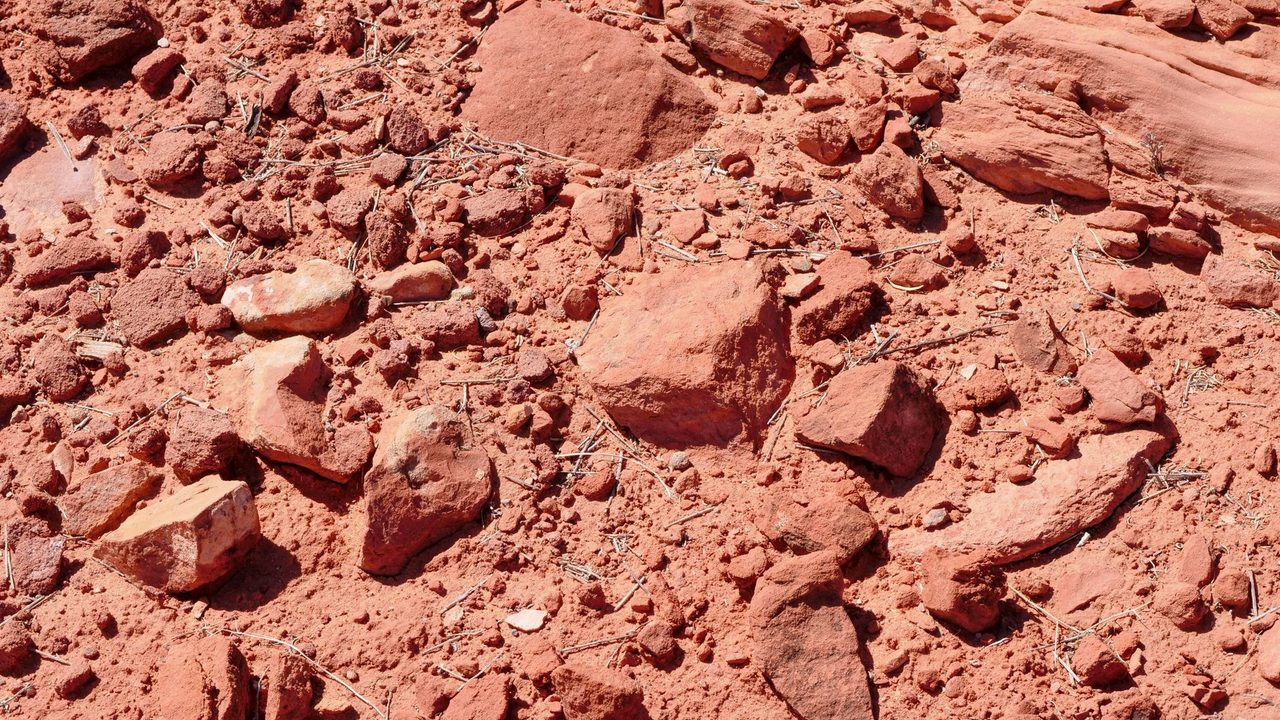
In 2024, Curiosity, which weighs 899 kilograms (1,982 pounds), rolled over an unremarkable rock in the Gediz Vallis Channel in Gale Crater. The rock cracked open, revealing pale yellow crystals that looked like pure sulfur. It was the first time elemental sulfur had been identified on Mars, although sulfates, which are salts that contain sulfur and oxygen, are fairly common there.

More rocks of the same kind were scattered around. Curiosity project scientist Ashwin Vasavada of NASA's Jet Propulsion Laboratory compared finding a field of such stones to finding an oasis in the desert.

Why is pure sulfur so unusual?

Sulfate minerals form when water carrying dissolved minerals evaporates, and they help scientists trace Mars' water history. Pure sulfur is different. On Earth, large deposits are often linked to volcanic or hydrothermal activity, but there was no sign of the high temperatures that would be needed in Gediz Vallis.

What did the first study conclude?

A team led by planetary scientist Scott VanBommel of Washington University in St. Louis reported its findings in the journal Science in June 2026. The researchers examined the rover's images and chemical analyses and confirmed that the sulfur was spread across an area of about 2,100 square meters and was remarkably pure.

The way the rock broke under only part of Curiosity's weight points to fragile material. On Mars, the rover weighs about as much as a 341-kilogram object does on Earth. The team argues that fragile rocks like these would be unlikely to survive transport, so they most likely formed where they were found.

One possibility the researchers suggest is that ancient volcanic activity released sulfur-bearing gases, which became trapped underground, perhaps inside cage-like ice structures called clathrates. As erosion carved out Gediz Vallis, pressure on the buried gases dropped and they escaped. Chemical reactions among them could then have produced pure sulfur without high temperatures. Based on the geological setting, the team estimates the deposit formed between 3.1 and 2.8 billion years ago.

Geochemist Jeff Berger of NASA's Johnson Space Center, who co-led the study, said it is hard to grasp how long the rocks sat there with almost no chemical change.

What did the second study find?

In a separate paper published in Geophysical Research Letters in July 2026, atmospheric scientist Jiawei Wang of Cornell University led experiments to see whether a chemical reaction in water could make pure sulfur without high heat or living organisms.

The team mixed dissolved sulfide with chlorate, a compound of chlorine and oxygen that may have existed on ancient Mars, in acidic water at room temperature. The reaction produced tiny yellow crystals of elemental sulfur. The amount of chlorate mattered: lower concentrations favored pure sulfur, while higher ones produced more sulfate.

The crystals were microscopic, far smaller than the chunks Curiosity found. The researchers suggest that similar reactions running over much longer periods could build larger deposits. They also noted that the hydrogen sulfide the reaction needs could have come from the same underground gas reservoirs proposed in the first study.

What does this mean for the search for life on Mars?

Sulfur is essential to all life, and many organisms take it up as sulfates to build two of the amino acids used in proteins. Because sulfates on Mars have been known for some time, the new finding adds nothing there.

Microbes can make elemental sulfur on Earth, but Wang's experiments show that living organisms are not needed to explain how it could form on Mars. No conclusive signs of life have been found on the planet.

What the discovery does offer is a clearer view of the ancient Martian environment: how gases moved underground, how water chemistry worked and how long some rocks can survive nearly unchanged.

Around Prague, based on reporting by ScienceAlert
Share: Telegram WhatsApp

More science news

BMI Alone Missed Obesity in Up to 8.6 Percent of People in a Study of 844,108 Adults
Body-mass index may misclassify obesity for a meaningful share of people, according to a new international study published in Nature. ScienceAlert reported that the researchers compared BMI with a bro
Trump’s Asia Trip Ends With First Summit Among Him, Xi and Putin
President Donald Trump heads to Asia this week for a trip that will end with an unprecedented three-way summit with Chinese President Xi Jinping and Russian President Vladimir Putin, according to The
Sponge-on-a-String Test for Esophageal Cancer Risk Recommended for NHS Use
Thousands of people in England who are at higher risk of esophageal cancer could soon be offered a seven-minute test on the National Health Service that involves swallowing a small capsule on a string
Why Chess AI Keeps the Pressure On Late in Games While Humans Ease Off
Researchers who analyzed online chess games say strong engines keep the board in a state of high strategic tension deep into a game, while human players tend to simplify their positions as the game go
Mechanical Arms Snag a 407-Foot Starship Out of the Sky After Orbit
SpaceX caught its Starship upper stage with the giant mechanical arms of its launch tower on Saturday, after the vehicle returned from a full orbital flight. La Voce di New York reported that it was t
Artificial Muscles Let a Robot Hand Play Piano and Robot Eyes Hold a Gaze
Engineers at the University of Pennsylvania have built an artificial muscle that can make fine, steady movements, the kind needed to move a finger or hold an eye in place. Popular Science reported tha

Related news

Body-mass index may misclassify obesity for a meaningful share of people, according to a new international study published in Nature. ScienceAlert reported that the researchers compared BMI with a broader definition of obesity proposed by e
President Donald Trump heads to Asia this week for a trip that will end with an unprecedented three-way summit with Chinese President Xi Jinping and Russian President Vladimir Putin, according to The New York Times, The Guardian and the Hon
Thousands of people in England who are at higher risk of esophageal cancer could soon be offered a seven-minute test on the National Health Service that involves swallowing a small capsule on a string. The National Institute for Health and
Researchers who analyzed online chess games say strong engines keep the board in a state of high strategic tension deep into a game, while human players tend to simplify their positions as the game goes on. Scientific American reported on t
SpaceX caught its Starship upper stage with the giant mechanical arms of its launch tower on Saturday, after the vehicle returned from a full orbital flight. La Voce di New York reported that it was the first time a rocket's upper stage has
Engineers at the University of Pennsylvania have built an artificial muscle that can make fine, steady movements, the kind needed to move a finger or hold an eye in place. Popular Science reported that the team tested it on a robotic hand t
Manchester City striker Erling Haaland has played down talk that an ongoing appeals process could affect his future at the club. He said he signed a long-term contract in 2024, according to the London Evening Standard. The newspaper reporte
Sour-sensing cells in the taste bud release the chemical serotonin, which quiets neighboring cells that detect other tastes, according to a new study in mice, Scientific American reported. The finding suggests that taste buds do more than r
For the first time, astronomers have followed a giant exoplanet as it gradually dropped out of view from Earth. The planet, TOI-2535b, had vanished by March 2026, according to ScienceAlert, which reported on a paper in The Astrophysical Jou
The SS Central America, a wooden steamship that sank in a hurricane off South Carolina in 1857, is now remembered less for the 425 people who died than for its gold and the courtroom fights that followed its discovery, Popular Science repor
NASA's Voyager 1 is set to reach a distance of one light-day from Earth on Wednesday, NPR reported. The spacecraft is already the farthest anything humans have launched into space, and the agency is marking the milestone with a public event
United Launch Alliance's Vulcan rocket failed to reach orbit Sunday, Nov. 15, losing all 40 Amazon Leo internet satellites it was carrying. The company said an anomaly struck about 10 minutes after liftoff from Cape Canaveral Space Force St