Coffee May Change Your Gut Beyond the Bathroom Rush, Small Study Finds
USD 22,10
Popular
Coffee may do more inside the body than wake you up and get your bowels moving. A small new study in the journal Gut Microbiology links regular coffee drinking to differences in gut physiology and in the bacteria found in stool, according to ScienceAlert. The authors stress that the work is preliminary and was not designed to study coffee in the first place.
The key takeaway: the study found some associations, not proof that coffee causes any change, and several of the microbiome results did not hold up under stricter statistical testing.
What did the researchers actually study?
Scientists from institutions in Denmark, Singapore and Belgium reused data from 61 participants in an observational project called PRIMA. The project was built to look at how diet, the gut microbiome and conditions in the gut interact.
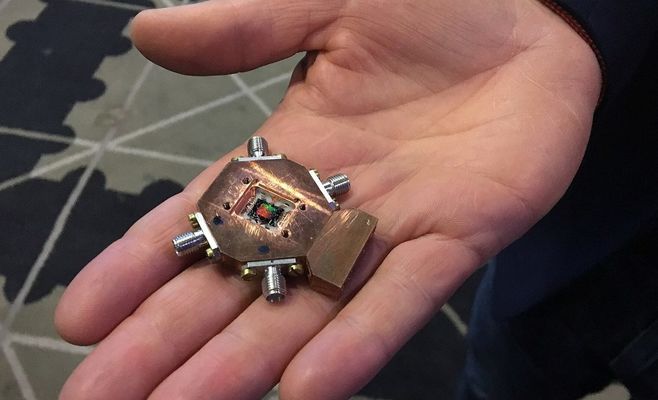
The team checked whether habitual coffee intake was associated with the makeup of gut bacteria and with measures of how the digestive tract works. Coffee intake was judged from an eight-day food diary and from biomarkers in urine. Gut bacteria were assessed from stool samples. For 50 of the participants, researchers also recorded colon contractions with a smart pill that the volunteers swallowed.
What did they find?
Two results stood out as the more solid ones. The first was acidity: the authors reported that pH in the small intestine was significantly lower in frequent coffee drinkers than in rare ones. The second was bacterial abundance: the more caffeine metabolites a person had in their urine, the more bacteria showed up in their stool. That link held for all four caffeine metabolites that were tested, which makes a fluke unlikely, according to the report.
A third result was weaker. The 48 people who drank coffee frequently, defined here as having it on four or more of the eight days, had greater microbial species richness in stool than the 13 who drank it rarely, defined as fewer than three of eight days. ScienceAlert noted that even this result was not especially strong statistically, in part because of the small number of participants.
Does coffee give you a distinct gut microbiome?
Not clearly. At first, frequent drinkers appeared to have a different microbial profile, with high levels of a bacterium called Lawsonibacter, along with Slackia and an unclassified group in the family Eggerthellaceae. Earlier research had already shown that coffee can stimulate Lawsonibacter in lab conditions and that it tends to thrive in the guts of coffee drinkers.
But once the team applied a statistical tool meant to reduce false discoveries, the differences between frequent and rare drinkers no longer held up. Lawsonibacter and the Eggerthellaceae group were still linked to how much coffee people drank in other analyses, according to the report. ScienceAlert said a much larger sample would be needed to know whether any meaningful pattern exists.
Why does it matter for coffee drinkers?
For now, the practical meaning is modest. The study does not say whether any of these gut differences are good or bad for health, and ScienceAlert noted that it does not really address that question. It also cannot show that coffee is the cause, since participants were observed rather than assigned to drink more or less of it.
What the work does offer is a lead. The authors wrote that the relationships they saw provide “valuable indications for future research” on how gut bacteria, gut physiology and coffee interact. Coffee is one of the most consumed drinks in the world, so even small effects on the gut could be of wide interest to researchers.
What are the limits of the study?
Several caveats apply. The sample was small, and only 13 people fell into the rare-drinker group, which limits how much can be read into comparisons with the 48 frequent drinkers. The bar for being counted as a frequent drinker was low, since it required coffee on only four of the eight days recorded.
The authors also noted that the study was not originally intended to investigate the effects of coffee consumption. The researchers repurposed existing data, which means the design was not tailored to answer this particular question. Results from a dataset like this are best treated as hints to be tested in larger studies built for the purpose.
What happens next?
The authors point to future research on the interplay between the gut microbiota, gut physiology and coffee. According to ScienceAlert, confirming any of the patterns would require a much larger group of participants than the 61 people in this analysis.
Read next
A Hidden Gut-to-Brain Dopamine Signal May Explain Why We Learn to Love Bitter Coffee
Fish-Heavy Diets Made Medieval Danish Monks Look Centuries Too Old
Ancient Underwater Canyons Helped Preserve Earth's Oldest Animals
Around Prague, based on reporting by ScienceAlert
Cover photo: Navaneeth Krishnan S / Wikimedia Commons, CC BY-SA 4.0, cropped