Science & Space By

Artificial Muscles Let a Robot Hand Play Piano and Robot Eyes Hold a Gaze
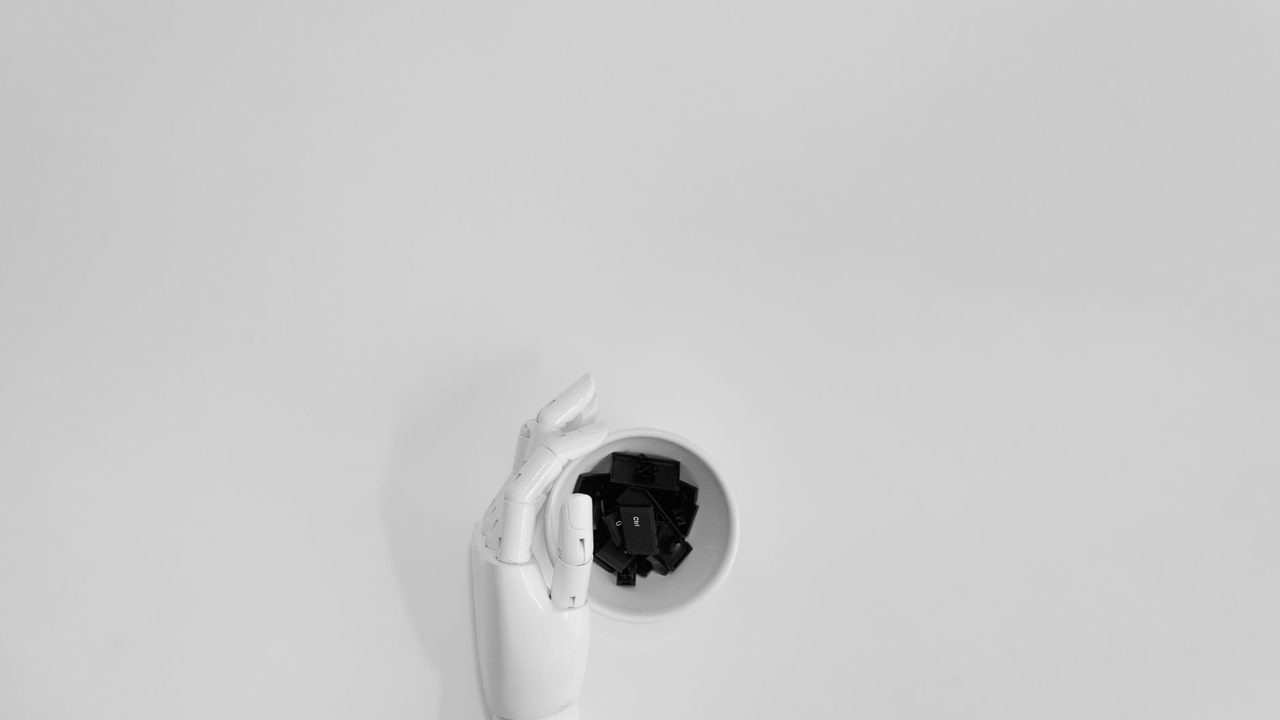
Engineers at the University of Pennsylvania have built an artificial muscle that can make fine, steady movements, the kind needed to move a finger or hold an eye in place. Popular Science reported that the team tested it on a robotic hand that struck piano keys with different levels of force and on a pair of robotic eyes that shifted their gaze on demand.

The work was published this week in the journal Advanced Functional Materials. It is a laboratory demonstration, not a product, and the researchers describe their next steps as combining more of these muscles into larger systems.

Why hands and eyes are hard for robots

According to Popular Science, most large robots, humanoid ones included, depend on bulky, rigid motors and components. That works for walking and lifting. It works far less well for the delicate muscles that move human eyes and fingers, which call for flexibility, fine control and enough strength to survive repeated use.

The article notes that tasks that look easy to people are often the hardest for machines. Robots have performed dance routines and acrobatics for years, it said, yet they still struggle with folding laundry or holding a gaze.

Shu Yang, a University of Pennsylvania engineer and study co-author, said in a statement that soft robotic muscles must be strong and flexible at once, and that those properties are rarely found in a single material.

How the muscle fiber works

The team built each fiber from three parts. The main material is a liquid crystal elastomer, a rubber-like substance that acts as the muscle by contracting and stretching. Graphene is added to make the material tougher and a little softer, so it holds up when opposing muscles pull against it. An ultrathin copper coil runs through the middle.

The coil solves a specific problem. When the elastomer is heated, it stretches, but it then keeps contracting and slowly creeps back toward its original length as it cools. That drift would ruin a light, steady key press or a fixed gaze.

The researchers used the coil as both a heater and a sensor. Study co-author and Ph.D. student Xuelin Wu said the team tracked the coil's electrical resistance as a feedback signal and adjusted the heating power in real time to keep the resistance near a target value. Because one part does both jobs, no separate sensor is needed.

What the tests showed

In the first test, the muscles were fitted into a 3D-printed robot hand built to mimic finger movement. The fingers pressed piano keys at different levels of force and speed, and sensors under the keys recorded how hard each note was played. Popular Science described the result as no Mozart, but a working demonstration.

In the second test, the team mounted a pair of robotic eyeballs on freely rotating ball joints inside 3D-printed shells. Muscle fibers were attached around the edges of opposing pairs, imitating the way eye muscles pull against each other. The eyes shifted their gaze on demand with controlled, repeatable movements, according to the report.

Why it matters

For most people, the near-term effect is limited. The study shows a design for small, precise artificial muscles that could one day replace some rigid motors in robots that need to move with subtlety, such as in faces and hands. Popular Science says the long-term goal is robots that look and feel more like the real thing, and the outlet also remarked that the idea is unsettling to some.

The research is part of a growing field of labs and companies working on artificial muscle systems. Popular Science pointed to Polish startup Clone Robotics, which in 2025 released a video of a faceless, human-sized robot hanging from a ceiling and writhing. The company says the movements were driven by synthetic muscles and a hydraulic system, and calls the machine the world's first musculoskeletal android. Popular Science said the video was likely more a proof of concept than a working prototype.

What happens next

The Pennsylvania team says its next step is joining more of these muscles into larger, integrated systems, where dozens of small muscles must cooperate to produce more natural expressions. Later, the researchers are interested in using AI computer vision to coordinate such systems.

Ziyun Zhang, a University of Pennsylvania engineer and co-author, said he is excited about using the approach to build robots that move with the subtlety and expressiveness of human faces.

Around Prague, based on reporting by Popular Science

Share: Telegram WhatsApp

More science news

Haaland Points to Long-Term Contract as Man City Appeal Heads Toward December Hearing
Manchester City striker Erling Haaland has played down talk that an ongoing appeals process could affect his future at the club. He said he signed a long-term contract in 2024, according to the London
Sour Taste Makes Taste Buds Release Serotonin That Mutes Sweet and Bitter Signals
Sour-sensing cells in the taste bud release the chemical serotonin, which quiets neighboring cells that detect other tastes, according to a new study in mice, Scientific American reported. The finding
Astronomers Watch a Giant Planet Vanish From View as a Hidden Sibling Tugs on It
For the first time, astronomers have followed a giant exoplanet as it gradually dropped out of view from Earth. The planet, TOI-2535b, had vanished by March 2026, according to ScienceAlert, which repo
Gold Steamship Sunk in 1857 Was Found With Math, Then Fought Over in Court
The SS Central America, a wooden steamship that sank in a hurricane off South Carolina in 1857, is now remembered less for the 425 people who died than for its gold and the courtroom fights that follo
Voyager 1 Is About to Be One Light-Day From Earth, More Than 16 Billion Miles Away
NASA's Voyager 1 is set to reach a distance of one light-day from Earth on Wednesday, NPR reported. The spacecraft is already the farthest anything humans have launched into space, and the agency is m
Vulcan Rocket Loses 40 Amazon Internet Satellites 10 Minutes After Liftoff
United Launch Alliance's Vulcan rocket failed to reach orbit Sunday, Nov. 15, losing all 40 Amazon Leo internet satellites it was carrying. The company said an anomaly struck about 10 minutes after li

Related news

Manchester City striker Erling Haaland has played down talk that an ongoing appeals process could affect his future at the club. He said he signed a long-term contract in 2024, according to the London Evening Standard. The newspaper reporte
Sour-sensing cells in the taste bud release the chemical serotonin, which quiets neighboring cells that detect other tastes, according to a new study in mice, Scientific American reported. The finding suggests that taste buds do more than r
For the first time, astronomers have followed a giant exoplanet as it gradually dropped out of view from Earth. The planet, TOI-2535b, had vanished by March 2026, according to ScienceAlert, which reported on a paper in The Astrophysical Jou
The SS Central America, a wooden steamship that sank in a hurricane off South Carolina in 1857, is now remembered less for the 425 people who died than for its gold and the courtroom fights that followed its discovery, Popular Science repor
NASA's Voyager 1 is set to reach a distance of one light-day from Earth on Wednesday, NPR reported. The spacecraft is already the farthest anything humans have launched into space, and the agency is marking the milestone with a public event
United Launch Alliance's Vulcan rocket failed to reach orbit Sunday, Nov. 15, losing all 40 Amazon Leo internet satellites it was carrying. The company said an anomaly struck about 10 minutes after liftoff from Cape Canaveral Space Force St
NASA's Voyager 1, already the most distant human-made object, reaches a new marker on Nov. 18: it will be one light-day from Earth, so far away that light needs 24 hours to cross the gap, according to Live Science. NASA says the spacecraft
A sock that squeezes the ball of the foot can make walking slightly less tiring, according to a new study from the University of Texas at Austin. ScienceAlert reported that the socks stiffened the foot's arch and lowered the body's energy u
A 28-year-old man from the northeastern United States has spent two years seeing his pet cat's features in the faces of people he meets, according to ScienceAlert, which covered a case report in the journal Cortex. The episodes began after
A gas giant about 1,000 light-years from Earth has slipped out of sight while astronomers were watching it. According to EarthSky, the planet, TOI-2535 b, did not really go anywhere: the gravity of another, unseen planet has tilted its orbi
Astronomers say a star system nicknamed the Blaze Star is very likely to erupt soon, but none can say exactly when. According to Space.com, skywatchers have waited about two years for the nova, and when it comes it will make a faint, normal
Scientists may have an explanation for one of the oddest features of Uranus and Neptune: their lopsided magnetic fields. According to ScienceDaily, new computer simulations suggest that the way the planets’ deep interiors conduct electricit