Science & Space By

Physicists Flipped an Atom's Nuclear Spin in an Experiment Theory Says Can't Work
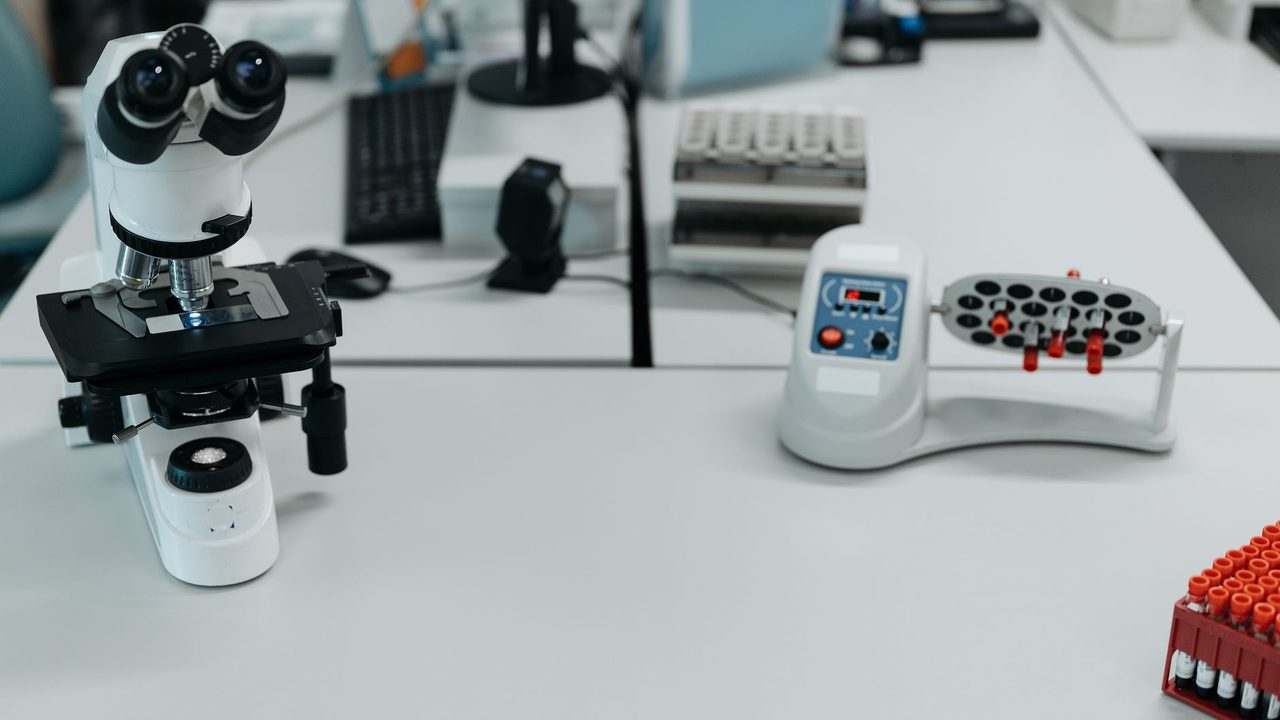
Physicists at Delft University of Technology in the Netherlands have flipped the spin of an atom's nucleus using a scanning tunneling microscope, an effect that current understanding says should not happen, according to New Atlas. The result leaves a puzzle for theorists and could offer a new route to robust quantum bits. The study was published in Nature Communications.

What did the researchers actually do?

The team used a modified scanning tunneling microscope to deliver a finely controlled electromagnetic field to exposed titanium-47 atoms. The instrument emitted two signals: a gigahertz signal that probed the atom's electron, whose resonance carried a signature of the nuclear state, and a much lower megahertz signal that swept across frequencies where the nucleus was expected to respond.

As the second signal swept along, the spin of the nucleus changed at two precise points, at roughly 50 and 85 megahertz, New Atlas reported. That worked even though the electron and nucleus communicate only weakly in this setup.

Why is this result considered surprising?

The shift persisted when the team cut the quantum mixing between electron and nucleus by a factor of ten. Sander Otte, the lead scientist and a condensed matter physicist at Delft, said that by the simple understanding, the nuclear spin should not be sensitive at all to the electrical signals from a scanning tunneling microscope.

How the microscope managed to nudge the nucleus is still unexplained. One unlikely possibility, according to New Atlas, is that the method produced an oscillating magnetic field near the atom.

What is nuclear spin, and why is it hard to use?

Spin is a property of particles with characteristics of angular momentum, but unlike a spinning ball it is point-like and quantized, with two possible directions. Electron spins are easy to reach and are used in electronics and quantum computing. Protons and neutrons also have spin, which together add up to the spin of the nucleus, but that signal is far weaker and harder to measure and manipulate.

That weakness has an upside. Last year, Delft researchers found that a nuclear spin state could last about five seconds, roughly 10 million times longer than the electron spin state in the same atom. The difficulty was reaching it without forcing it to mix with its electromagnetic surroundings. A 2014 approach used the interplay between an atom's electric field and nuclear spin, and New Atlas noted that scientists in Singapore used a similar method this year toward what could be the world's most accurate clock, based on a lutetium nucleus.

What this means for quantum technology

Nuclear magnetic resonance is a well-known technique, and the new result may one day allow it to be applied to single atoms using the relatively common scanning tunneling microscopy, according to New Atlas. While physicists work out the mechanism, the process could give engineers a way to change nuclear spin while keeping it out of the entanglement with its environment, effectively providing a robust quantum bit for new technology.

This is a single experiment on one kind of atom, and the explanation is still open, so any practical use remains a possibility rather than a demonstrated technology.

Around Prague, based on reporting by New Atlas

Share: Telegram WhatsApp

More science news

Why Frozen Mars Dunes Look Like Forests of Trees in a NASA Photo
A photograph taken in 2008 by NASA's Mars Reconnaissance Orbiter appears to show thickets of scraggly trees standing upright on frozen dunes near the Martian north pole, ScienceAlert reported. The tre
A Spacecraft Has Reached Mercury, and It Is About to Enter Orbit
A joint European-Japanese space mission has arrived at Mercury after a voyage of more than eight years, The Guardian reported. Flight controllers are due to fire the spacecraft's thrusters on Saturday
Hera Probe Turns Heat Vision on the Asteroid NASA Slammed Into
Four years after NASA deliberately crashed a spacecraft into an asteroid, Europe's Hera probe has returned its first images of the target system, Universe Today reported, based on a European Space Age
Euclid Telescope Finds 15,000 New Candidates for Cosmic Magnifying Lenses
The European Space Agency's Euclid space telescope has identified 15,000 new candidates for strong gravitational lenses, according to Universe Today. Astronomers say these rare cosmic magnifiers are o
A Black Hole Smaller Than an Atom Could Blow a Star Apart From Inside
A black hole no bigger than an atom could destroy an entire star from the inside, and the resulting flash might be bright enough for today's telescopes to spot, according to a new study by physicists
Potatoes Grown in Fake Moon Soil Match Earth Yields With Worm Compost
Scientists on a NASA-backed project have grown potatoes in simulated moon soil, and with enough added compost the harvest matched what the same plants produced in ordinary Earth soil, according to a s

Related news

A photograph taken in 2008 by NASA's Mars Reconnaissance Orbiter appears to show thickets of scraggly trees standing upright on frozen dunes near the Martian north pole, ScienceAlert reported. The trees are an illusion. The dark streaks are
A joint European-Japanese space mission has arrived at Mercury after a voyage of more than eight years, The Guardian reported. Flight controllers are due to fire the spacecraft's thrusters on Saturday to send it into orbit around the smalle
Four years after NASA deliberately crashed a spacecraft into an asteroid, Europe's Hera probe has returned its first images of the target system, Universe Today reported, based on a European Space Agency press release. The pictures are the
The European Space Agency's Euclid space telescope has identified 15,000 new candidates for strong gravitational lenses, according to Universe Today. Astronomers say these rare cosmic magnifiers are one of the best ways to trace dark matter
A black hole no bigger than an atom could destroy an entire star from the inside, and the resulting flash might be bright enough for today's telescopes to spot, according to a new study by physicists at MIT and other institutions. The findi
Scientists on a NASA-backed project have grown potatoes in simulated moon soil, and with enough added compost the harvest matched what the same plants produced in ordinary Earth soil, according to a study in the journal npj Microgravity. Th
The rapid growth of data centers built for artificial intelligence harms air quality and health in regions far from the buildings themselves, according to a new study by MIT researchers. The team estimates that extra air pollution from the
A traditional Thanksgiving dinner for 10 people will cost an average of $58.63 this year, about 6% more than in 2025, according to the American Farm Bureau Federation's annual survey, released Wednesday. It is the first yearly increase sinc
Researchers in Germany have put a virtual version of Los Angeles underwater to make a point about climate change. Timed to the launch week of Grand Theft Auto VI, the study simulates coastal flooding in Los Santos, the fictional city from G
People who ate dinner earlier, ate breakfast earlier and did not snack in between tended to have lower body mass index five years later, according to a Spanish study of 7,074 adults. The findings do not prove cause and effect, but they add
An atmospheric river drenched Northern California on Wednesday, setting rainfall records in downtown San Francisco and causing flooding and power outages around the Bay Area, The Guardian reported. The storm was expected to reach Southern C
When people want to convince others that a statistic is big or small, they tend to describe it in words instead of just stating it, according to a new study. Audiences find those word-based descriptions persuasive even when they are told th