Why Frozen Mars Dunes Look Like Forests of Trees in a NASA Photo
USD 22,22
Popular
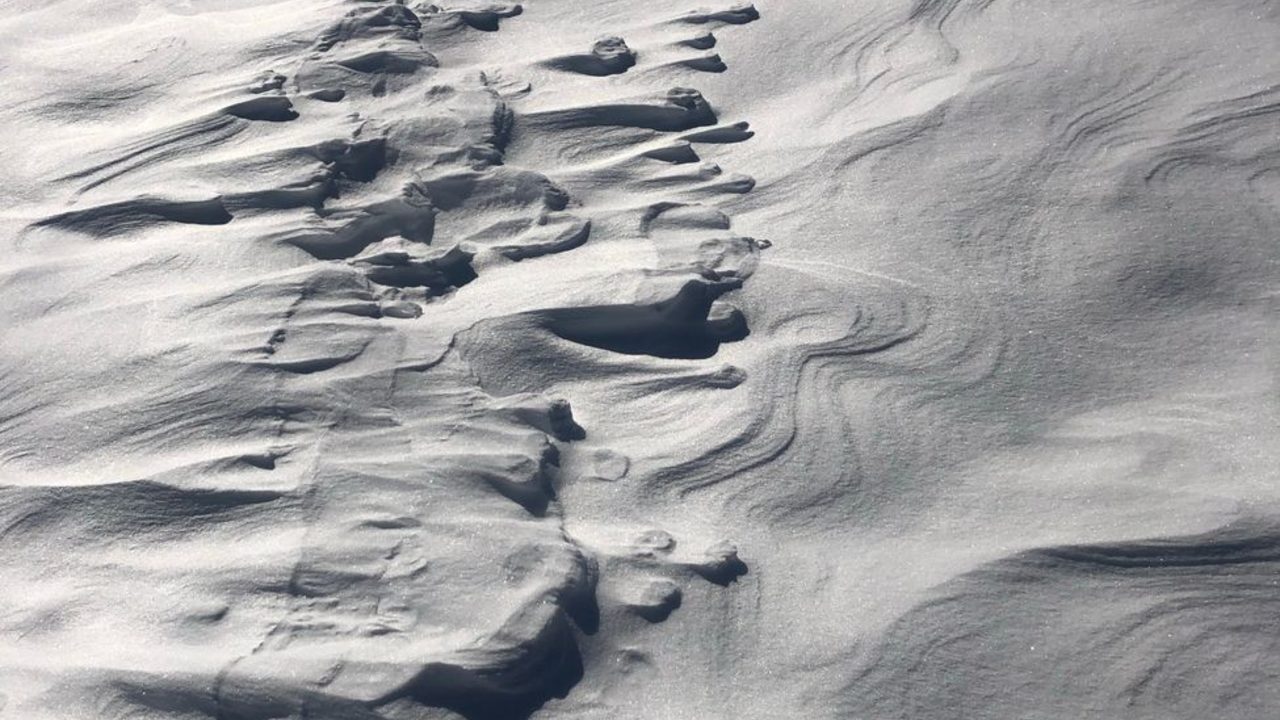
A photograph taken in 2008 by NASA's Mars Reconnaissance Orbiter appears to show thickets of scraggly trees standing upright on frozen dunes near the Martian north pole, ScienceAlert reported. The trees are an illusion. The dark streaks are sand sliding down the dunes as ice turns to gas in spring.
Nothing is known to grow on Mars. According to ScienceAlert, no rover or orbiter has ever detected a single alga, cactus or tumbleweed, which is why the image looks so startling at first glance.
What the picture actually shows
ScienceAlert said that flipping the image upside down makes the streaks easier to read. They look less like trees and more like what they are: dark sand from inside a dune, knocked loose and sent tumbling down its side.
The cause is the seasonal sublimation of carbon dioxide ice, the process in which ice turns directly into gas without melting first. As the sand cascades down the steep slopes, it leaves long, dark marks that resemble branches and trunks when seen from above.
How Martian winter and spring work
Mars is tilted relative to the sun, as Earth is, and passes through its own seasons every year. But the seasons behave differently. In the bitterly cold Martian winter, carbon dioxide from the atmosphere freezes into snow and frost, covering the polar landscape in a layer of dry ice, according to ScienceAlert. On Earth, water ice dominates.
When the long winter eases into spring, that ice does not melt into liquid. It sublimes straight back into the atmosphere, and the outlet describes the process as disruptive.
Even the feeble warmth of the sun that reaches Mars is enough to warm the ice along the dune crests, which weakens and cracks it. Sunlight can also pass through the translucent ice and warm it from below. Gas builds up underneath and can eventually burst outward, carrying sand with it.
Proof that the sand is moving
These avalanches are not just a hypothesis. In the 2008 image, the orbiter's HiRISE camera captured a small cloud of dust kicked up by material cascading down a dune, ScienceAlert reported.
A 2011 study by the late planetary scientist Candice Hansen-Koharcheck of the Planetary Science Institute and her colleagues compared images of the northern polar dunes across successive Martian years. The images showed how dramatically the landscape can change. Some dunes developed new gullies and alcoves, while others gathered fresh deposits of sand at their bases. In five dunes the team measured, the lower edges of the slopes advanced by between 2.2 and 4.7 meters over a single Martian year.
Why it matters
The image is a reminder of how easily a photo of another world can be misread, and of how active Mars still is. The planet is often pictured as a frozen, static desert, yet the dunes near its north pole reshape themselves each year as carbon dioxide ice builds up and disappears. Seeing sand move across the surface in images taken from orbit helps scientists understand how those processes work, and it explains an effect that might otherwise be mistaken for life.
What happens to the streaks
The forests do not last. By summer the ice has vanished, taking the dark streaks with it. Martian winds then redistribute the sand and gradually smooth the slopes of the dunes.
When winter returns, the dunes freeze over again. That sets up another spring of fleeting tree-like marks, ScienceAlert wrote, a pattern that repeats every Martian year.
Around Prague, based on reporting by ScienceAlert