Science & Space By

Old PVC Pipes Became Engine Oil Ingredient in Three Hours, Researchers Report
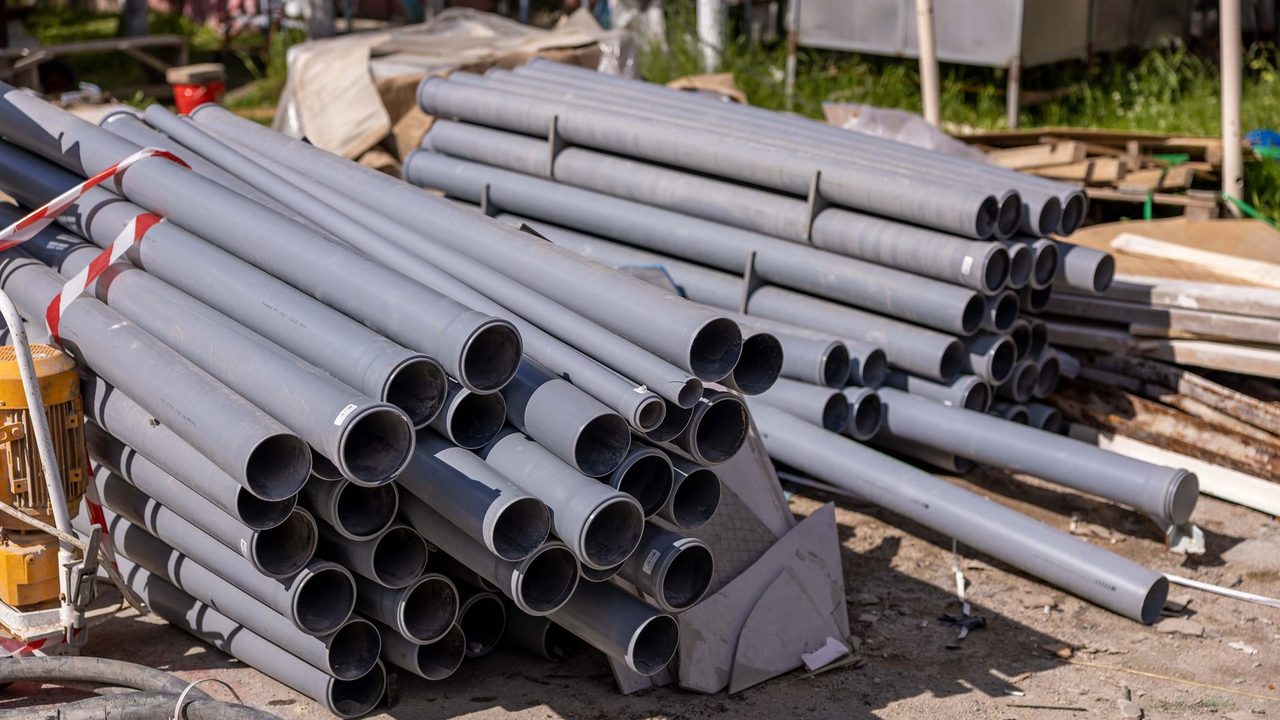
Old plumbing pipes, window frames and expired credit cards could one day end up as an ingredient in engine oil. Chemists at Virginia Tech have developed a process that converts polyvinyl chloride, or PVC, into a base material for synthetic lubricants, ScienceDaily reported on Nov. 27. The work was published in the journal Nature.

PVC is among the hardest plastics to recycle, and much of the world’s discarded PVC ends up in landfills. The new method takes about three hours.

How PVC becomes a lubricant ingredient

The team, led by chemist and chemical engineer Guoliang “Greg” Liu, turned PVC into polyalphaolefin, a key ingredient in synthetic lubricants such as engine oil. According to the report, the researchers first place PVC of the kind used in household plumbing, window frames and credit cards into a solvent. They then add aluminum trichloride and alpha-olefins, a class of hydrocarbons already used to make synthetic lubricants.

The mixture is heated to 158 degrees Fahrenheit for three hours. At the end, the researchers draw off a relatively thick lubricating oil.

Polyalphaolefins are a family of synthetic base oils valued for their stability, their lubricating properties and their ability to work across a wide range of temperatures. They are commonly the foundation of high-performance synthetic engine oils.

Why PVC is so hard to recycle

Two features make PVC difficult. One is its chlorine content. The other is the wide range of chemical additives manufacturers mix into it to make the plastic flexible, rigid or heat resistant. Those additives complicate conventional recycling, which is why so much of the material is landfilled.

A dead end that changed the approach

The researchers did not start out aiming for lubricants. Liu said the original idea was simple: PVC should be easy to convert into other molecules by swapping out its chlorine atoms for other chemical groups. Those early experiments kept producing soft, sticky substances of little practical use.

The disappointing results led Liu to try a different route. Instead of modifying the long molecular chains, he asked whether breaking them into smaller pieces would yield something more useful. That change of direction led to the lubricant process.

The project grew out of earlier work from Liu’s lab, published in Science and Nature Sustainability, which showed that other kinds of plastic waste could be turned into surfactants, the compounds that help water mix with oils and grease and are widely used in soaps and detergents. After those results, the team decided to take on PVC. Doctoral student Eric Munyaneza Nuwayo led the project, joined by chemistry graduate student Connor S. Thompson and first-year graduate student Abby Civiello. Liu called the trio “the three musketeers.”

What it means for plastic waste and everyday machinery

Lubricants rarely make headlines, but they reduce friction and wear between moving parts, helping engines run efficiently and last longer. Equipment from lawn mowers and passenger cars to jet engines depends on them. Global demand for lubricants keeps growing, and making them can carry significant environmental costs.

The Virginia Tech team says its approach offers a possible answer to two problems at once: the buildup of stubborn plastic waste and the search for more sustainable ways to make industrial lubricants. The work is an example of upcycling, which, unlike conventional recycling that recovers material for reuse, turns discarded items into products of greater value or usefulness.

Liu summed up the findings in two points. First, he said, the team has shown that it is feasible to use plastic waste to make high-performance lubricants. Second, he said, the resulting lubricants are green and can meet the market’s emerging sustainability needs. For now, these are the researchers’ own assessments from a laboratory study, and the report does not describe any commercial use.

Liu said the group wants to help improve the recycling and upcycling of PVC.

Around Prague, based on reporting by ScienceDaily

Share: Telegram WhatsApp

More science news

Beethoven's Hair Had 95 Times the Normal Lead, and Hepatitis B DNA Too
More than 200 years after Ludwig van Beethoven asked that doctors describe his illness for the world, scientists studying locks of his hair have found two likely contributors: a hepatitis B infection
Why a Volcano on Russia’s Kamchatka Peninsula Hides Under Clouds in a NASA Photo
A new satellite image from NASA shows Shiveluch, a volcano on Russia’s Kamchatka Peninsula, with clouds wrapped around its flanks and a clear opening over its crater. NASA’s Earth Observatory publishe
Deep-Sea Fish and Shrimp Lost 8% of Their Genetic Diversity in 12 Years
The deep ocean has long been seen as a refuge for marine life, but new genetic research suggests that may be wrong. Scientists at Florida International University found signs of extinction risk in all
Screen Time at Age 1 and Age 6 Linked to Weaker Memory and Grades Later
Children who spent more time on screens as infants and around the start of school tended to do worse academically at age 9 and had weaker working memory at 10.5, according to a study reported by Scien
A Mineral Never Seen on Mars Turned Up in a Meteorite Fragment Smaller Than a Poppy Seed
Scientists have found garnet in a Martian meteorite, according to ScienceAlert, and it is the first time the mineral has turned up in any Martian sample. The few grains sit inside a rock fragment roug
Green Fireball Over Michigan on Thanksgiving Eve: What We Know
A bright meteor crossed the sky over Michigan on Wednesday, Nov. 25, at about 7:40 p.m. ET, and a federal weather satellite recorded the flash, according to Primetimer, which cited local reports and T

Related news

More than 200 years after Ludwig van Beethoven asked that doctors describe his illness for the world, scientists studying locks of his hair have found two likely contributors: a hepatitis B infection and lead poisoning, ScienceAlert reporte
A new satellite image from NASA shows Shiveluch, a volcano on Russia’s Kamchatka Peninsula, with clouds wrapped around its flanks and a clear opening over its crater. NASA’s Earth Observatory published the photo, taken by the Landsat 9 sate
The deep ocean has long been seen as a refuge for marine life, but new genetic research suggests that may be wrong. Scientists at Florida International University found signs of extinction risk in all five deep-sea species they studied in t
Children who spent more time on screens as infants and around the start of school tended to do worse academically at age 9 and had weaker working memory at 10.5, according to a study reported by ScienceDaily. The research points to ages 1 a
Scientists have found garnet in a Martian meteorite, according to ScienceAlert, and it is the first time the mineral has turned up in any Martian sample. The few grains sit inside a rock fragment roughly 0.8 by 0.5 millimeters across, small
A bright meteor crossed the sky over Michigan on Wednesday, Nov. 25, at about 7:40 p.m. ET, and a federal weather satellite recorded the flash, according to Primetimer, which cited local reports and The Saline Post. Residents across the sta
NASA's Europa Clipper is about to make a final pass by Earth. On Dec. 3, the spacecraft will use a gravity assist to pick up speed without spending fuel, then continue toward Jupiter, Universe Today reported. The flyby is also a dress rehea
A male orca that washed up in Scotland may be the oldest male of his species ever recorded. Radioactive residue from mid-century atomic weapons tests, locked into his teeth, points to a life of more than 65 years, Live Science reported. The
Astronomers have detected titanium oxide in gas form around a young, massive star for the first time, Universe Today reported. The find gives a rare look at the earliest stage of a solar system, before any planets or asteroids have formed.
Quantum fluctuations of gravity could blur the line between events that can influence each other and those that cannot, according to a mathematical study by physicists Giordano Cintia, Federico Piazza and Samuel Ramos of the Center for Theo
Rock samples from China's Chang'e-6 mission, combined with data from the earlier Chang'e-4 mission, have produced a timeline of the impacts that shaped the South Pole-Aitken (SPA) basin, one of the largest, oldest and deepest craters on the
Astronauts on the International Space Station will mark Thanksgiving with a mix of classic dishes and plants grown in orbit, Space.com reported. NASA astronaut Anil Menon plans to build his holiday meal around greens that he and his crewmat