Voyager 1 Hits 16.09 Billion Miles, a Full Light-Day From Earth
USD 22,10
Popular
NASA's Voyager 1 probe will reach a distance of 16.09 billion miles (25.89 billion kilometers) from Earth on Wednesday, Nov. 18, according to Live Science. At that range, light takes 24 hours to cross the gap, making the spacecraft the most distant human-made object.
The milestone arrives with the camera dark. Mission scientists switched it off in 1990, right after it captured the Pale Blue Dot and Solar System Family Portrait images from beyond Neptune's orbit. But Live Science points out that the probe had already taken tens of thousands of pictures by then, and some of them reshaped what astronomers thought they knew about the outer planets.
How Voyager 1 rewrote Jupiter's story
- 1977: Voyager 1 begins its journey through the solar system, heading ever farther out.
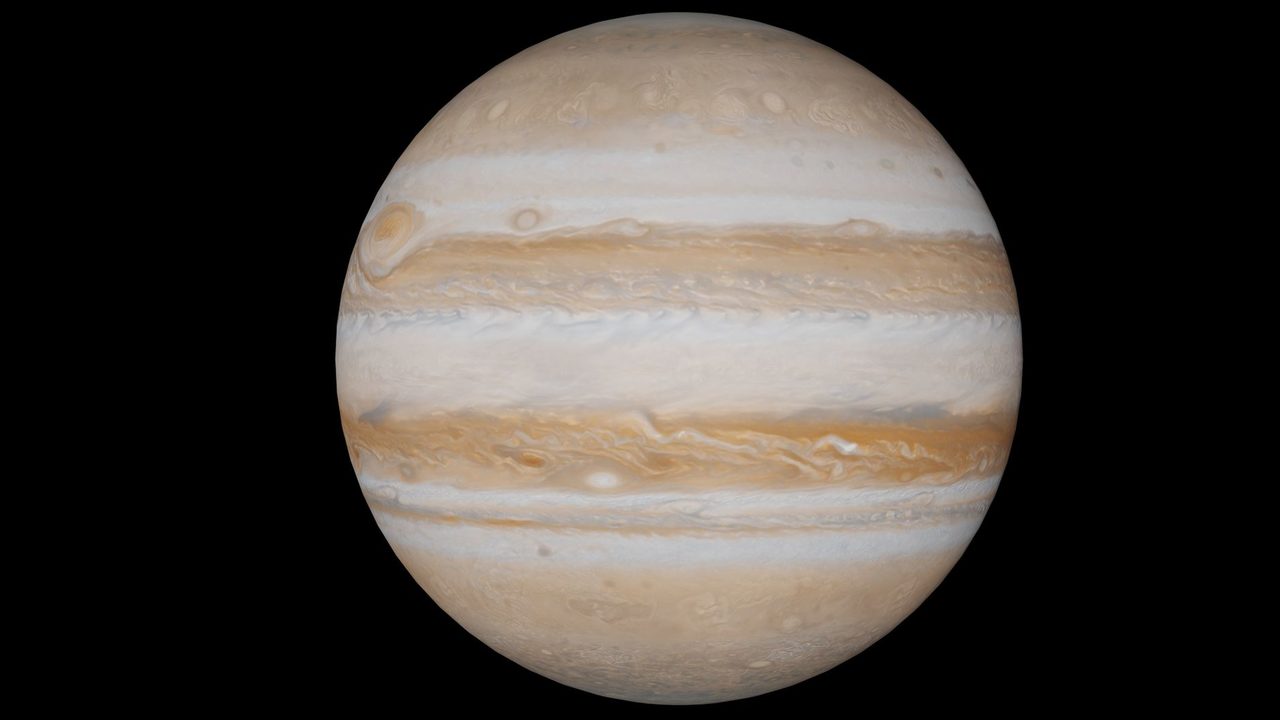
- January to April 1979: The probe studies Jupiter and several of its giant moons up close. As it approached, it photographed the planet every 96 seconds, producing a time-lapse of the turbulent atmosphere.
- March 1979: Voyager 1 makes its closest pass, at a minimum distance of 174,000 miles (280,000 km), according to NASA.
- July 1979: Voyager 2 reaches Jupiter and takes even clearer pictures of the planet's rings.
- 1990: The camera is turned off after the final family portrait of the solar system.
- 2012: Voyager 1 officially enters interstellar space.
What the Jupiter images showed
The time-lapse film covers about 60 full days on Jupiter, which Live Science says is roughly a month on Earth, since a Jupiter day lasts about 10 Earth hours. It gave the most complete, highest-resolution look at the planet to that point. It showed bands of atmosphere moving at different speeds and in different directions, with clouds racing along like conveyor belts and planet-size storms churning.
The footage built on data from NASA's Pioneer 10 and 11 probes, which launched about five years earlier, and revealed an atmosphere far more dynamic than astronomers had realized.
A faint ring and a volcano on a moon
Shortly before its closest approach, Voyager 1 spotted a thin, faint ring system around Jupiter. The rings are made mainly of dust and showed up only when the planet was lit from behind by the sun. No telescope had seen them before, though ground-based observatories soon confirmed they were real. Today scientists know that all four outer planets, Jupiter, Saturn, Uranus and Neptune, have rings, and they suspect eruptions on the moon Io help keep Jupiter's rings supplied with dust.
Io was another first. During a close pass, Voyager 1 witnessed the first volcanic eruption ever seen on a world beyond Earth. One image shows Loki Patera, the largest volcano on Io, which Live Science says measures an estimated 125 miles (200 km) across, spewing material into space. The sighting showed that moons, not only planets, can be geologically active.
Why it matters
Taken together, the observations revealed Jupiter and its moons as a more complex and chaotic system than anyone had expected. Live Science argues that the close-up views turned distant dots of light into real worlds to map and, eventually, visit. As an example, it notes that China's space agency announced this week plans to send a lander to Jupiter's moon Callisto, which would be the first landing mission in the Jovian system.
What happens next for Voyager 1
Voyager 1 is still working in interstellar space, using magnetic field and plasma detectors to study the radiation environment. Those are the last two of its 10 science instruments still receiving power. Scientists suspect the probe will run out of power completely in the 2030s.
Read next
Voyager 1 Hits One Light-Day From Earth, and NASA Wants Your Phone Lit Up
Voyager 1 Is About to Be a Full Light-Day From the Sun, on Nov. 18
Voyager 1 Becomes First Human-Made Object to Reach One Light-Day From Earth
Around Prague, based on reporting by Live Science