Nové Mlýny: Could a Semi-Dry Polder Save the Dyje River from Ecological Disasters and Břeclav from Floods?
USD 21,79
Popular
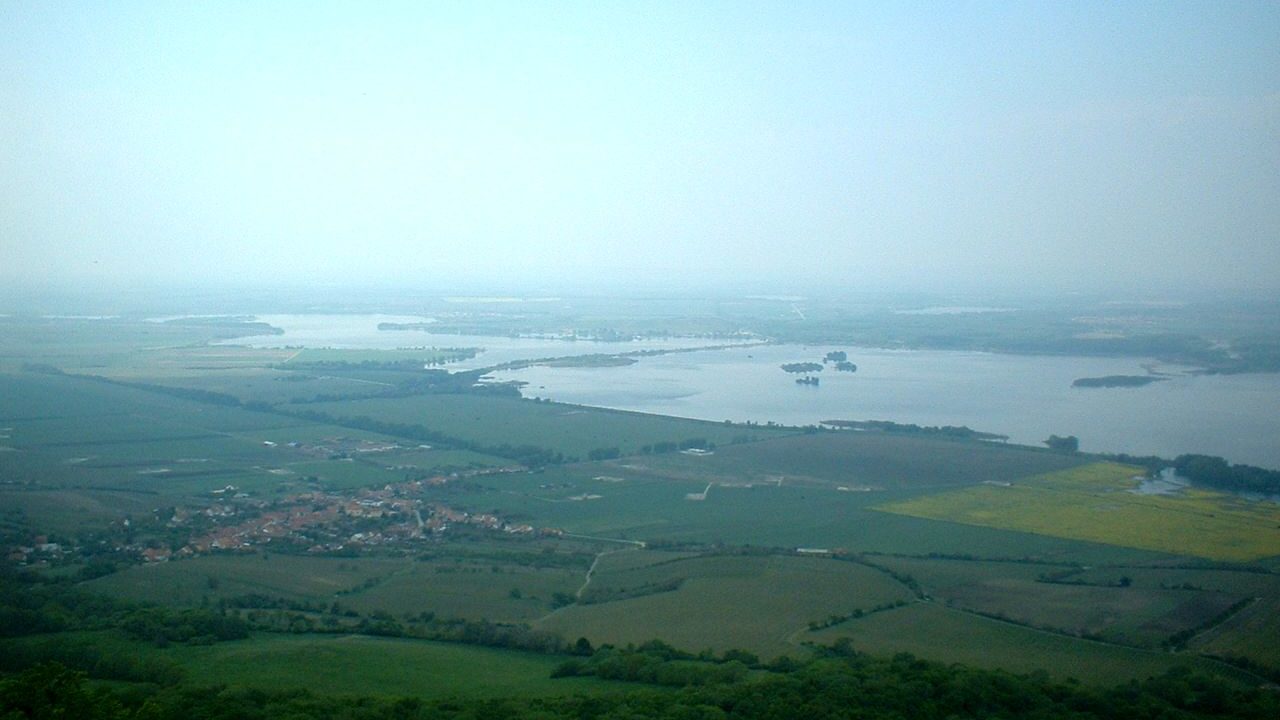
The Nové Mlýny reservoir cascade in southern Moravia — Mušov, Věstonice and Nové Mlýny itself — no longer serves its original purpose of irrigating farmland. Instead, every summer it turns into a shallow "incubator" for toxic blue-green algae, which periodically triggers mass fish die-offs in the Dyje River.
Experts point to phosphorus as the root of the problem, washed into the reservoirs from inadequately treated wastewater and agricultural runoff. At night, the algae consume all available oxygen, and when the Morava River Basin Authority releases water from the oxygen-depleted lower layers back into the Dyje, the river is essentially flooded with a "rotting cocktail." The result is tens of tons of suffocated fish and a collapsed river ecosystem, year after year.
Some scientists and botanists are pushing for a radical fix: draining the middle and lower reservoirs entirely and turning them into a giant dry polder. The cascade currently holds around 130-140 million cubic meters of water, yet only 14.5 million cubic meters of reserve capacity is actually used for flood protection. If fully drained, Europe would gain its largest dry polder — over 100 million cubic meters in volume, capable of absorbing even a once-in-a-century catastrophic flood without difficulty.
There's a serious technical catch, though: the dams here are earthen embankments built around a clay watertight core designed to remain permanently submerged. If the reservoirs dried out, the clay would crack and lose its protective properties, risking a dam breach at the very first major flood. Converting to a fully dry polder would require investments of 3-5 billion crowns — for deep soil grouting or building new concrete walls inside the dam bodies, carving new channels for the Dyje, Jihlava and Svratka rivers across the exposed riverbed, hauling away millions of tons of old sediment, and reinforcing the international roads that run along the dam crests.
A compromise solution being floated is a controlled "semi-dry" polder model — a scheme already working successfully on a smaller scale at the Czech Republic's largest polder, Žichlínek, and at Bezděkov. The idea is not to drain the middle and lower reservoirs completely, but to permanently lower the water level to a critical minimum — roughly 1-2 meters deep.
According to experts, this approach delivers several benefits at once: the dams stay safe, since the clay cores remain permanently underwater; a huge free capacity of 85-95 million cubic meters is preserved — enough to fully absorb a hundred-year flood for Břeclav and the settlements downstream; hundreds of hectares would develop into a mosaic of backwaters, marshes and reed beds that would naturally slow and disperse a flood wave before it even reaches the main dam; water flowing through a living wetland would be continuously oxygenated and cooled, while marsh vegetation would act as a natural biofilter, absorbing phosphorus.
Switching to a semi-dry polder would cost far less than full drainage — an estimated 400-800 million crowns, mostly for reworking the lower outlets and making localized changes to the riverbed. But the concept's authors stress something important: the state doesn't need to spend the billions it saves on expensive municipal technology — the root cause of the problem, phosphorus pollution, can instead be tackled through smart legislation that forces polluters to act and kickstarts a market-driven circular economy.
Starting in 2029, the EU will require large treatment plants to recover phosphorus from sludge. Meanwhile, natural phosphate deposits in Morocco and China are expected to run out within a few decades — so-called "peak phosphorus" is forecast to occur between 2035 and 2070, and Europe is entirely dependent on imports of this raw material, which is critical for agriculture. The catch is that clean, recycled phosphorus from sludge (in the form of struvite, for example) currently costs 4-6 times more than mined phosphorus — forcing farmers to suddenly switch to expensive recycled material would push food prices up by 5-12%.
A gradually rising environmental levy on imported raw phosphorus could offer a way out: if the state introduced a tariff that climbed steadily over ten years to a level that made imports from Morocco economically unviable, the market would receive a clear signal and time to adapt. Revenue collected in the early years could fund the Nové Mlýny overhaul, and as the price of imported phosphorus rose, domestic, eco-friendly, slow-release struvite from treatment plants would naturally win out in market competition — without a single crown of state subsidy.
To keep central treatment plants further up the cascade from becoming overloaded, the tariff would need to be paired with a second legislative measure — mandatory phosphorus recovery directly at industrial sites: large commercial laundries, slaughterhouses, dairies, breweries and chemical plants, since household detergents and dishwasher tablets are already covered by strict EU phosphate bans. In hot, highly concentrated industrial wastewater, extracting phosphorus is technologically simpler and cheaper than doing so at the final municipal treatment plant, where the pollution is diluted by millions of liters of rainwater.
As the concept's authors point out, the debate over Nové Mlýny shouldn't be framed in black and white: full drainage is technically dangerous and economically unfeasible, while keeping the status quo means silently accepting a recurring ecological disaster in the Dyje River. A managed semi-dry polder, combined with pressure on industrial polluters and a gradual tariff on imported phosphates, could become a functional, safe and financially self-sustaining system — reliable flood protection in winter, a haven for nature in summer, and a source of water where fish can finally breathe freely again.
Read also: U Černého vola: the Hradčany pub where the clocks stopped in 1965
Source: ekolist.cz