Partial Solar Eclipse to Sweep Over Czechia on August 12 — the Sun Will Set as a Slender Crescent
USD 21,75
Popular
On the evening of Wednesday, August 12, 2026, a partial solar eclipse will be visible across Czechia — the Moon will cover most of the Sun's disc, and in the east of the country residents will be treated to a rare sight: the setting sun shrunk to a thin, horned crescent right on the horizon.
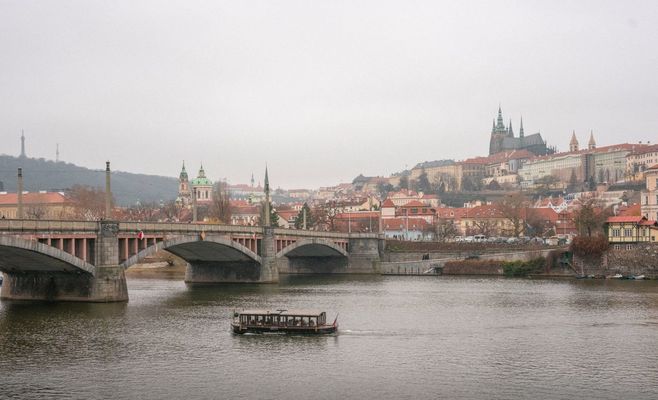
The eclipse will begin roughly between 19:17 and 19:21 local time, depending on the region, as the Moon starts creeping over the solar disc "from below." The maximum phase will occur around 20:10–20:13. In Prague, the eclipse begins at 19:19, peaks at 20:11, and sunset follows at around 20:26 — meaning the most dramatic phase will unfold just a quarter of an hour before the Sun disappears below the horizon.
The spectacle will be especially striking in the east of the republic, particularly in the Beskydy Mountains, where the Sun will set exactly at the moment of maximum eclipse — observers there will watch the "horns" of the solar crescent touch the horizon and vanish together with the sunset. In the west of the country, near Cheb, the eclipse will last the longest, since the Sun and Moon will be higher above the horizon when the event begins there — the whole show could stretch past 21:00, though in reality the Sun will set before the Moon fully clears its disc.
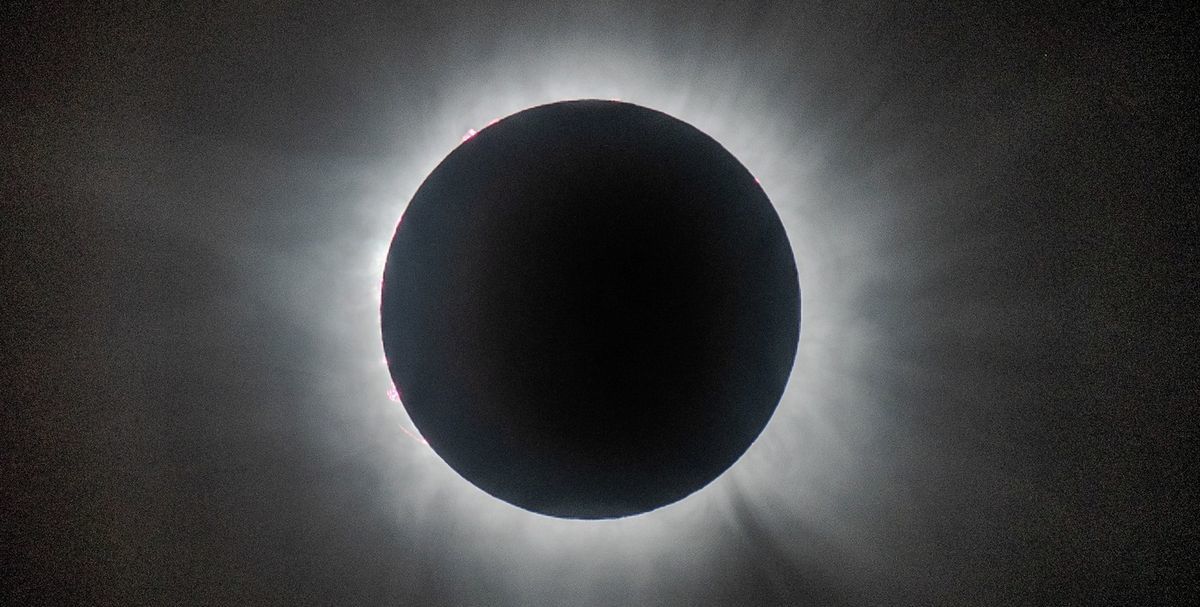
There will be no total eclipse anywhere in Czechia — even at the peak, between 13 and 17 percent of the Sun's diameter will remain visible. Because of its low position above the horizon, the Sun may take on a dramatic yellow, orange or reddish hue, and an unusual dusk-like gloom will settle over the surroundings. Observers may notice an odd "double twilight" effect: after the light dims during the darkened sunset, the sky will briefly brighten slightly again before true evening twilight sets in.
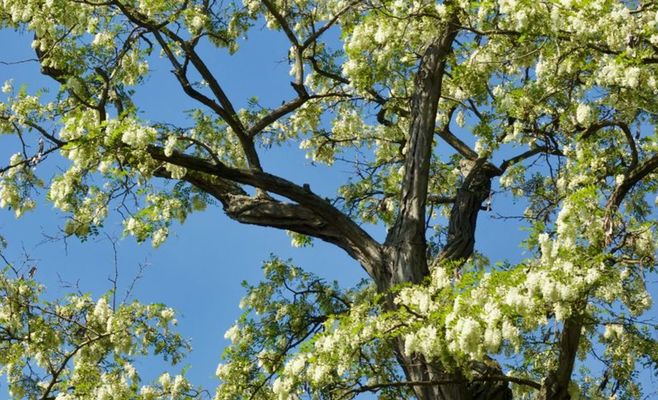
An intriguing side effect can be produced by tree canopies — gaps between leaves act as makeshift pinhole cameras, casting dozens of tiny solar crescents onto the ground. A similar effect can be achieved with a colander or a sheet of paper with a small hole punched in it.
For the best view, a completely unobstructed line of sight to the west or west-northwest is essential, since the Sun will sit very low on the horizon at the peak of the eclipse. Good spots include hilltops, open fields, meadows, plateaus, lake or river shores, and open outskirts of towns free of tall buildings or trees — within city limits, an ordinary house or tree can easily block the view. In Moravia and Silesia, the Sun sets earlier, so finding a spot with a clear horizon is especially important there.
The biggest threat to visibility is cloud cover: since the Sun will be so low, even a thin band of clouds near the horizon could block it entirely. In the worst case, if the crescent isn't visible at all, people may only notice an unusual dimming of the evening light. Importantly, thin clouds, fog and haze do not protect the eyes from solar radiation — looking directly at the Sun through them remains just as dangerous.
Experts stress that you should never look at the Sun with the naked eye, even during a deep partial phase, since Czechia won't experience totality — meaning eye protection is required throughout the entire viewing period. Staring directly at the Sun can damage the retina and cause so-called solar retinopathy, an injury that doesn't always cause immediate pain but can later manifest as blurred vision, a dark or light spot in the field of view, distorted images, or impaired color perception.
The simplest form of protection is dedicated eclipse-viewing glasses or a handheld solar filter meeting the ISO 12312-2 standard; ordinary sunglasses are unsuitable no matter how dark the lenses are, and the filter itself must be free of any damage. Under no circumstances should you use dark sunglasses, smoked glass, photographic negatives, X-ray film, CDs, cling film, or welding glass of unknown type. It is especially dangerous to look at the eclipse through binoculars or a camera viewfinder without a proper filter mounted in front of the lens — the optics concentrate solar radiation and can cause serious eye damage instantly. The safest method is indirect observation: project the Sun's image through a small hole in a piece of paper onto a light-colored surface, wall, or the ground — never look through the hole directly at the Sun.
Read also: 8 best swimming spots near Prague: lakes, quarries and beaches within an hour of the capital
Source: novinky.cz