Železník, king of the Velká Pardubická steeplechase in Czechia
USD 21,75
Popular
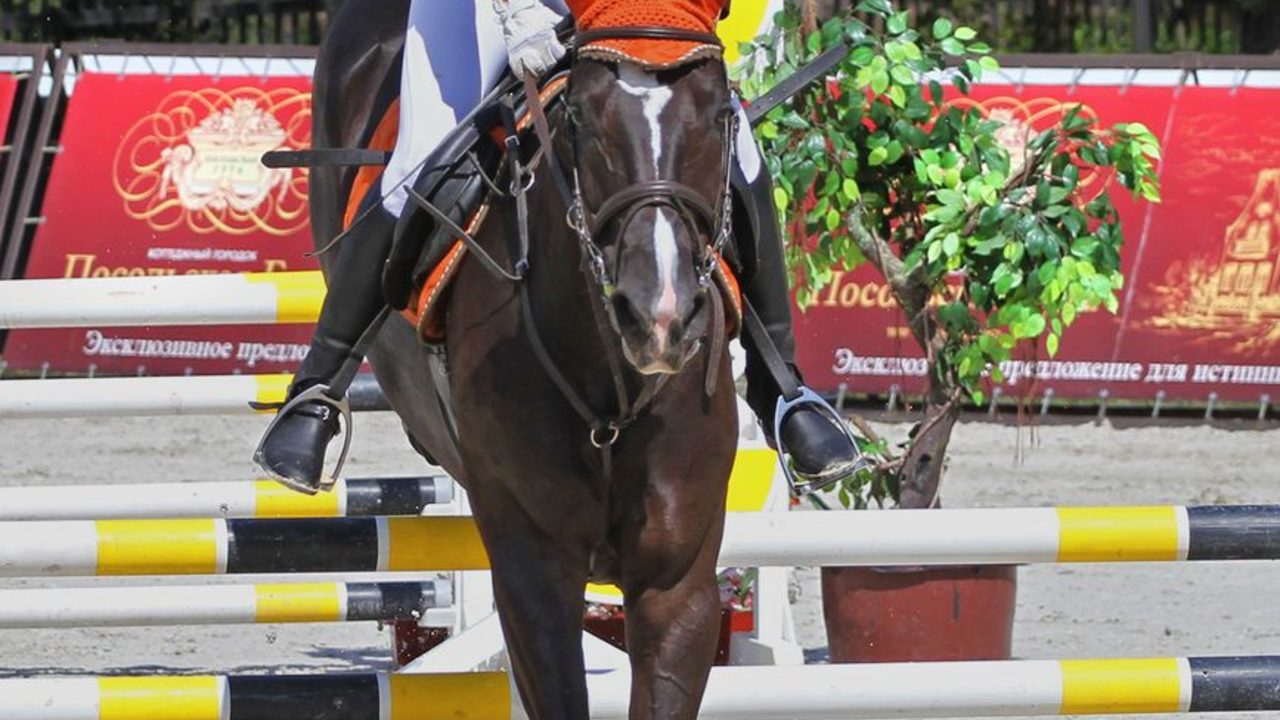
It is 35 years since the chestnut stallion Železník won the Velká Pardubická for the fourth and last time, and he remains the king of this steeplechase to this day. In 1991 the three-time champion fell at the Popler fence and ended up on the ground together with jockey Josef Váňa, but they got up and won again.
“It is a story from another, unrepeatable time, which takes nothing away from its charm,” says racing historian Martin Cáp. According to him, almost everyone who lived in Czechoslovakia at the time remembers Železník’s name, and people still recognize Josef Váňa on the street.
A race that no longer exists
Repeating such a feat today is impossible. The Velká Pardubická of that era was very different from today’s: footage from those years looks like a film for veterans, and the horses in it are noticeably slower than today’s, but first impressions are deceptive. “For jockey Váňa to get back on the horse and win would be impossible today: the pace is different, and it is not even allowed. Nobody can know whether the horse has suffered concussion or an injury,” Cáp says, pointing to the increased attention to animal welfare.
There is less ploughed ground, in which hooves easily get stuck, and it used to be deeper. The obstacles have become easier. “The rules have changed as radically as if football had cut playing time to an hour,” Cáp compares. The Velká Pardubická used to be called the toughest steeplechase on the continent; now the main emphasis is on safety.
A symbol of the changes is the famous obstacle, the Taxis Ditch, named after Prince Egon of Thurn and Taxis. It used to be two metres deep and five metres long, while today it is one metre deep and four metres long. The aim is clear: to make the race less dangerous and protect the health of both jockeys and horses.
How communism made a champion
To understand the phenomenon, one has to look further back than 1991. After the war a new totalitarian regime took shape in the east, and it influenced everything, including racing. Železník’s dam, Želatina, was of Soviet blood and his sire came from East Germany, and the stallion himself was born in Graditz in the GDR. “There are theories that the dam was not a thoroughbred: Soviet horse breeding after the war relied on trophy horses from Germany and other countries, and nobody fussed over the paperwork,” Cáp says. This may explain why Železník was so good over fences.
Some communists were racing fans, and they came up with a justification: under the bourgeoisie it had been a money-making machine, but under socialism it would be a pure test of performance, since all the horses belonged to the state. At the turn of the 1950s and 1960s, Soviet horses and jockeys dominated at Pardubice. “When the Czechoslovak horse Korán won in 1963, it was something like the ice hockey players beating the Soviets,” the historian adds.
From East Germany the stallion went to southern Slovakia: horses were allocated among state enterprises, and Železník went to an enterprise from Šamorín. It was run by the communist Josef Kostal, a racing enthusiast who dreamed of raising the best horses in the Eastern Bloc. But Železník was the son of a German sire and a Soviet dam, and Kostal wanted victories from his own homebred horses, so he offered the horse to various stables. In Prešov they wanted to buy him, but the manager there, fearing accusations of poor management, preferred three cheaper horses.
In 1979 Železník first came to the Czech lands, specifically Moravia: he was bought by an agrochemical enterprise from Slavkov u Brna. He was promising but did not shine. After a serious leg injury came the choice between long, expensive treatment and selling him, and the horse was handed to the Bruntál–Světlá Hora state farm. There, in the riding arena, girls rode him too: children found a common language with him easily, and the horse understood he could get away with a lot. The historian also debunks the myth that Železník was held back by a lack of understanding with jockey Antonín Novák; in the 1980s they won prestigious steeplechases together. But Pardubice demanded far more. Everything changed when the young trainer Čestmír Olehla arrived at Světlá Hora and paired Železník with Josef Váňa.
The secret of the winning formula
The Velká Pardubická is a kind of puzzle: it needs not one outstanding talent but a high level in several qualities at once. The qualifying race is a kilometre shorter than the main race, and many of its winners later lack something. “Železník had the optimal combination of qualities, but every year it only becomes clear on race day that most horses lack one of them,” Cáp notes. A horse must be fast: in 1987 Železník ran the Velká Pardubická in under ten minutes for the first time, “as if he had come from Mars”. He must also be enduring and a brilliant jumper.
Železník won three times in a row, in 1987, 1988 and 1989. A year later he fell, and in 1991 he took his fourth and last victory. In 1992 demonstrators ran onto the course and threw him off his rhythm, after which he broke a pastern bone while being walked.
In 1991 the Velká Pardubická was run for the first time with prize money of one million crowns, half of which went to the winner. Over his whole career Železník earned 1.7 million crowns, almost a third of it from his last win at Pardubice. He returned to Světlá Hora and lived to the age of 26, spending half of that in retirement as an icon and tourist attraction.
“You cannot look at history only through today’s eyes,” Cáp sums up. “The Velká Pardubická has modernized a great deal, but it is still more tied to the past than other races. You still ride through the landscape, there is still ploughed field, though less than before. It is a living museum.” Its greatest legend remains Železník.
Read also: 6 Prague cemeteries where history and art matter more than grief: a guide to necropolis museums
Source: seznamzpravy.cz