Voyager 1 is now one light-day from Earth: what NASA says
USD 22,22
Popular
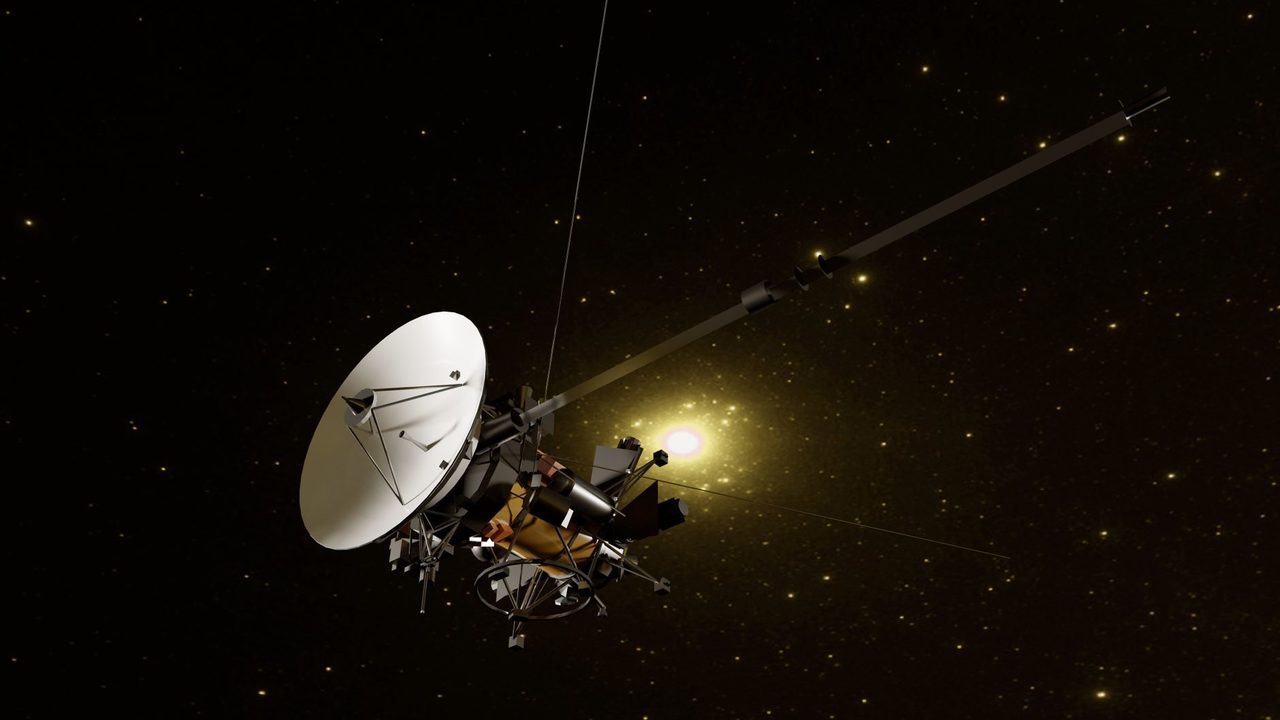
The Voyager 1 space probe, launched in 1977, reached a distance of one light-day from Earth on Nov. 18 at 2:16 a.m. Pacific time (11:16 CET), NASA’s Jet Propulsion Laboratory (JPL) announced. It is the most distant human-made object, and it got there after more than 49 years of continuous flight.
A light-day is the distance light travels in 24 hours: roughly 25.9 billion kilometers. The time it takes the probe’s carrier signal to reach Earth helped NASA confirm the milestone.
What NASA says
“Passing one light-day is a unique achievement for a spacecraft, but Voyager 1 is more than a distant traveler. The mission is remarkable for how its journey past the outer planets advanced planetary science,” said Joe Westlake, head of the heliophysics division at NASA headquarters in Washington.
The probe is moving at almost 61,000 kilometers per hour. In 2012 it crossed the outer edge of the heliosphere, the protective bubble of particles and magnetic fields created by the Sun, and entered interstellar space. Its “twin,” Voyager 2, was also launched in 1977 and entered interstellar space in 2018. According to Reuters, citing JPL representatives, recent energy-saving measures could give both probes enough power to stay in contact with Earth for another three to four years.
A problem with science data
During its mission Voyager 1 flew past Jupiter and Saturn, the two largest planets in the Solar System, and gave scientists valuable information about the interstellar environment. Its instruments, for example, detected faint vibrations of a small amount of gas in interstellar space.
Since Nov. 14, however, NASA has received neither science nor engineering data from the probe. Voyager 1 is still sending a carrier radio signal, which confirms that its transmitter works and its antenna still points toward Earth. NASA engineers are investigating the cause, which may be linked to the onboard computer that processes data from the probe’s systems.
The Golden Record with a Czech greeting
Both probes carry a Golden Record, a gold-plated copper disc 30 centimeters in diameter. It is a time capsule of sounds and images meant to introduce any extraterrestrial civilizations to life and culture on Earth. Czech is on it too: “Dear friends, we wish you all the best!” is a message recorded by nuclear physics professor Václav Otakar Kostroun while he worked at Cornell University in the U.S.
Around Prague guide on the topic: How to learn Czech: courses, apps and tutors in 2026
Around Prague, based on reporting by novinky.cz