"War in the Shopping Cart": Why Ukraine Is Systematically Bombing Russian Online Retailers' Warehouses
USD 21,74
Popular
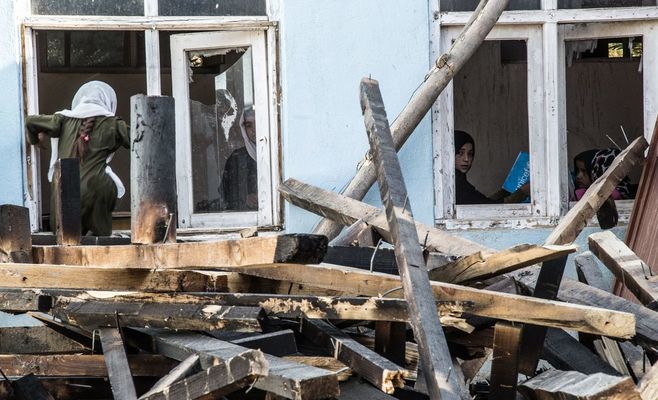
Since July 18, Ukrainian drones have been carrying out systematic strikes on warehouses belonging to Wildberries, Russia's largest online retailer — in Elektrostal near Moscow and in Kotovsk, Tambov Region. In Kotovsk, seven night-shift workers were killed and another 25 were injured, while the fire at the Elektrostal warehouse took three days to extinguish.
Over the following month, drones struck around twenty facilities — from St. Petersburg and Moscow to Samara Region and the Urals. According to Ukraine's Ministry of Defense, seven of the company's ten largest logistics hubs have been knocked out of action, although some have since partially resumed operations. In late August, a strike also hit a warehouse belonging to competitor Ozon.
Not Just Civilian Goods
Robert Brovdi, commander of Ukraine's Unmanned Systems Forces, called Wildberries "a delivery service for Russia's war": the platform sold body armor, helmets, radios, electronics and drone parts, with some items marketed with labels like "field-tested in the SVO." An investigation by the Russian opposition outlet Meduza identified 77 pro-war channels on Telegram and VKontakte through which buyers purchased medical kits, protective gear, night-vision devices and Starlink terminals destined for the front.
However, the traceable volume of such purchases amounted to roughly 18.6 million rubles — less than five million Czech crowns — a figure clearly incomparable in scale to full-fledged military supply chains. Similar links also pointed to Ozon. There is no public data on the actual share of military-related cargo at specific warehouses, so it's impossible to confirm their role as military targets in the strict sense.
Why the Warehouses Are the Target
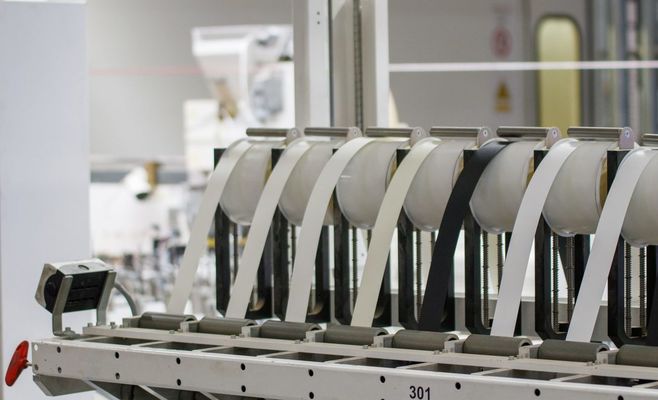
Wildberries' logistics network relies on roughly twenty massive distribution centers — some as large as 300,000 square meters — that serve about 100,000 pickup points across the country. Such centralization is efficient in peacetime, but in wartime it concentrates both goods and risk in just a handful of locations. These warehouses were never designed to withstand aerial attacks, and their lightweight structures, packed with flammable packaging, plastic and batteries, quickly turn into massive fires — as happened in Novosemeykino, Samara Region, where flames engulfed roughly 160,000 square meters.
By rough estimates, a Ukrainian long-range FP-1 drone costs around $55,000 (about 1.2 million crowns), yet it can destroy goods worth far more — from a purely arithmetic standpoint, such strikes are advantageous for Kyiv, though the question of their legality remains a matter of debate.
Many Targets, Thinly Spread Defenses
Calculations based on Russian reports of downed drones suggest that in July, Ukraine may have launched around ten thousand long-range drones per month, while Russia claimed to have intercepted an average of about 425 aircraft a day. Where air defenses are especially dense, as in Moscow, drones' chances of success are slim — by one estimate, the first two layers of defense stop about 93% of incoming drones. Yet on August 16, a strike still reached Koledino near Podolsk, a major Wildberries hub outside Moscow, with the fire visible across the capital.
The more varied the targets Ukraine can strike, the harder it becomes for Russia to distribute radars and air-defense systems across its entire territory — covering the whole country with air defense is physically impossible, but forcing the enemy to try is already a strategic win.
A Blow to Wallets — and Nerves
Brovdi has openly stated that the goal of these strikes is to make ordinary Russians feel the war in their everyday lives: Wildberries customers experience the consequences as a delayed order or a cancelled delivery. According to monitoring of roughly a thousand regional groups on Telegram and VKontakte, posts about the attacks on Wildberries generated 223,793 reactions — the topic clearly struck a nerve with the audience more than strikes on distant industrial facilities, though that alone doesn't necessarily signal any shift in Russians' attitudes toward the war.
Damage to Business — and the Economy
According to one of the more credible estimates, from the analytics firm Data Insight, the total damage from destroyed seller inventory ranges between 215 and 280 billion rubles — roughly 56–73 billion Czech crowns. For comparison, RWB Group, which owns Wildberries, reported a net profit of 175 billion rubles (about 46 billion crowns) for 2025 — meaning even the lower estimate of the damage exceeds the company's annual profit, although most of the destroyed goods belonged to independent sellers rather than the platform itself.
Wildberries had already amended its seller agreements in advance, absolving itself of liability for damage caused by missiles and drones, while simultaneously beginning to pay compensation to tens of thousands of sellers and deferring their payments through its own bank. Across the Russian economy as a whole, the damage amounts to roughly 0.10% of annual GDP — relatively modest, but it adds to the broader costs of the war amid a sharp economic slowdown: in July, Russia's Central Bank cut its growth forecast for the year to 0–1%, while keeping its key interest rate at 14%; short-term ruble loans for small and medium businesses cost an average of 18.2% annually in May.
Analysts note that such attacks are likely to continue — and not only against logistics warehouses, but against other vulnerable segments of the Russian economy only loosely tied to the war effort, as Ukraine's capacity to strike the enemy's rear continues to grow, primarily in scale.
Read also: Prague Metro: Map and Tickets
Source: seznamzpravy.cz