Who will defend Czechia if the army goes to help its NATO allies
USD 21,62
Popular
If the main forces of the Czech Army are deployed to carry out NATO missions abroad, it will be the territorial forces that take over the protection of the country within its own borders. This was explained by Tomáš Kučera, an expert from the Faculty of Social Sciences at Charles University.
According to him, territorial forces are responsible for protecting strategically important sites and the entire domestic territory of the country precisely at the moment when the rest of the army is busy fulfilling allied obligations. The backbone of the Czech armed forces is the ground troops, whose two main brigades are primarily designed for NATO operations and could be redeployed to the alliance's eastern flank in the event of an attack.
Meanwhile, territorial units would be tasked with guarding power plants and distribution substations, transport hubs, key highways, and facilities essential to military operations. "Our task is to ensure that in a crisis, key parts of the state and society can keep functioning," said Simona Mužátko, a spokesperson for the territorial forces.
Defense reform and the role of reservists
According to Kučera, protecting such a large number of sites requires a considerable number of personnel, which is why active reservists are also part of the territorial forces.
The government of Andrej Babiš (ANO) is preparing to revise crisis and defense plans, as well as related legislation, which will directly affect the territorial forces. The authorities want to change the rules so that the state can respond more quickly to natural disasters, terrorism, and external threats. The specific details of the reform have not yet been finalized — ministries have been tasked with drafting proposals within a year.
Lessons from the floods and support for allies
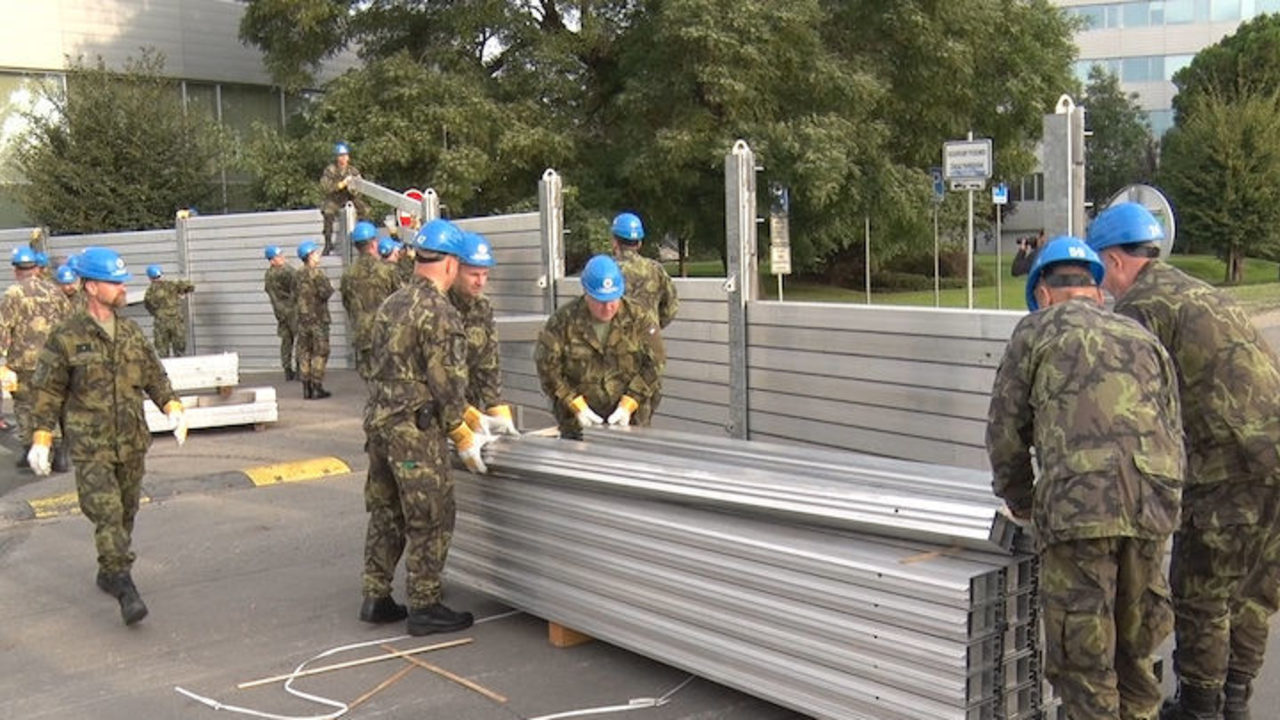
In peacetime, territorial units can support the police or the integrated rescue system and help during natural disasters — they can be deployed even without a formal state of crisis being declared, although each deployment requires a legal basis, and reservists must be officially called up for service.
A clear example of this came during the floods in Moravia and Silesia in September 2024. At the time, the army delivered water and humanitarian aid, cleared debris and silt, repaired homes and roads, and built temporary bridges. Over the course of nearly three months, 5,400 professional soldiers and reservists rotated through the affected regions from various units.
Territorial forces also play a key role in providing so-called Host Nation Support — assistance that a host country gives to allied troops. In the event of a Russian attack, Czechia would serve as a transit country for allied soldiers and equipment heading to NATO's eastern flank, ensuring their accommodation, supplies, fuel, and safe movement across the country.
Read also: Extension of temporary protection in Czechia for Ukrainians
Source: novinky.cz