Wildfires in Europe Are Unearthing Unexploded WWI and WWII Ordnance
USD 21,74
Popular
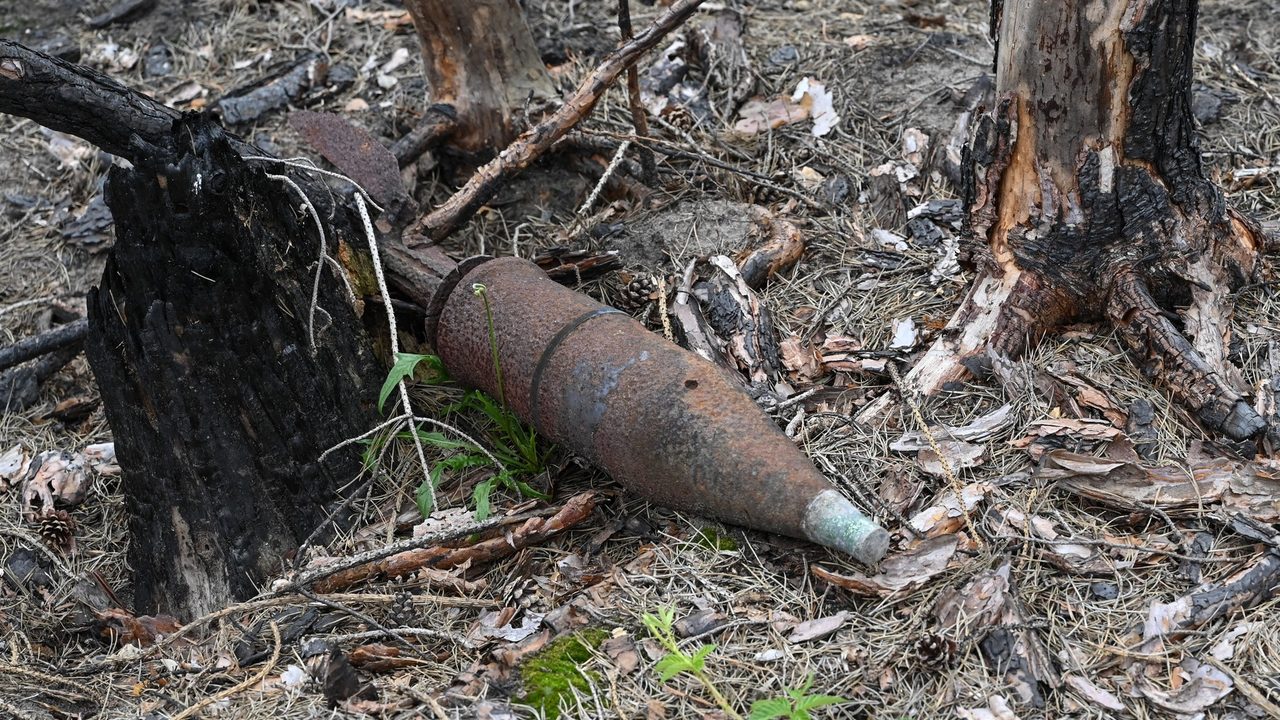
An unusually rainy January this year unexpectedly fuelled summer wildfires across Europe: heavy rainfall triggered explosive vegetation growth, which then turned into perfect kindling once the sweltering heat arrived. Heat, drought and strong winds have created ideal conditions for fires to spread — including in areas where unexploded ordnance from both world wars still lies hidden, according to ABC News.
A large fire near Bordeaux, France, exposed a munitions cache believed to date back to World War II. Meanwhile, in Belgium's eastern province of Liège, Governor Hervé Jamar said residents recently reported "several isolated detonations" — emergency crews are now adjusting their firefighting tactics to account for the possibility of unexploded munitions in the burn zone.
A Legacy of the Battle of the Bulge
In the Hautes Fagnes region on the Belgian-German border, mines and bombs were planted during World War II. According to local historian Bernard Collard, who runs the Truchbaum museum near the Belgian-German border, these munitions killed six civilians in just the first four years after the war ended. "When you walk into a forest like this, you never know where the explosives are hidden," he noted.
This is the very ground where the bloody Battle of the Bulge unfolded, and the fires have also reached the sites of two lesser-known engagements — on the Elsenborn Ridge and in the Hürtgen Forest. Those battles raged for 88 days and claimed the lives of 33,000 American and 28,000 German soldiers.
Heat Can Trigger Old Fuses
Unexploded ordnance poses a particular danger in wildfire zones, since high temperatures can knock a fuse off safe, explained Jonas Tepe, a spokesman for the German state of North Rhine-Westphalia, which borders the affected region.
Belgium's Ministry of Defence says it receives requests for help disposing of explosive devices every day, though it doesn't consider this the country's most dangerous area — riskier zones lie further west. Near the city of Ypres, known for its trench warfare during World War I, farmers refer to the annual ploughing of the land as the "iron harvest": even more than a century later, remnants of that war are still regularly turned up in the soil.
Belgian bomb disposal teams carry out roughly 3,000 call-outs a year, defusing between 200 and 250 tonnes of ordnance left over from both world wars.
Shrinking Rivers Are Giving Up Their Secrets Too
The drought that has lowered water levels in rivers and lakes has also led to discoveries of old weaponry. Two naval mines were found in the Danube in Slovakia. In Budapest, authorities closed Margaret Bridge to traffic after a World War II-era bomb was discovered nearby. Similar finds — bombs from the same war — have also turned up in the Rhine.
Source: novinky.cz