World By

German Economist Slams Defense Minister for Spending Big Without Results
German Economist Slams Defense Minister for Spending Big Without Results

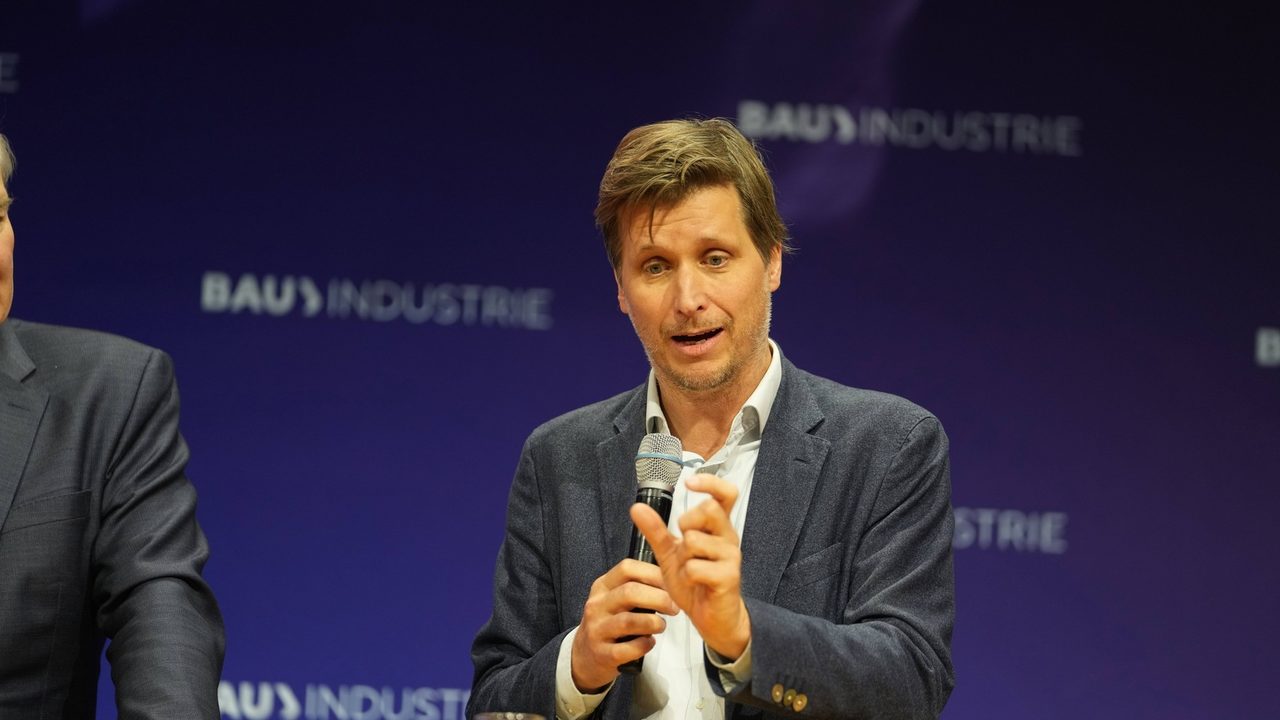
The head of the Kiel Institute for the World Economy (IfW), Moritz Schularick, has publicly criticized the policies of German Defense Minister Boris Pistorius, arguing that the country's multi-billion-euro military spending is failing to deliver the expected results because of an outdated approach to arms procurement.

"We have plenty of capital, enormous industrial expertise, and in some fields still cutting-edge technology," the economist noted. "What we don't have is hundreds of thousands of people willing to climb into tanks and head to the front. That means that instead of boosting troop numbers, we need more unmanned systems, and wherever possible we should be relying on artificial intelligence, robotics, drones and satellite technology."

Criticism of Outdated Procurement

According to Schularick, the Ministry of Defense is still operating under the old model — it has simply increased its budgets. A significant share of the funds, he estimates, continues to go toward tanks, frigates and other equipment that he considers hopelessly outdated.

The economist called for arms procurement to be entrusted to someone "with real political authority, capable of bringing together industry, startups and government ministries, resolving internal conflicts, and focusing efforts on a single goal." A funding program built mainly on borrowing hundreds of billions of euros could, in theory, give Germany's economy a real boost — but if mismanaged, the expert warned, it risks simply "fizzling out."

Cheap flights from Prague
One search across every airline and travel agency.
Find tickets
Sponsored

Not Weapons, But Factories

Schularick argues that simply spending money and restocking the Bundeswehr's arsenals isn't enough. "It's far more important to think from the outset about what the economic processes should look like, so that when necessary, the required weapons systems can be produced quickly and in sufficient quantities," he stressed.

In his view, Germany needs to stop ordering small, custom-made batches of complex hardware — say, 200 anti-aircraft missiles — and instead invest in building production capacity. "In other words, we shouldn't be ordering individual pieces of equipment, but an entire factory that, in an emergency, can quickly ramp up to produce 2,000 missiles a year instead of 200," the economist explained.

Since maintaining such a factory during peacetime isn't economically viable for companies, the state would need to pay manufacturers a kind of standby premium for keeping the capacity to scale up production rapidly. According to the IfW chief, a similar principle is already being applied elsewhere: after the coronavirus pandemic, Europe saw the emergence of facilities capable of quickly switching to mass vaccine production in the event of a new outbreak.

Source: novinky.cz

Share: Telegram WhatsApp

Related news

A large wildfire has broken out on the Croatian island of Dugi Otok, spreading through hard-to-reach terrain covered in dense scrub. According to Matej Rudić, head of the fire service in the city of Zadar, the flames are threatening residen
US President Donald Trump has said that once the US-Israeli coalition defeats Iran, he will declare the strategic Strait of Hormuz to be United States territory. "As soon as we beat Iran (…), pretty soon I'm going to declare the Strait of H
A powerful earthquake struck the Indonesian island of Flores early on Friday morning, at around 5:00 a.m. local time (11:00 p.m. Prague time). Rescue teams are working to pull people from the rubble of buildings damaged by the main shock an
Starting in September, tenth-graders in Belarus — around 16 years old — will be required to complete a ten-hour course on operating unmanned aerial vehicles. This was reported by the BelTA news agency, citing Belarusian Deputy Education Min
Two drones crashed on Romanian territory on Friday — both incidents occurred in Tulcea County, near the border with Ukraine, the country's defence ministry reported based on emergency call data.The first drone came down near the village of
At a hastily convened hearing in federal court in Manhattan, Luigi Mangione, accused of murdering UnitedHealthcare CEO Brian Thompson, pleaded guilty. The plea resolves one of two criminal cases brought against him over the executive's deat
Jason Arday, whose name made headlines around the world over a plagiarism scandal and almost unbelievable fabrications in his own biography, was found unresponsive on Friday afternoon at his flat in the Battersea area of London.Paramedics w
Authorities in Spain and Morocco are bracing for a possible repeat of the mass migrant surge into the Spanish enclave of Ceuta in North Africa, with a new attempt to breach the border expected as early as this weekend.Moroccan Interior Mini
Last December, Putin publicly criticized Western leaders for "whipping up hysteria" over the alleged threat posed by Russia. Yet shortly afterward, according to an American newspaper, he secretly convened his top military command and said t
Ukrainian troops holding positions in Zaporizhzhia region have reported a critical shortage of food and drinking water lasting nearly four months. The account comes from a unit commander identified by Ukrainian media as Anatoliy Sashchuk (s
The village of Wisley in Surrey, on the outskirts of London, hasn't seen a drop of rain in 58 days, according to the UK's Met Office. Meanwhile, London's Heathrow Airport has gone 52 consecutive days without rainfall.Britain's all-time reco
On August 13, a 49-year-old man named Robert Shageyev was killed in an explosion in Sevastopol. Shageyev was a former Ukrainian navy captain who switched sides to Russia in March 2014. He was walking along a staircase in a park when a power