Science & Space By

Laser-Pushed Starships Hit a Strange Drag Problem Near 75% of Light Speed
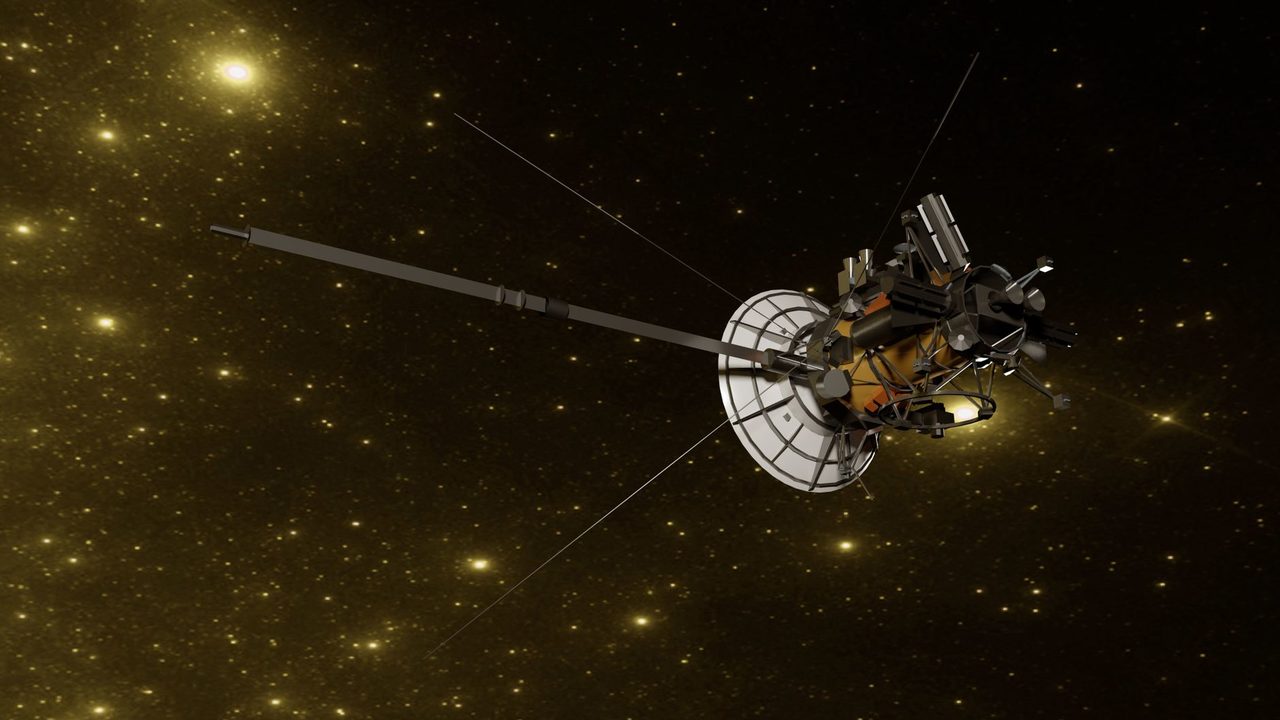
Light that is supposed to push an interstellar spacecraft forward can start working against it, according to a new physics study. Once a laser-driven solar sail reaches about 75% of the speed of light, part of the scattered light produces drag instead of thrust, ScienceDaily reported, citing Universe Today.

The effect does not stop a sail from speeding up. It does make the final stretch of acceleration less efficient, which matters for proposals that rely on lasers to send tiny probes to other stars.

What is a solar sail, and why use lasers?

A solar sail is a large, lightweight reflective surface. Light has no mass, but it carries momentum, and when it strikes a surface it delivers a small push known as radiation pressure. In the vacuum of space, a big reflective sail can slowly build up speed this way.

Chemical rockets cannot reach the speeds needed to cross the distances between stars in a practical time, according to the report. Some mission concepts therefore propose aiming a powerful laser at a sail to accelerate a very small probe far faster than conventional propulsion could. Breakthrough Starshot is one such concept, which envisioned using lasers to send tiny spacecraft toward nearby stars.

Who found the problem, and how?

The work comes from Chao Shen and Jiaze Li of the Harbin Institute of Technology, in a paper available on the preprint server arXiv. That means it is a theoretical analysis posted publicly, and the report does not describe it as peer-reviewed.

The researchers looked at three ways photons, the packets of energy that make up light, hand momentum to a sail. The first is incident light, the raw momentum of photons hitting the sail. The second is specular reflection, where photons bounce cleanly off the surface. The third is diffuse scattering, where the sail absorbs photons and re-emits them in random directions. In the researchers' breakdown, incident light gives the strongest push, followed by specular reflection, then diffuse scattering.

Why does the sail lose efficiency as it speeds up?

As the sail races away from the laser, it experiences an increasingly strong Doppler effect, the same principle that changes the pitch of a passing ambulance siren. For light, the change shows up as a drop in frequency. From the sail's point of view, the incoming laser light is increasingly redshifted, so it transfers momentum less effectively. All three of the pushing mechanisms weaken as a result.

In plain terms, the faster the sail goes, the less each unit of laser light helps it, even if the beam stays powerful.

What happens at 75% of the speed of light?

At about that speed, a relativistic effect called aberration changes how scattered light is distributed. Seen from Earth, the diffusely scattered light becomes more concentrated in the spacecraft's forward direction. Because light carries momentum, emitting it forward causes a recoil in the opposite direction, so diffuse scattering turns from a small help into a small drag.

The study describes this as a paradox: some of the light meant to accelerate the craft begins to resist its motion. Diffuse scattering is the weakest of the three contributions, and the laser still produces a positive overall force. The sail keeps gaining speed, just less efficiently.

Why does it matter?

Nothing here affects anything people can build or ride today. The finding matters to engineers and physicists designing future interstellar missions, who now have another factor to account for when they estimate how fast a laser-pushed sail could get and how much power it would take.

The study also has limits. It looks only at forces produced by light and does not try to model every obstacle a spacecraft would meet on a journey between stars. It does not, for example, include resistance from interstellar gas and dust. The authors present the result as one more challenge for ambitious missions to consider, not as proof that such trips are impossible.

Around Prague, based on reporting by ScienceDaily

Share: Telegram WhatsApp

More science news

Old Prescriptions May Leave Gut Bacteria Fingerprints Years After You Stop
Medicines you stopped taking years ago may still be shaping the bacteria in your gut. A large study from the University of Tartu Institute of Genomics found that many commonly prescribed drugs leave d
Why Does the Right Brain Run the Left Body? A 500-Million-Year Theory
Why does the left side of your brain handle the right side of your body, and the other way around? Two neuroscientists at the University of Minnesota, Martin Wessendorf and Daniel Wang, have proposed
Houston’s Space Center Turns 65: From Gemini to 298 Station Visitors
NASA’s Johnson Space Center in Houston is marking 65 years of human spaceflight. The agency says the center has shaped American crewed missions from the Gemini flights through the Apollo Moon landings
Falcon 9 Booster Flies for the 14th Time to Launch Secret Spy Satellites
SpaceX launched a batch of classified satellites for the National Reconnaissance Office on Sunday, Nov. 22, on a mission called NROL-136, Space.com reported. A Falcon 9 rocket lifted off from Launch C
Physicist Builds a Black Hole From Logic Gates, and It Leaks
A physicist in Japan has built an analog black hole out of digital logic, and it behaved in a way a real black hole is not expected to. When he changed a single bit inside its horizon, a small part of
Scientists Hunting a Shipwreck Found a Seafloor Littered With Washing Machines
A NOAA expedition in the Gulf of Mexico went looking for a shipwreck and found a seafloor strewn with refrigerators, freezers and washing machines, ScienceAlert reported. The cargo, lost from a shippi

Related news

Medicines you stopped taking years ago may still be shaping the bacteria in your gut. A large study from the University of Tartu Institute of Genomics found that many commonly prescribed drugs leave detectable changes in the gut microbiome
Why does the left side of your brain handle the right side of your body, and the other way around? Two neuroscientists at the University of Minnesota, Martin Wessendorf and Daniel Wang, have proposed a new evolutionary answer in the journal
NASA’s Johnson Space Center in Houston is marking 65 years of human spaceflight. The agency says the center has shaped American crewed missions from the Gemini flights through the Apollo Moon landings and the space shuttle era to the Intern
SpaceX launched a batch of classified satellites for the National Reconnaissance Office on Sunday, Nov. 22, on a mission called NROL-136, Space.com reported. A Falcon 9 rocket lifted off from Launch Complex-4E at Vandenberg Space Force Base
A physicist in Japan has built an analog black hole out of digital logic, and it behaved in a way a real black hole is not expected to. When he changed a single bit inside its horizon, a small part of the resulting disturbance got out, acco
A NOAA expedition in the Gulf of Mexico went looking for a shipwreck and found a seafloor strewn with refrigerators, freezers and washing machines, ScienceAlert reported. The cargo, lost from a shipping container that never reached its dest
Astronomers have long assumed that galaxies formed first and their central black holes grew later. Observations from the James Webb Space Telescope (JWST) are shaking that assumption, Live Science reported, and researchers it spoke with say
Scientists have sequenced the entire genome of a whale using snot collected from its breath by small commercial drones, according to NPR. The team says it is the first time a whole whale genome has been produced from this kind of sample. Th
A researcher in Australia is proposing a sweeping change to how scientists label our ancient relatives: put nearly all of them in the same genus as modern humans. According to ScienceDaily, which summarized the work from Monash University,
A puzzle that has lingered for more than 150 years at Westminster Abbey may be close to an answer. According to ScienceDaily, new research suggests the skeleton found inside a Roman stone coffin at the abbey was a medieval abbot, not the Ro
An idea about evolution that has circulated for more than 50 years may rest on a measurement illusion. Researchers at the University of Bath analyzed what they describe as the largest collection of spontaneous genetic mutations assembled to
Winter brings long nights and a crowded sky. From December through February, stargazers can see three supermoons in a row, one of the year’s brightest meteor showers, Jupiter and Mars at their closest, and a view of Saturn that is slowly im