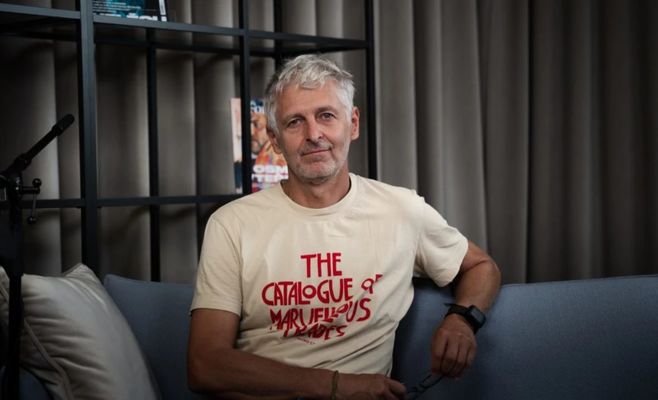
Dušan Šenkýpl on AI's dark side businesses don't talk about
USD 21,52
Popular
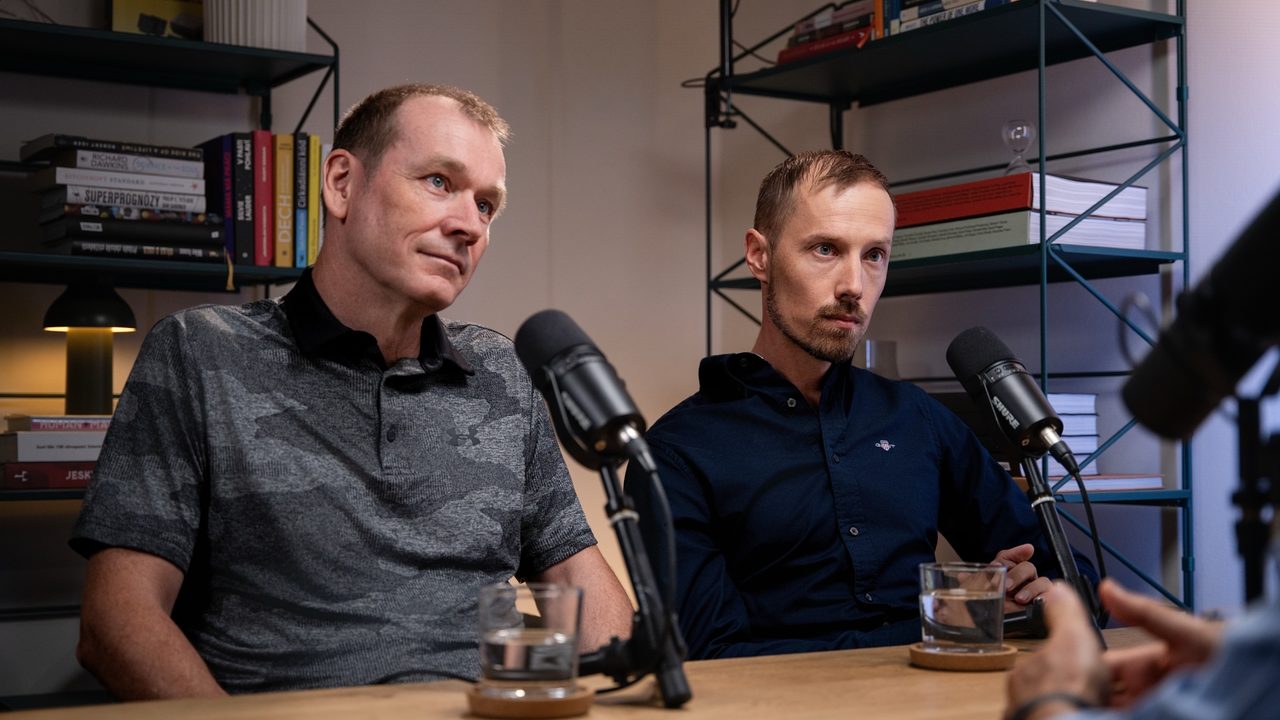
The co-founder of investment group Pale Fire Capital and CEO of the American company Groupon, Dušan Šenkýpl, together with his business partner Jan Černý, has spoken openly about an unexpected danger of artificial intelligence — its ability to draw users in so deeply that they lose sleep, time with family and any sense of moderation.
“I put my wife and kids to bed and went back to the computer for another two hours. It was like a drug,” Šenkýpl admitted on the Money Maker podcast. He normally goes to bed at ten, but ever since he immersed himself seriously in working with AI, his routine has gone out the window.
Šenkýpl, who built the investment group Pale Fire Capital together with Jan Barta and has headed Groupon since 2024, this spring created his own AI-based “chief of staff” using Anthropic's Claude Code, which now manages more than twenty projects for him — from strategy to communications. Černý, an Oxford graduate and former head of billionaire Tomáš Krsek's investment group BHM Group, joined PFC in April and, by his own admission, now spends more time with AI than with his wife.
But that intensity comes at a price. Šenkýpl says that juggling five or six tasks at once, each involving managing AI's work, makes the cognitive load “completely insane.” For the first time in his life, he has had to set himself rules for dealing with the technology. “My whole life I've had to wait for everything because of a shortage of programming resources, and now everything is available instantly and at excellent quality,” he explained. The result has been the strongest mental fatigue he has ever experienced — and a paradox in which sorting through email now counts as rest.
Černý describes it even more starkly: “It's the most dangerous computer game I've ever seen,” he says, noting that the dopamine hits come incredibly fast, the results are high quality, and the progress never lets up for a second. In his observation, people deeply immersed in AI tend to follow a similar curve: first euphoria and a huge investment of time to “catch the train,” then fear of falling behind, because the deeper you go, the more clearly you see how fast the industry is moving, and finally — normalisation, as people learn to live with it and build some distance.
The two investors' experience is not unique. Boston Consulting Group and the University of California, Riverside, described the phenomenon of “AI brain fry” in the Harvard Business Review earlier this spring. Of nearly 1,500 American employees surveyed, 14% of those working with AI reported experiencing it. Productivity rises along with the number of tools used simultaneously only up to three — at four or more, it starts to fall. Fatigued employees make 39% more serious mistakes and are more likely to think about quitting.
Šenkýpl draws another conclusion from this: “Now that asking questions has become so easy, we may be solving problems that weren't worth solving in the first place.” According to him, he never finished about half of the projects he started, and he is now relearning how to focus on what matters most.
The discussion of AI's dark side is just part of a much bigger conversation: Šenkýpl and Černý also talked about how Pale Fire Capital moves tens of billions of crowns on the stock markets, why a 750-million-crown bond issue sold out in 23 hours even though the company says it doesn't need the money, and about plans to turn family firms into European champions.