Magdaléna Kajan on building a therapy company after ten rejections

USD 21,66
Popular
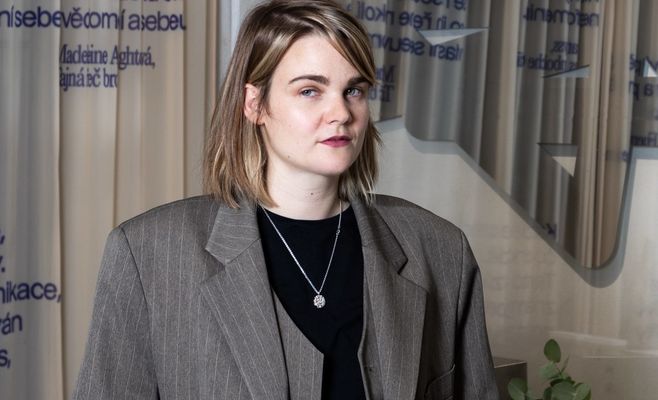
Slovak entrepreneur Magdaléna Kajan turned her personal experience of battling depression and failing to find a therapist into a business that now organises tens of thousands of psychological-support sessions a year in Slovakia and Czechia. Her company ksebe, which merged with the Czech startup Terapio, works with more than 270 specialists and partners with major corporate clients such as Heureka, Slevomat and O2.
The story began in 2020, when Kajan was going through severe depression and decided to find a therapist in Slovakia. “I wrote about ten emails, and almost everywhere I was told there were no free slots and advised to look for someone else,” she recalls. She eventually found a therapist and her condition improved noticeably, and she began openly discussing her experience with colleagues at the tech companies where she worked at the time. It turned out that a great many people around her had faced similarly long, discouraging searches for help.
At the same time, a similar idea was being developed by a team made up of Pavol Hurčan, clinical psychologist Karol Kleinmann and Petra Žilinčanová — in 2021 they founded the Slovak platform ksebe to connect clients with psychologists without months of waiting. A mutual friend introduced Kajan to Hurčan, and she soon joined the team as a co-founder.
In March last year ksebe entered the Czech market by buying 100% of the local startup Terap.io, founded by Hadi El-Mousawi and previously backed by the Miton group. The combined company began operating in Czechia under the Terapio by ksebe brand. Hurčan became CEO of the whole group, while Kajan is responsible for marketing strategy and B2B sales.
At the time of its entry into Czechia, ksebe had run more than 56,000 sessions and worked with 150 specialists. Today, after merging with Terapio, that figure stands at around 270 therapists, about 70 of them working in Czechia. Together the two platforms organise around 35,000 sessions a year, and besides corporate clients the company's services are used by around 7,500 people. According to Kajan, Terapio itself is growing 50% a year and works with around a hundred corporate clients, including Heureka, Slevomat, Raiffeisenbank, O2 and Applifting.
The online-therapy market as a whole is booming across Europe: over the past five years it has more than doubled, reaching around €2.49 billion (60.11 billion crowns) last year, and is forecast to grow by more than 23% annually. The largest domestic player in Czechia remains Hedepy, which organised more than 300,000 sessions worth 315 million crowns last year.
Kajan explains that, unlike a typical online shop where a purchase decision is made quickly, the decision-making process in therapy is much longer. “Clients usually book their first session months, and sometimes years, after they first start thinking about it,” she says. That's why, instead of chasing instant conversion, ksebe and Terapio focus on matching clients properly: an eighteen-question questionnaire helps statistically determine what kind of therapist a person needs — someone more directive, or, conversely, gentler.
The main audience for both platforms is women aged 25 to 40, who make up the overwhelming majority of users. Men seek therapy far less often, even though, in Kajan's view, they need it just as much. “Asking for help isn't a sign of weakness — it's actually a sign of strength,” she stresses, noting that men more often deal with their problems differently, through alcohol or other addictions, which only makes things worse.