Czech Microsoft head Michal Stachnik: teach civil servants AI
USD 21,83
Popular
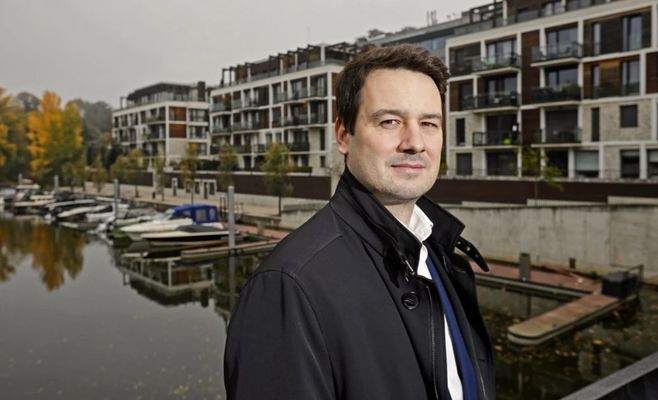
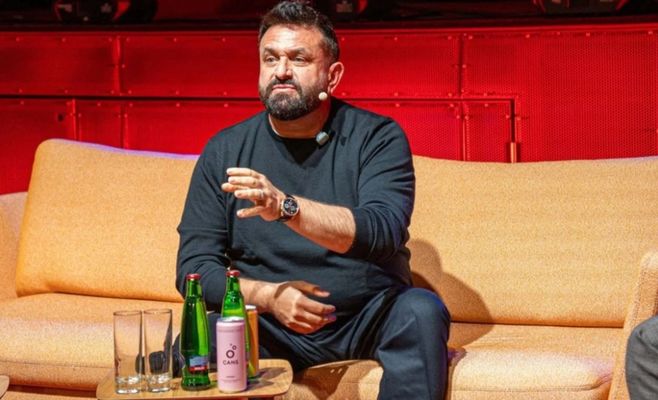
The head of Microsoft in Czechia, Michal Stachnik, believes Czech public administration is lagging in adopting artificial intelligence not because it lacks geniuses, but because ordinary civil servants do not know how to work with AI. He set out his recipe at the “Better Czechia” (Lepší Česko) conference in Karlovy Vary, walking on stage with a hockey stick in his hands.
Stachnik is 54 and has run Microsoft in Czechia for almost two and a half years. By his account, he has around 300 Teams chats and roughly sixty meetings a week. A regular at Forbes conferences, he appeared on stage with a stick for the first time at the Imperial Spa; the manager explained that it reminds him how easy it is to get stuck in your own “bubble”.
A lesson from the hockey players
By his own account, what pulled Stachnik out of that “bubble” was a training session of field hockey players with intellectual disabilities. He came for a formal visit, intending to do something kind, but the team captain handed him a stick and began teaching him how to hold it, where to stand and which way to pass. “From a corporate manager who knows everything, I suddenly turned into a person who knows nothing,” Stachnik recalls. In his view, this is very similar to the Czech state’s attitude to AI.
Czechia in 27th place
Czechia, the Microsoft head says, tends to pat itself on the back when it comes to AI. Yet by the share of the economically active population using AI, the country ranks 27th in the world. Ahead of it are countries that have taken up the technology far more decisively. “Other countries, including Hungary, for example, are accelerating, while we lost three places in a year,” Stachnik said.
The paradox is that Czechia holds a special position for Microsoft: Prague is home to the company’s largest research and development centre in continental Europe. Even so, the country has not risen above 27th place in the Microsoft AI Diffusion Report.
What holds back the public sector
Stachnik sees the main untapped reserve in public administration and government offices. The first problem is the move from pilot projects to full-scale operation: there are plenty of interesting pilots, but their number alone does not move the state forward. The second is skills. A few AI specialists in the ministries will not deliver progress: what is needed is for civil servants in every office, not just a narrow circle of experts, to be able to use AI safely.
Stachnik regards the debate over which models are better — American, European or Chinese — as secondary. In his view, what matters is what a model can do and does, not where it comes from.
He gave a positive assessment of the public sector’s efforts to train officials: about sixty organisations and several ministries take part, with Microsoft’s support, in the “AI for the Office” (AI na úřad) project.
Where AI’s limits lie
Stachnik drew a line of responsibility. He said he would be relaxed about an AI issuing a parking fine, since that is relatively clear-cut. He would look differently at a situation in which AI decided whether to remove a child from a family. Artificial intelligence, the Microsoft head stressed, is a good automation tool but cannot bear responsibility: in some cases a human must make the decision.
By the Around Prague newsroom