Petr Fajmon: how Teplárny Brno is cutting the city's gas use
USD 21,68
Popular
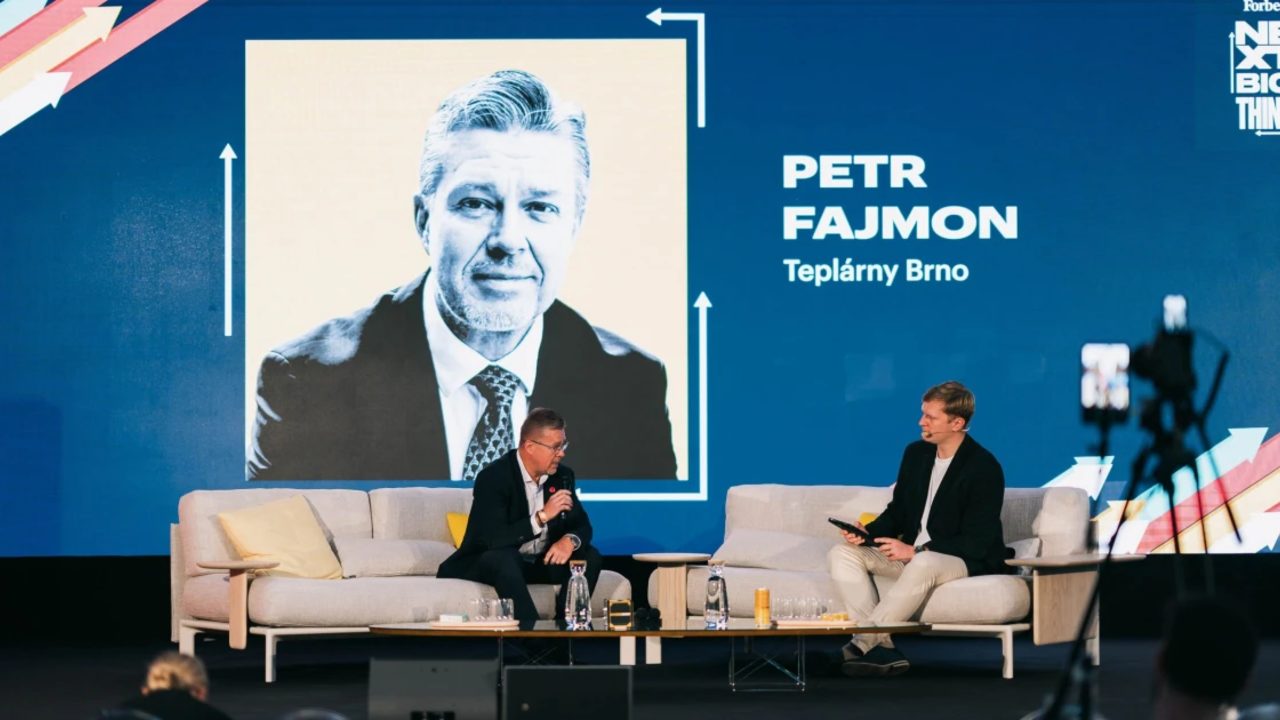
Petr Fajmon, CEO of Teplárny Brno, is leading a large-scale overhaul of the entire city's energy system: today Brno's heat supply depends on gas for 80%, but within six years the company intends to cut that share to just 5-10%, relying on heat from the Dukovany nuclear power plant and other sources.
Fajmon heads a company with a long history — Brno's heating plant started operating back in 1930, supplying steam to local textile factories. Almost a hundred years later, the company barely produces any steam at all; instead it supplies electricity, runs a network of 150 charging stations for electric vehicles, and is gradually turning from a simple heat producer into a provider of a whole range of energy services, including cooling buildings during the hot summer months.
The turning point was the 2022 energy crisis. According to Fajmon, the price of gas shot up to 300 euros per megawatt-hour at the time. To illustrate the impact, he cites his own household: at market prices, his annual gas bill would have come to around 200,000 crowns, and even after the government introduced a price cap of 100 euros per megawatt-hour, he still had to pay around 70,000.
But for Teplárny Brno, the scale of the problem was incomparably bigger. “We don't consume three thousand cubic metres, we consume 150 million cubic metres of gas a year. We are essentially the largest gas consumer in Czechia, and at that point we faced a situation where gas prices had risen sevenfold,” Fajmon recalls. Despite having stockpiled fuel in advance at lower prices, the company still had to raise heating tariffs by around 120%, and an average family, which used to pay about 25,000 crowns a year, felt the full impact.
It was precisely the crisis that sped up the decision to revive a project Teplárny Brno had been discussing with the ČEZ group since the 1990s — laying a heating pipeline directly from the Dukovany nuclear power plant to Brno. The 42-kilometre pipe, 80 centimetres in diameter and wrapped in half a metre of insulation, is designed to supply the city with heat so efficiently that the water inside will lose less than one degree along the way.
The nuclear plant produces around 150 million gigajoules of heat a year, while Brno will need just 2.2 million gigajoules — enough to cover roughly half the city's needs. In parallel, the company is developing other sources too: from 1 October, a new wood-chip heat source is due to come online in the Malomněřice district, replacing around 15 million cubic metres of gas.
According to Fajmon, the future of Brno's energy system lies not in a single breakthrough technology but in combining different sources, consumers and energy storage into a single system. Electric cars themselves are meant to become one of its building blocks: “Electric vehicles with charged batteries can be used as an energy source and feed electricity back into the home. We're already starting to test solutions like that,” the company's chief said.